Skip navigation

Category Archives: loons

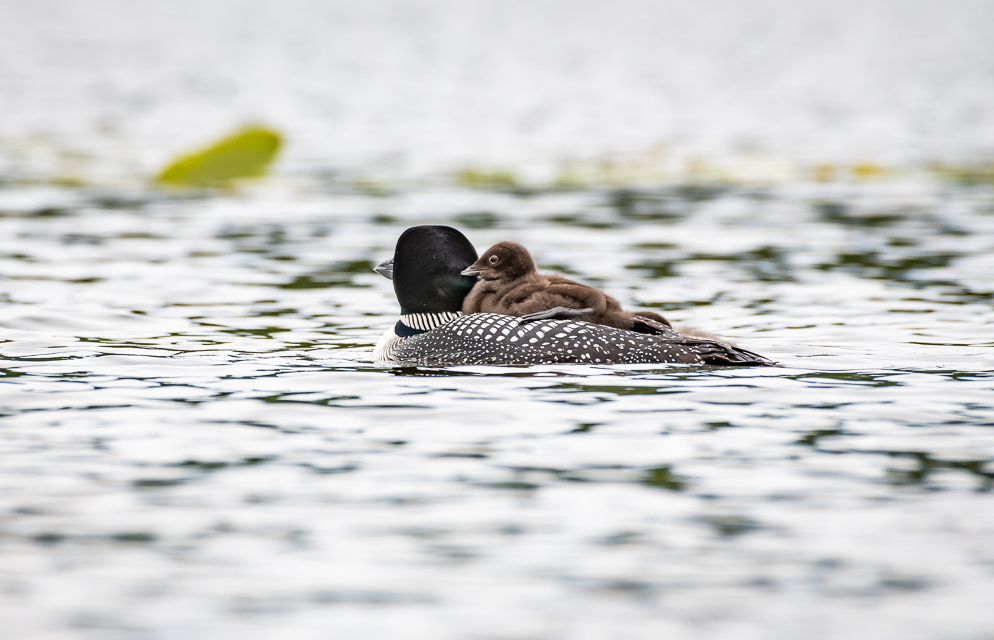
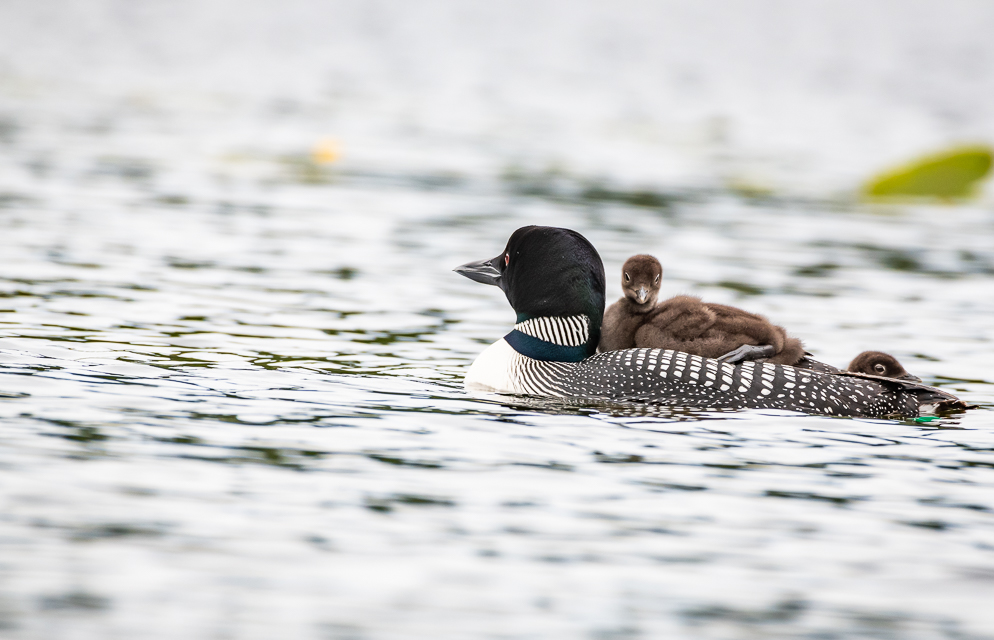
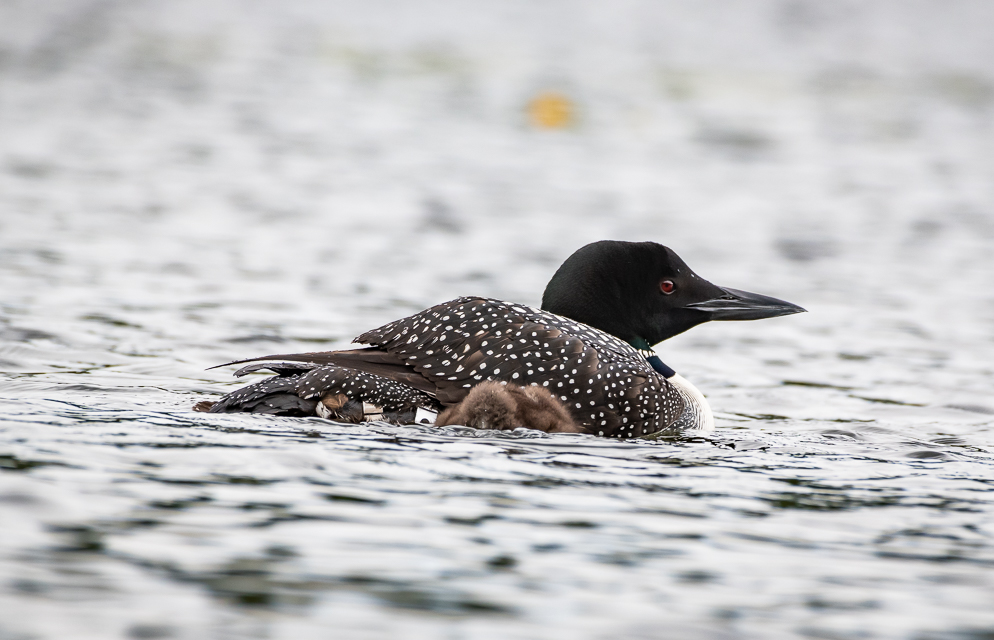
When I first arrived at the lake, I was delighted to see two adult Common Loons, each with a baby loon on its back! The little ones are subject to predation, primarily by Bald Eagles. Generally, loons lay two eggs which are also subject to predation by any animal that can get to their nests. So seeing two youngsters brought a smile to my face, especially seeing them on top of their parents. It was fun to see the baby get onto the parent’s back. Still not quite sure how they get a grip and pull themselves up. Loons are not agile on their feet.
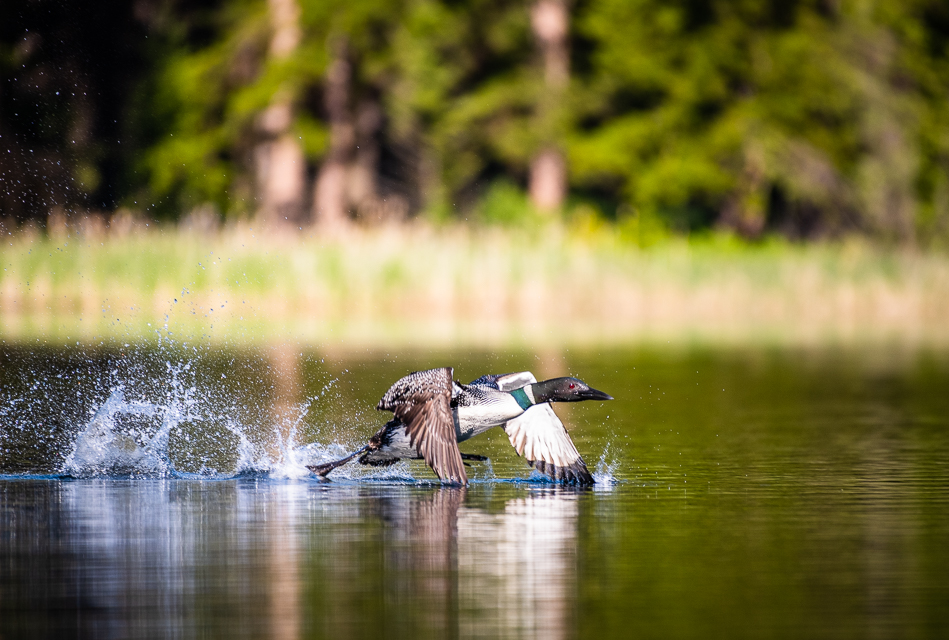
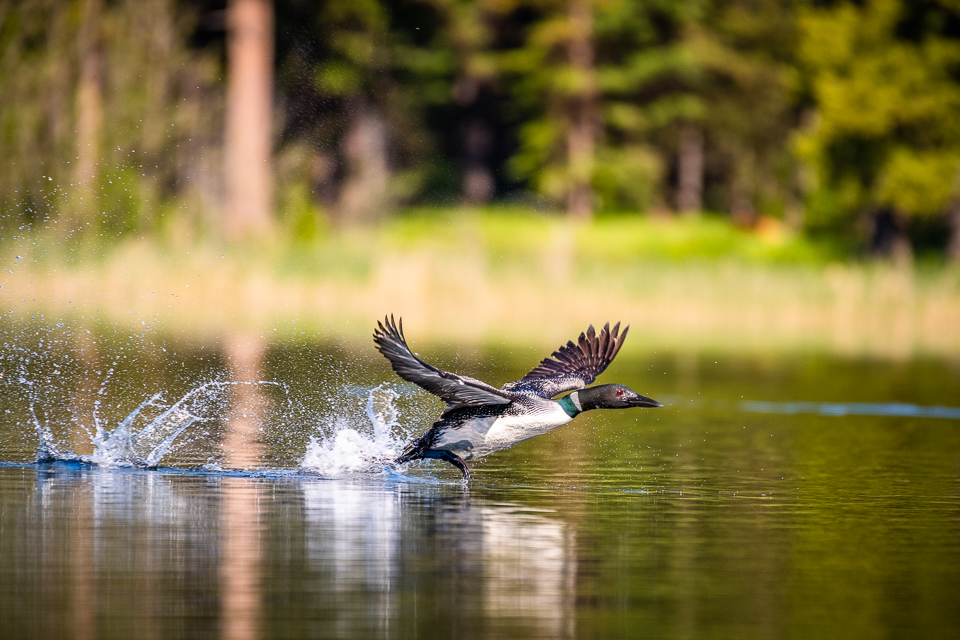
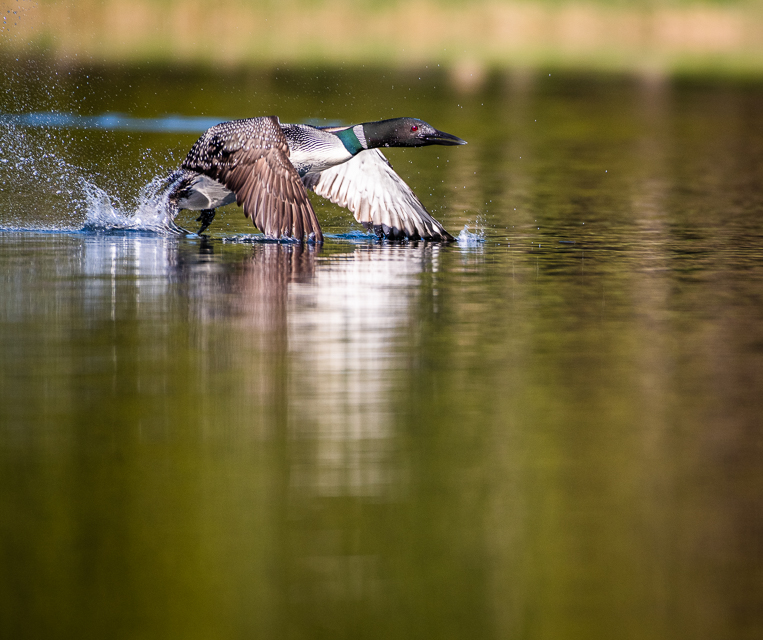
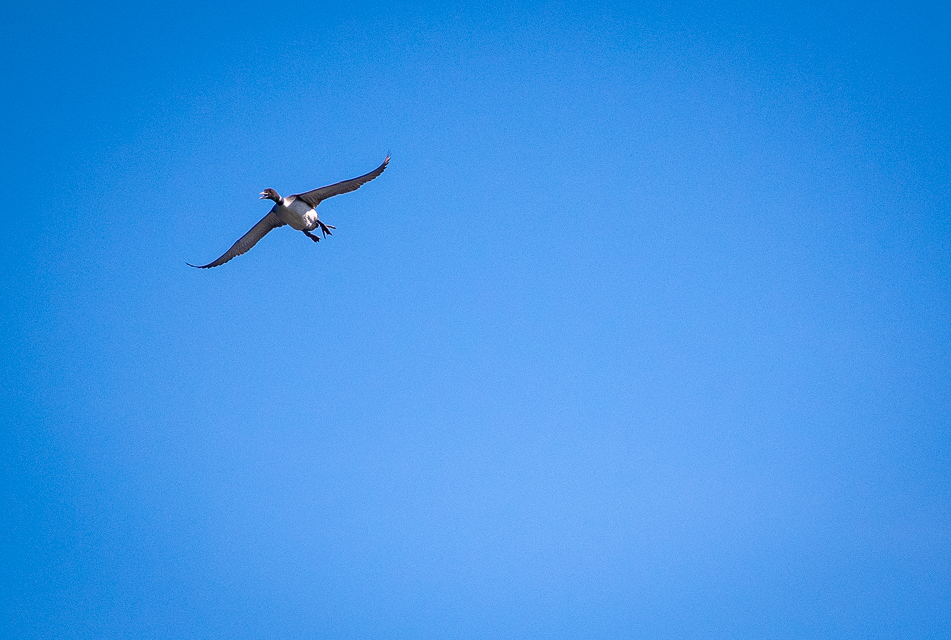
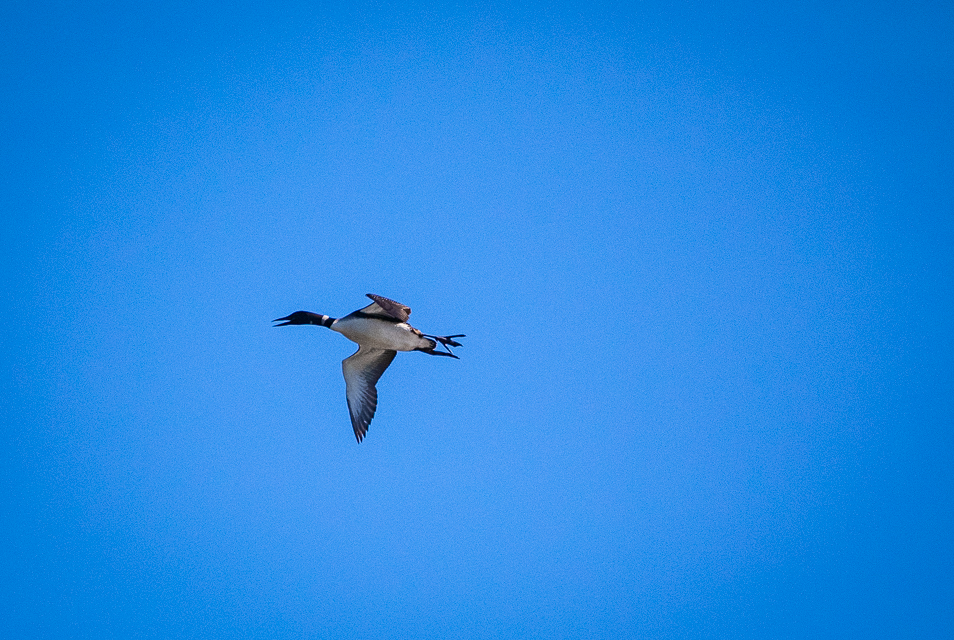
Common Loons need lots of water surface to get airborne and then, at a small lake like this one, they need to circle it two or three times to get high enough to clear the tall trees. It’s all pretty dramatic.

This is the family we saw back in June. The youngster was still quite little then. Look here and scroll down til you see the little loon. Now it’s two and a half months old and nearly as big as its parents who are still feeding it. A banding crew caught it sometime during the summer and it is banded and scientists may be able to find it in the future and discover its migration route.

Common Loon. One of my favorite birds. Growing up, I had no idea they could be found in Washington. I thought they lived in places like Minnesota or New England or Canada. I was well past middle age when I saw, and heard, my first loons in the Okanogan Highlands. It’s one of the reasons we keep going back there, year after year. Where else can we listen to loons as we sit around the campfire or hear them at first light or watch them socialize with each and raise their youngsters on the clear cool water? Loons are remarkable birds. You can learn more about ‘the spirit of the north’ here.

It is worthwhile to click through all of these images and see some interesting loon behaviour. They clearly are very social, flying from one lake to another to ‘visit’ with the resident loons. They struggle to raise their young with the ever-present threat from hungry eagles also raising youngsters. The family we watched each day had two young the week before we arrived but only one when we were there. And that splashing! I don’t know what that’s all about. Loons often just tip over gently into the water, hardly leaving more than a ripple. Those four loons appeared to be fishing together and did this repeatedly while we watched for an hour or more. Others reported seeing the same activity.

These photos are from our recent camping trip. I love to watch and photograph birds from my kayak. Some birds, like Common Loons, will approach a boat if it is quiet and this family did just that. If I was close to the birds, I’d sit quietly in the boat and hope that they would come closer. They didn’t always. Early mornings and evenings were best. It was busier around the lake during the day and the birds tried to keep to themselves. The first day we saw the baby loons, they were not yet diving but by the time we left, they were diving and preening and acting like their parents. The youngsters have big feet, like a lab puppy and I imagine someone asking the parents, ‘do you think they will ever grow into those feet?’ Well, people still ask me that about Sky and she’s almost six years old, so no.

At another lake, I was able to look down at the loons and see them swimming underwater. They strictly used their feet for propulsion. I also observed this from my boat but they were too close for photos!

I know, this is a lot of photos but the birds are so beautiful.