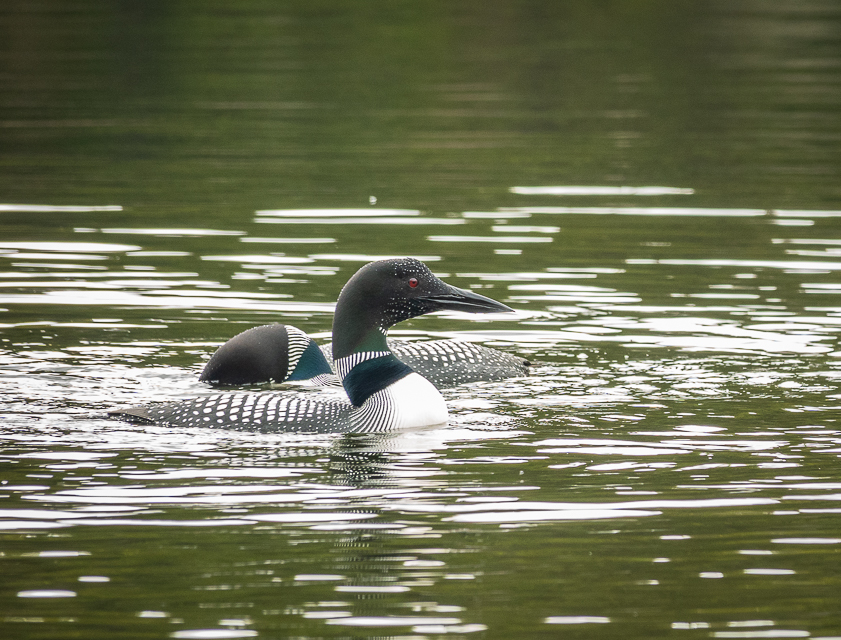
Common Loons are not so common in Washington, especially nesting Common Loons. Apparently they used to be common all over the west but not so much anymore. Threats to loons include loss of habitat, predators and discarded fishing tackle. Fishing line, hooks and lead weights are all potentially damaging or fatal to loons and other water birds such as Trumpeter Swans.
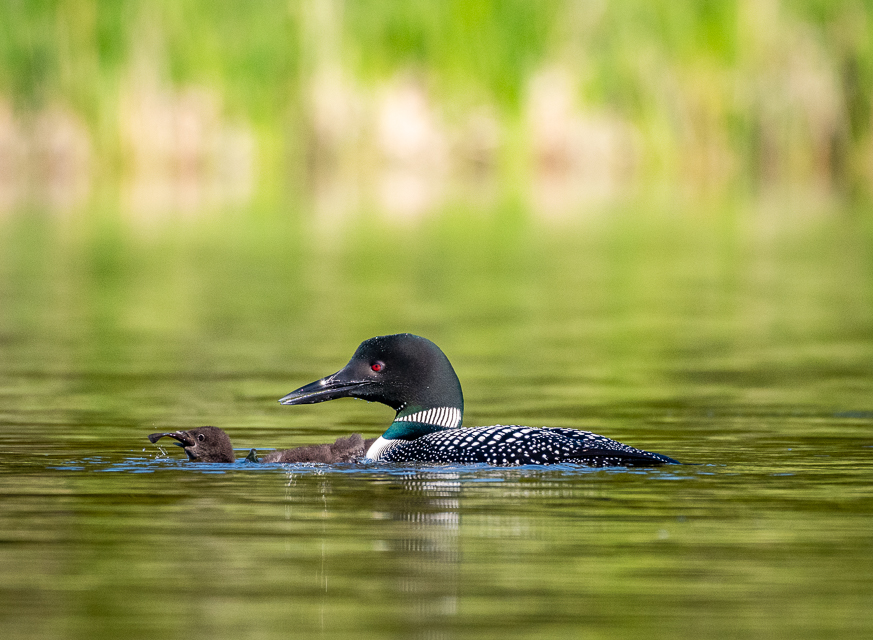
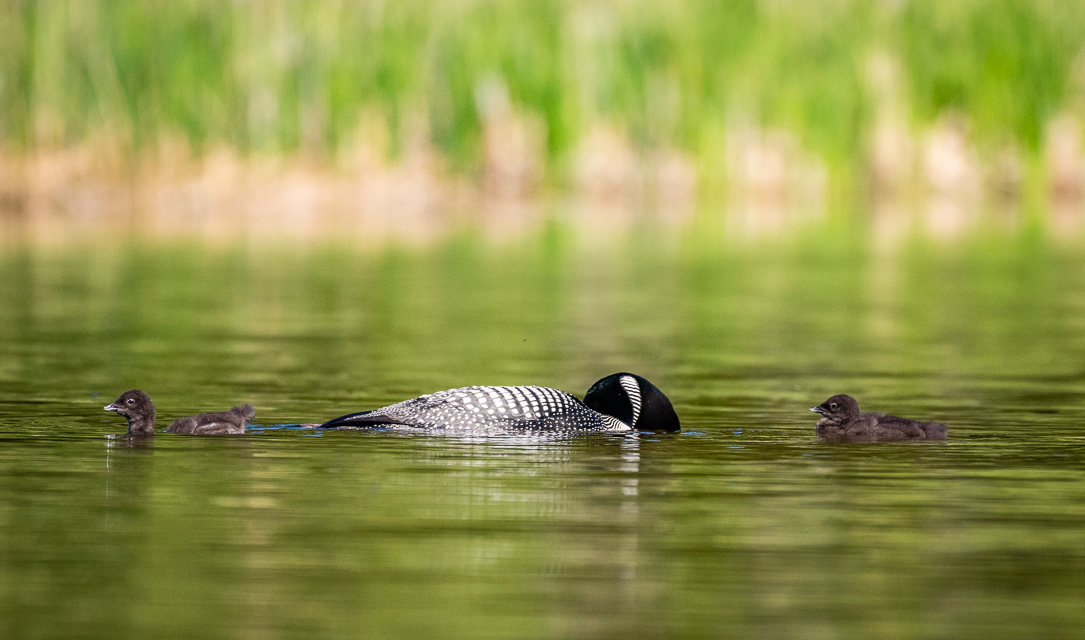
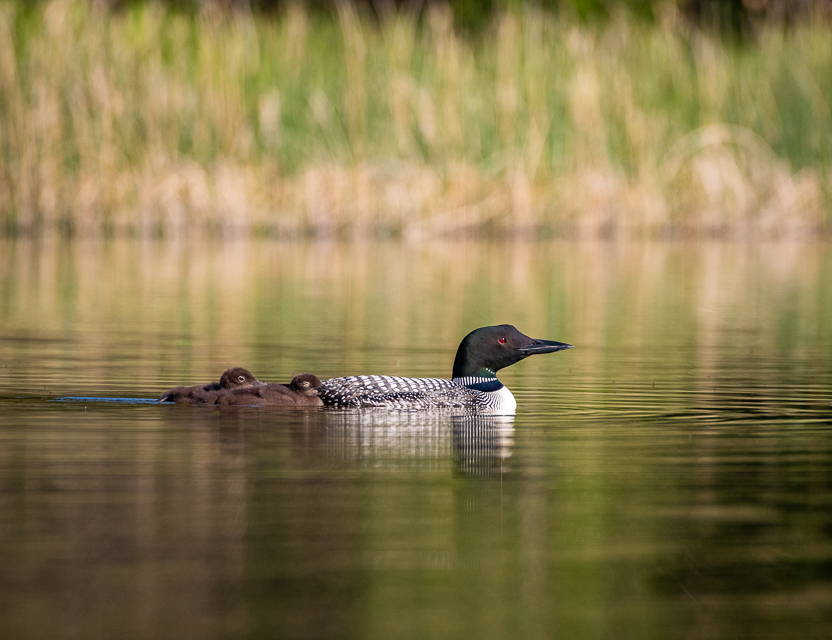
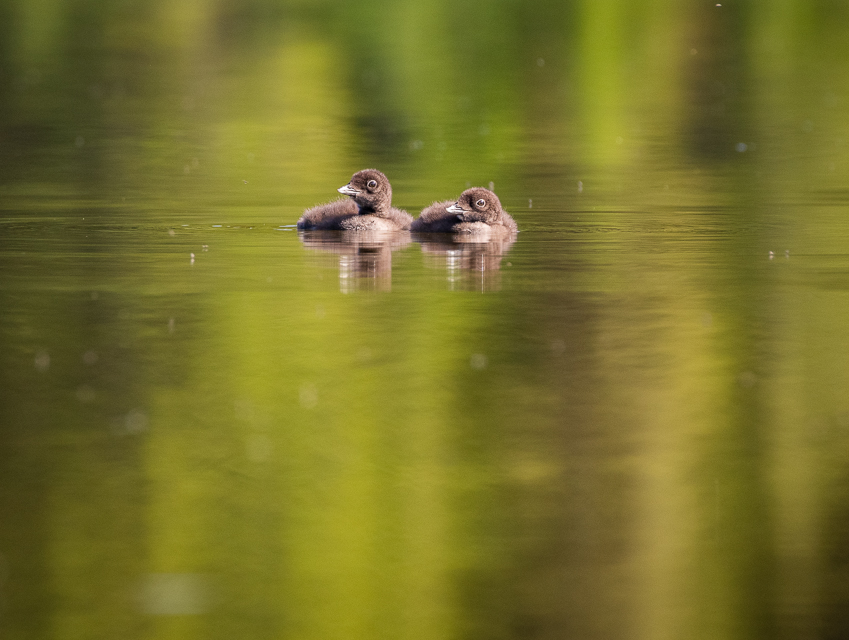
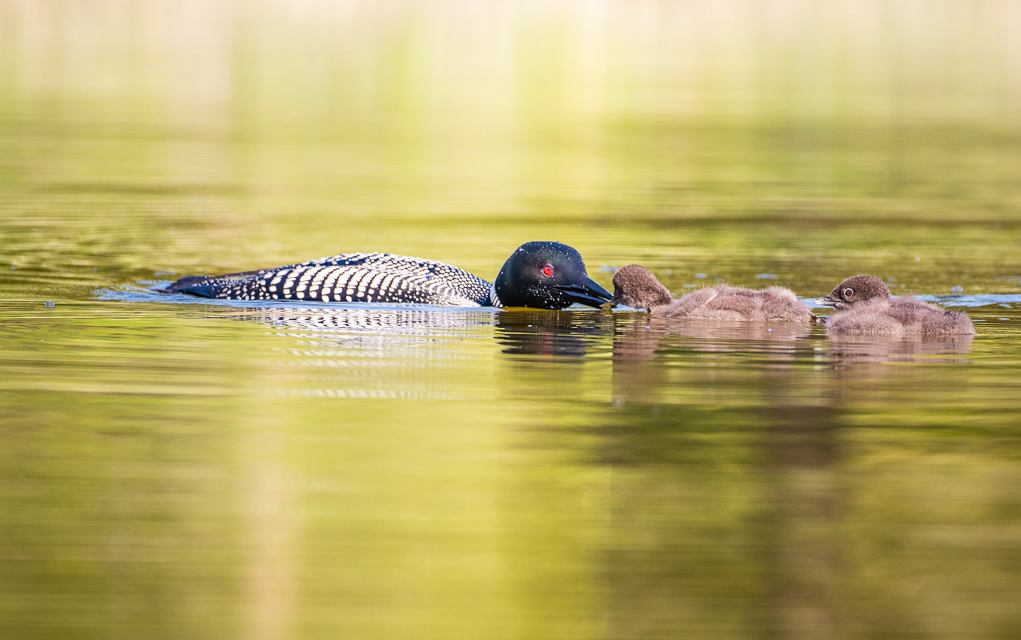
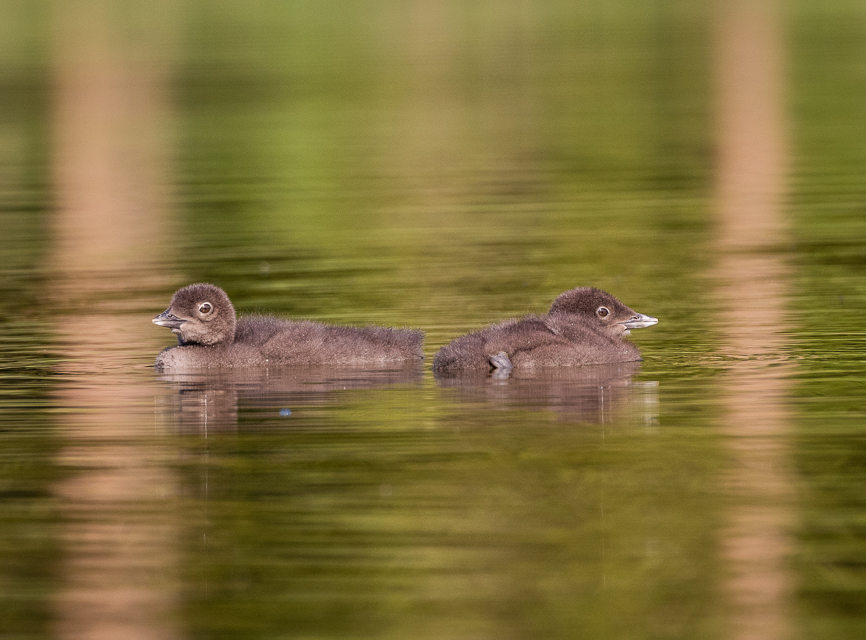
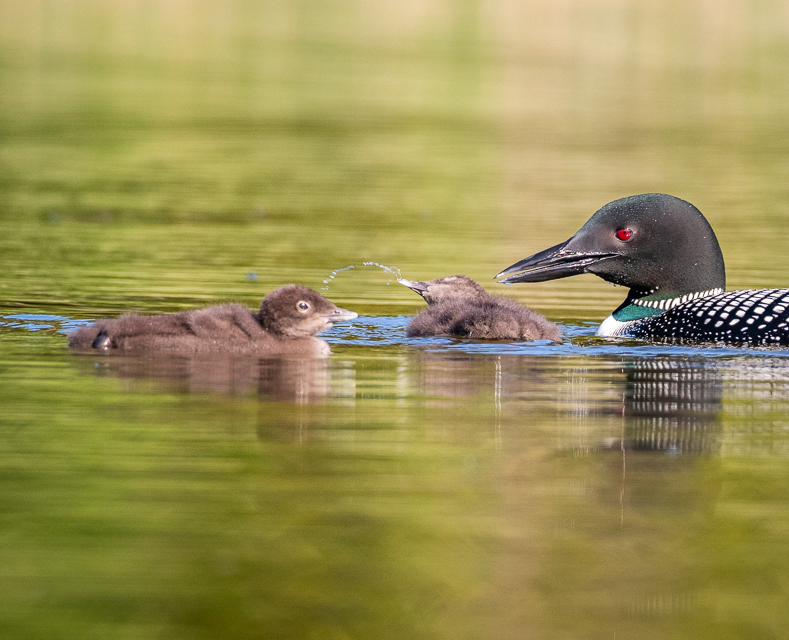
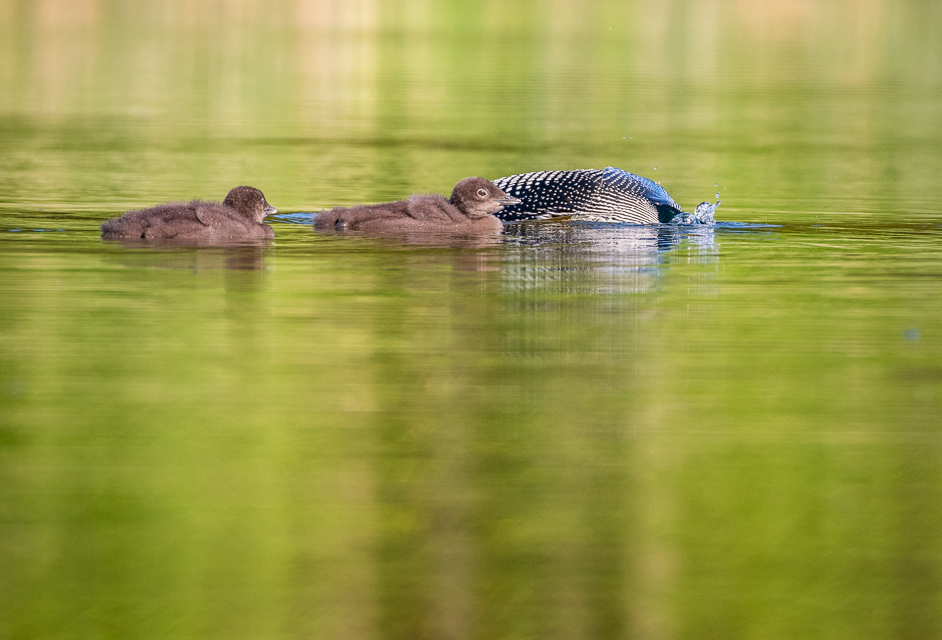
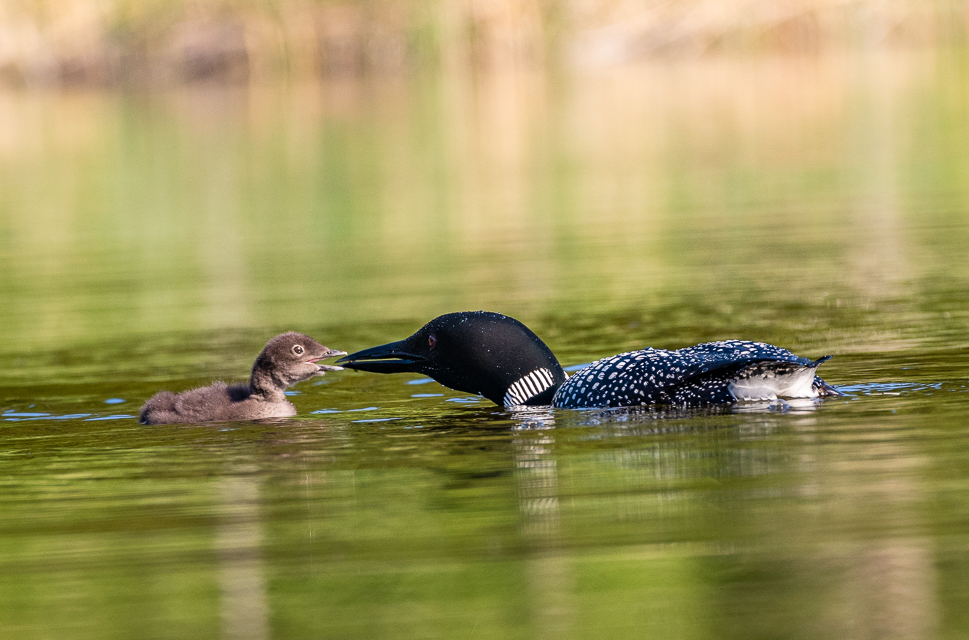
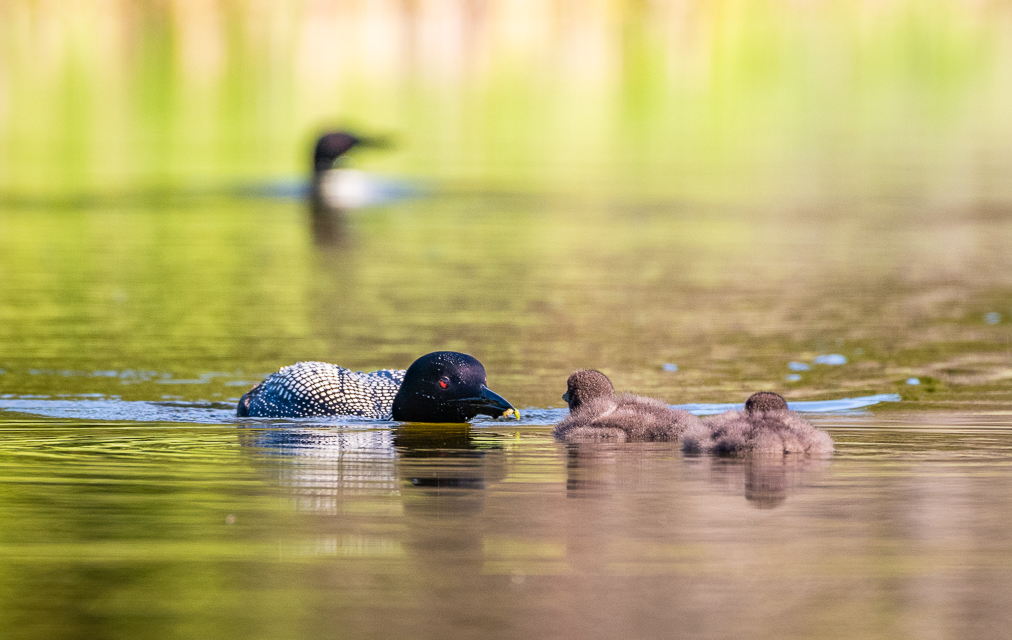
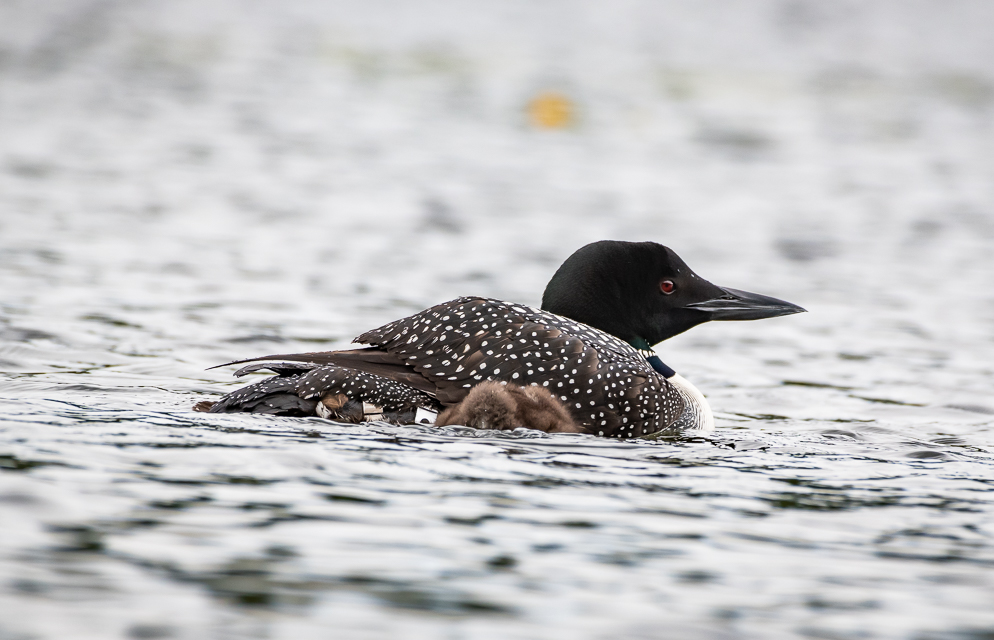
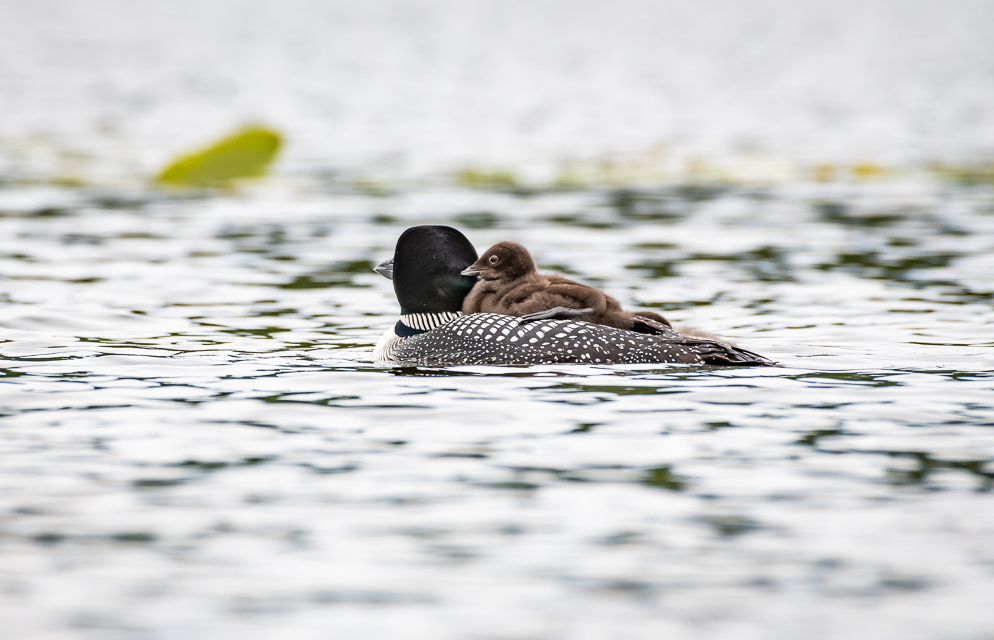
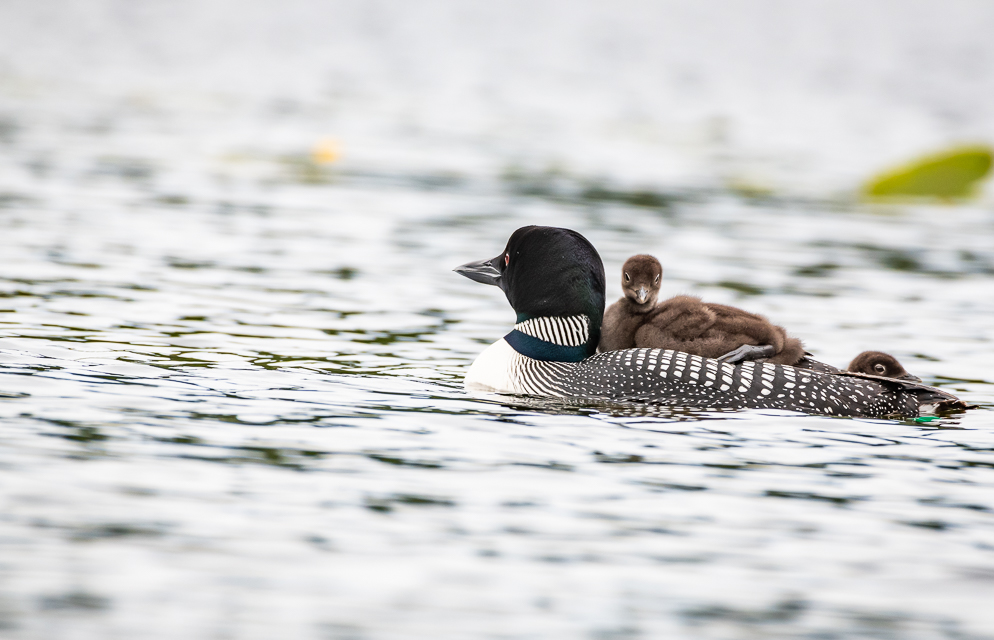
At Lost Lake, there is a pair of Common Loons that have nested in the same place for many years. They arrive in the spring from their wintering grounds and take up residence. Thirty days later, the eggs – there may be one or two – hatch and the tiny balls of black fluff are immediately paddling around the lake with their parents. They may also ride on the backs of the parent birds. Both parents care for the birds – feeding and protecting them from predators and gradually teaching them to forage for fish on their own. It takes much of the summer for the birds to fledge and be ready to migrate.
Due to shortage of good nesting areas, pairs in Washington are helped with the supplementation of extra four-inch fish added to nesting lakes by the Department of Fish and Wildlife. Also, sticks are placed around and leaning over the nest to protect it from avian predators such as Bald Eagles. Most loons are banded for further study. When the young are nearly grown, researchers will attempt to net them so they may also be banded. The male of this pair has always eluded capture and consequently has never been banded.
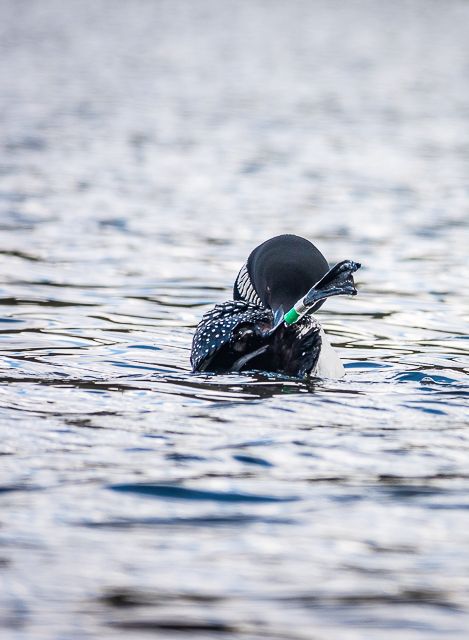
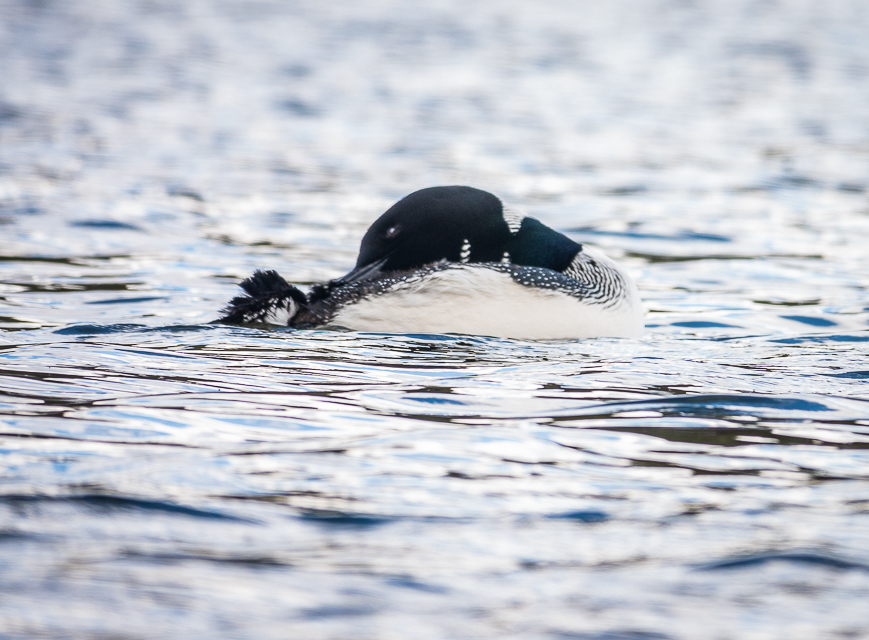
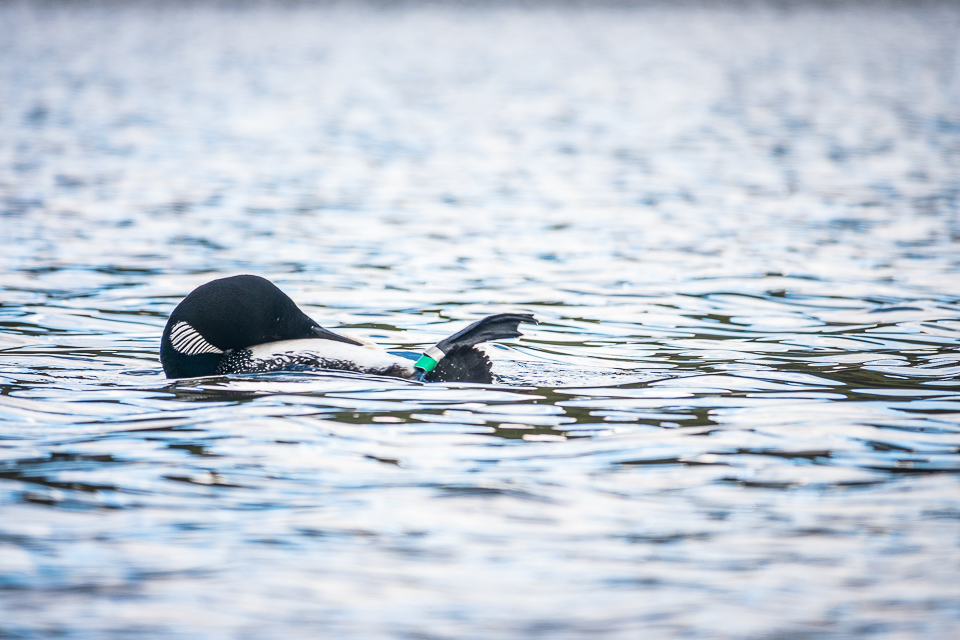
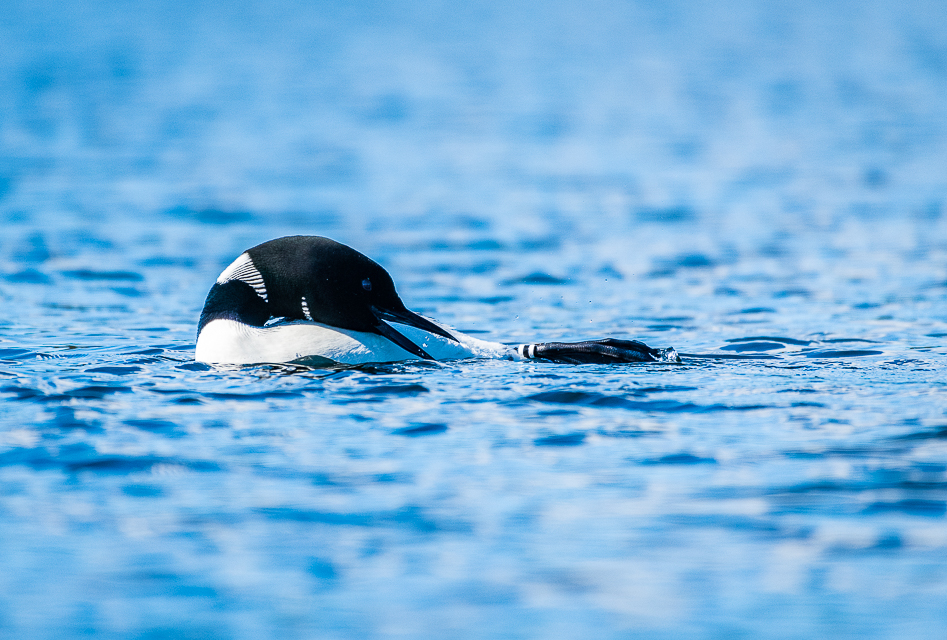
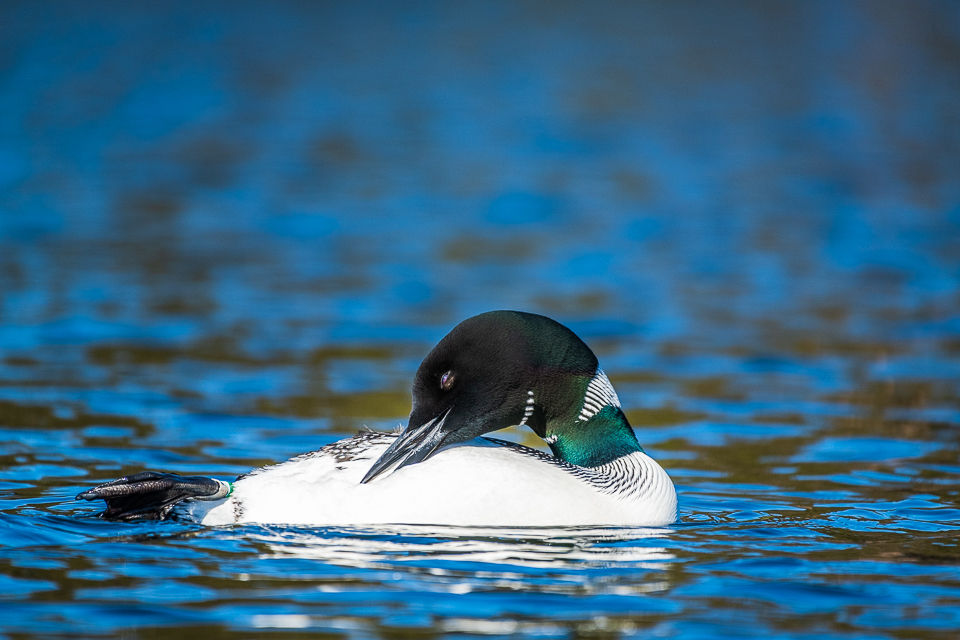
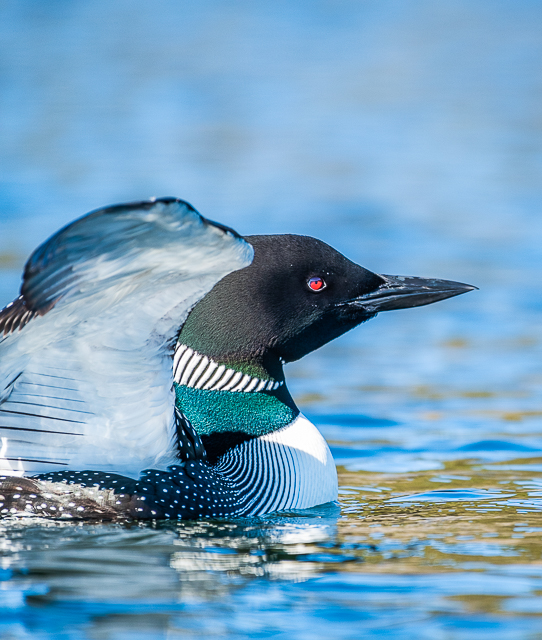
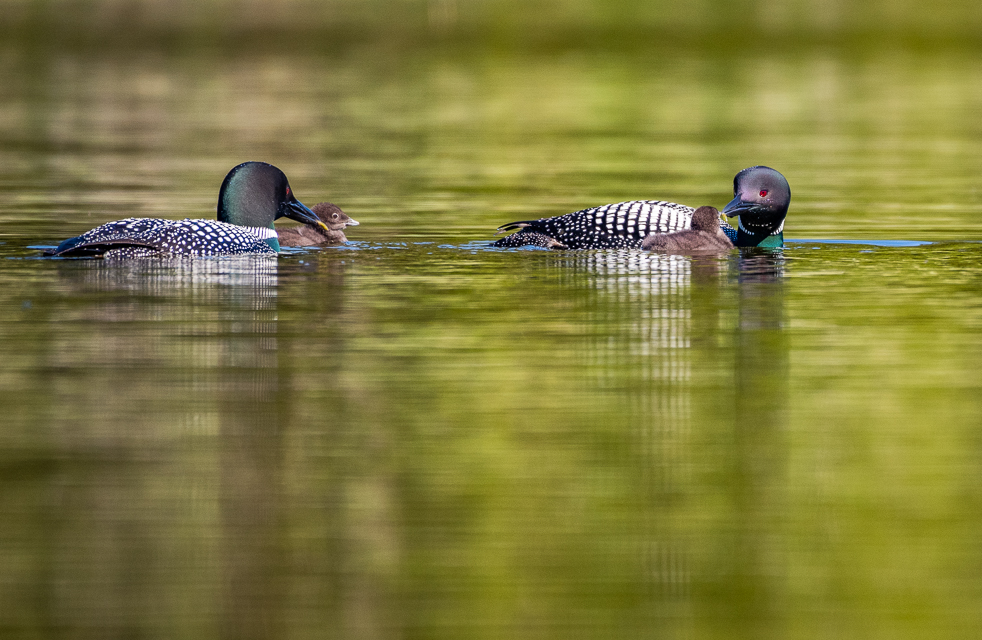
This male arrived at Lost Lake this spring with fishing line hanging out of his mouth. It is presumed that there is a hook embedded in his tongue or cheek – probably acquired when the bird ate a fish that had escaped an angler with the tackle in its mouth. You can clearly see the fishing line in the images I made on Wednesday with a loop of it hanging out one side of his mouth. On Friday, it appeared that he had both ends of the line in his mouth and it’s less easy to observe.
Wednesday I inadvertently, paddled right up to the nest. I did not know it was at the edge of the reeds. I was able to see the two dark eggs and quickly moved away in hopes of lessening any disturbance to the birds. Later in the day, we walked on the road on the east side of the lake where we had a clear view of the female on the nest. Friday when I was out on my boat I saw that the eggs had hatched and the two loonlings were out and about with their mother! It was very exciting for me.
All of these images were made with a 600 mm equivalent lens and I did my best to minimize disturbance to the loons.

Common Loon nest with two eggs

The fishing line dangling from the bird’s beak

The nest as seen from the road.

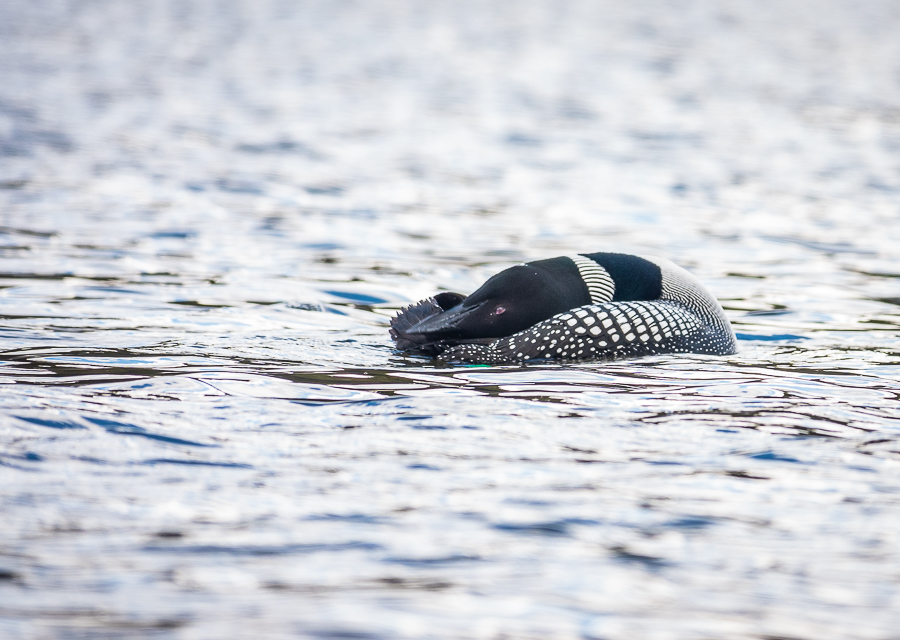
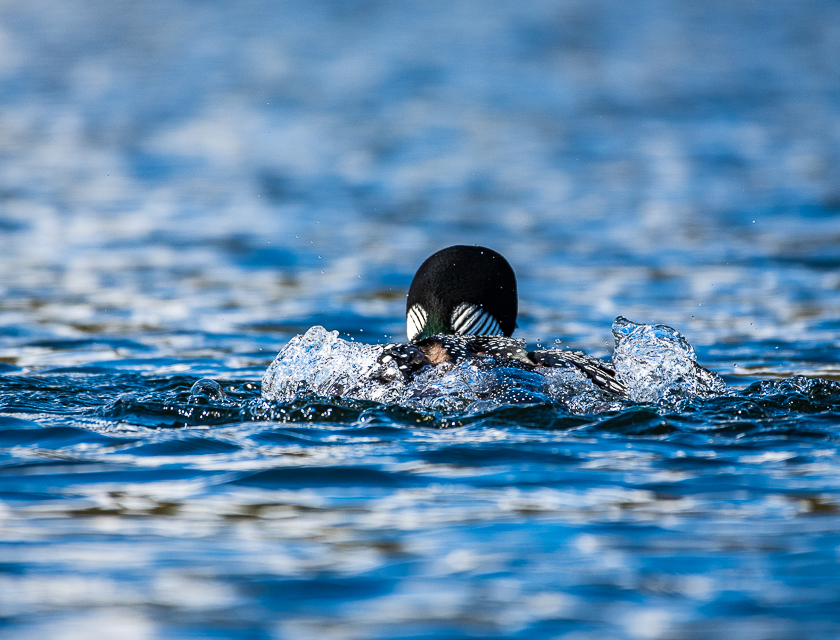
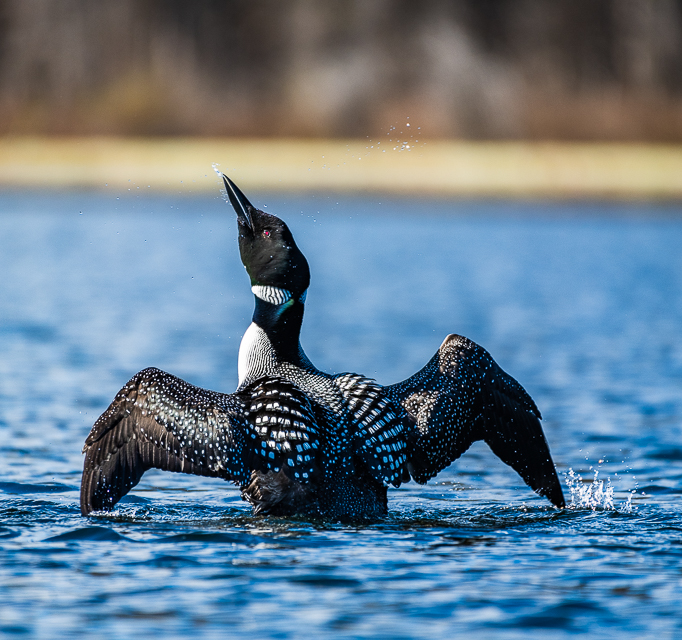
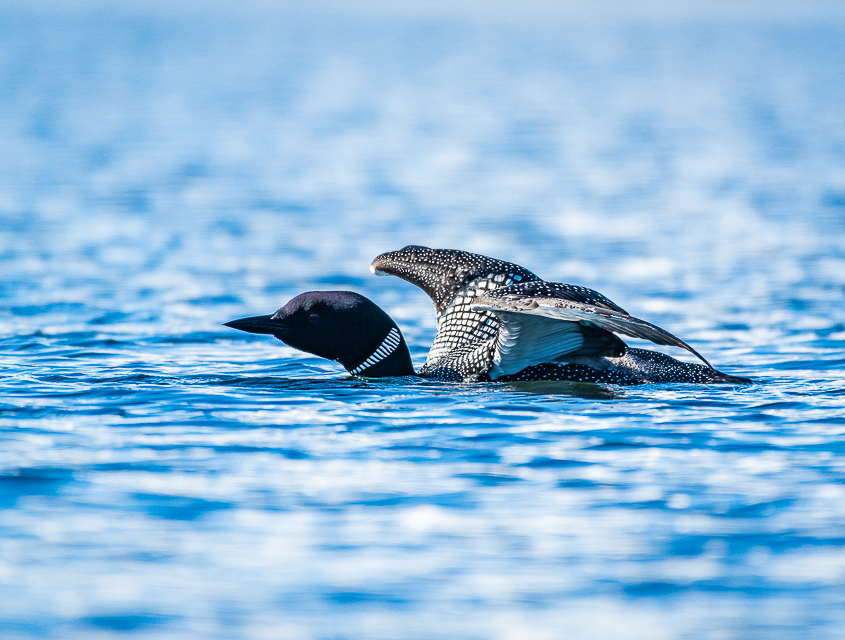
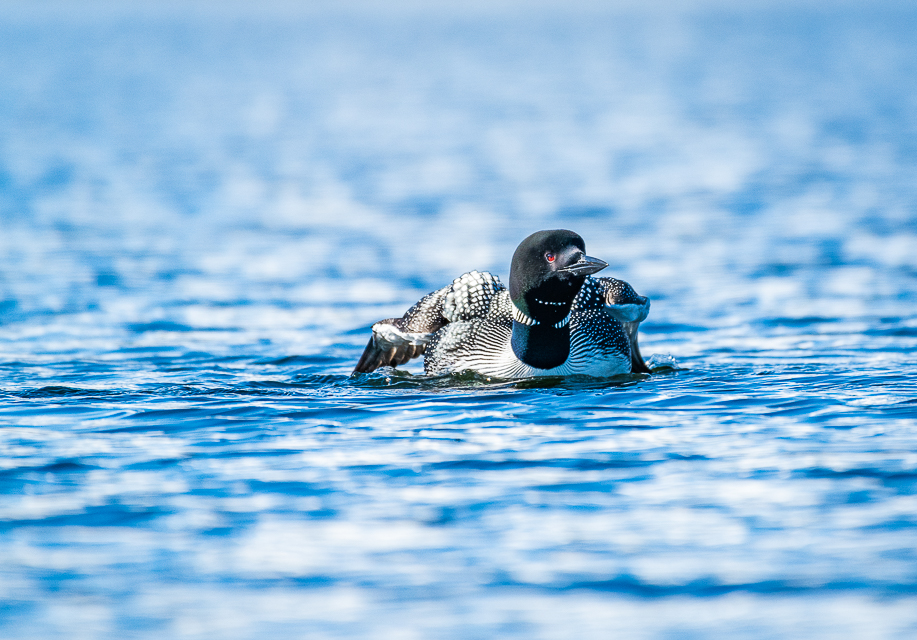
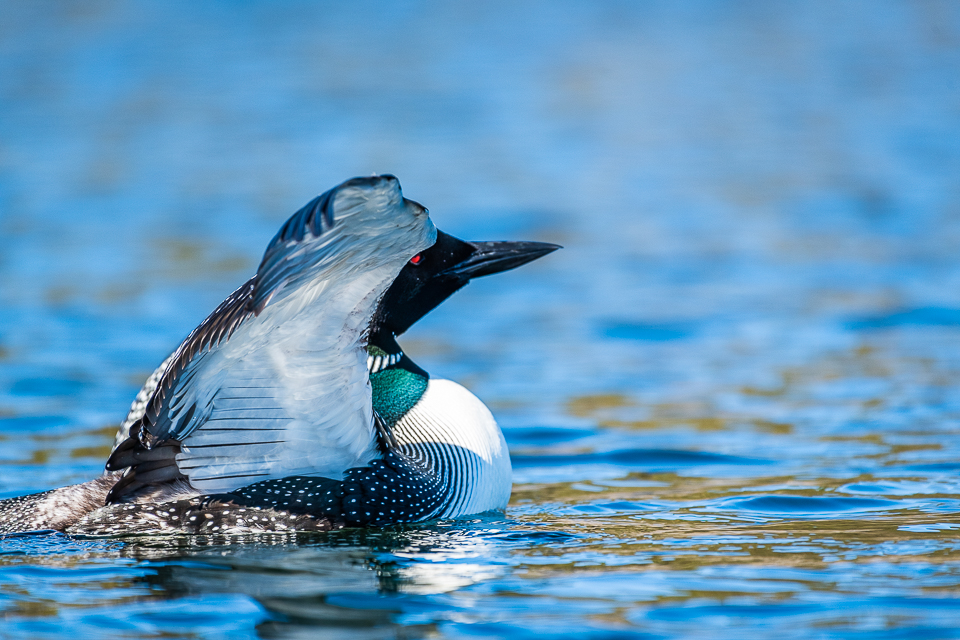
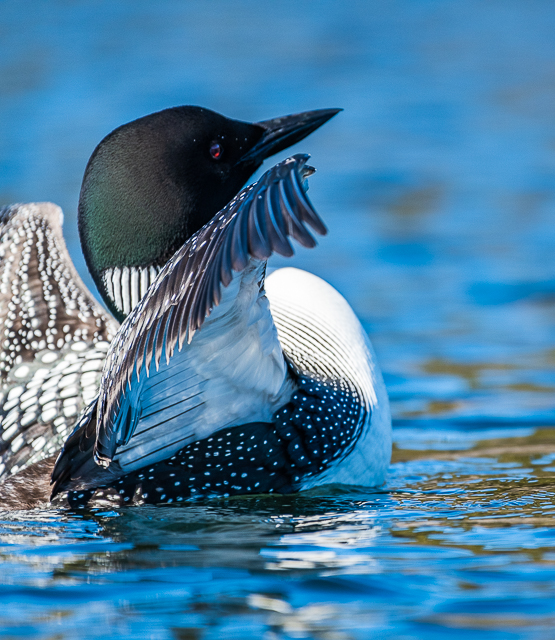
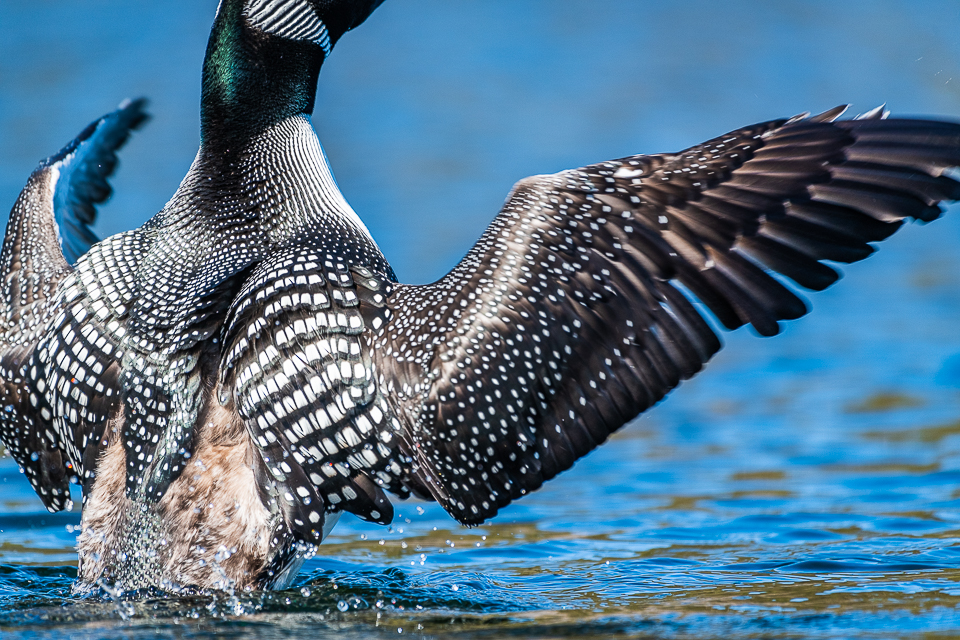
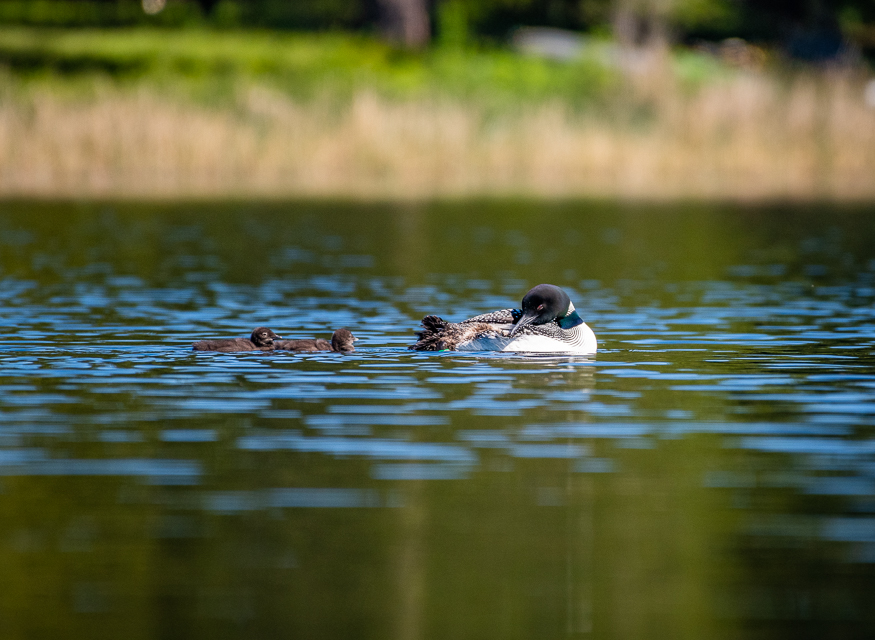
An interesting posture.

The fishing line cups the chin and is harder to see at this point.

You can see the line in this image and the next one too.

Loon babies

Loons are heavy with solid bones to help them dive for fish. This makes it harder for them to fly so they need to circle a small lake this several time before gaining enough altitude to clear the trees.


























 My Everyday Photos