Skip navigation

Tag Archives: loon photography

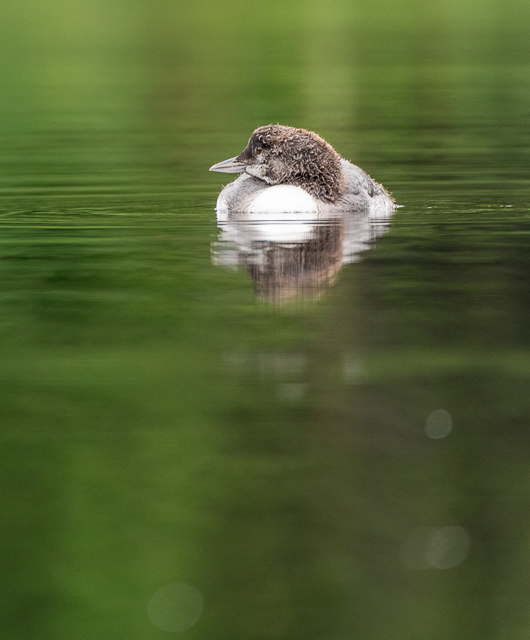
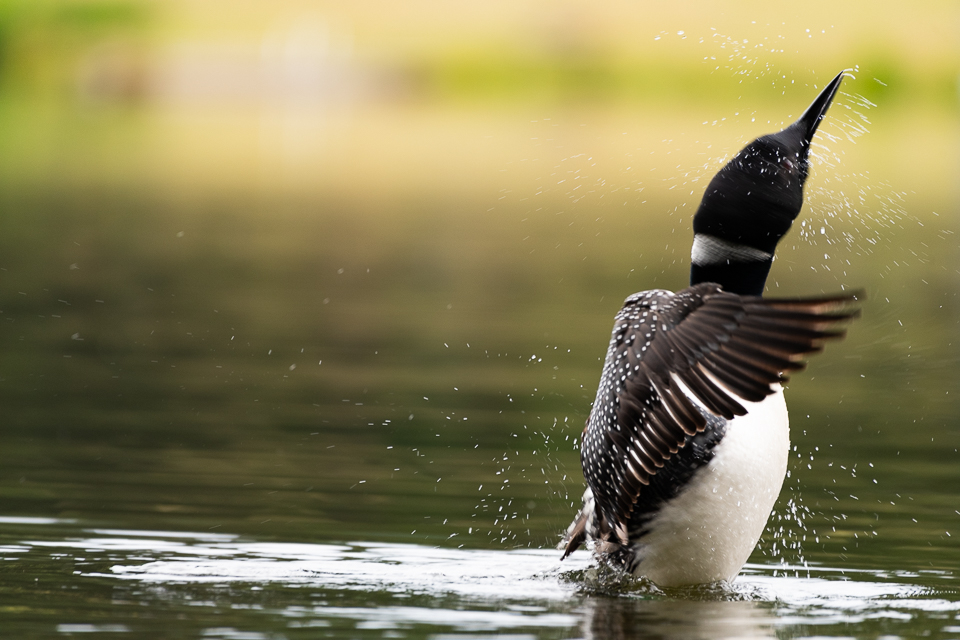
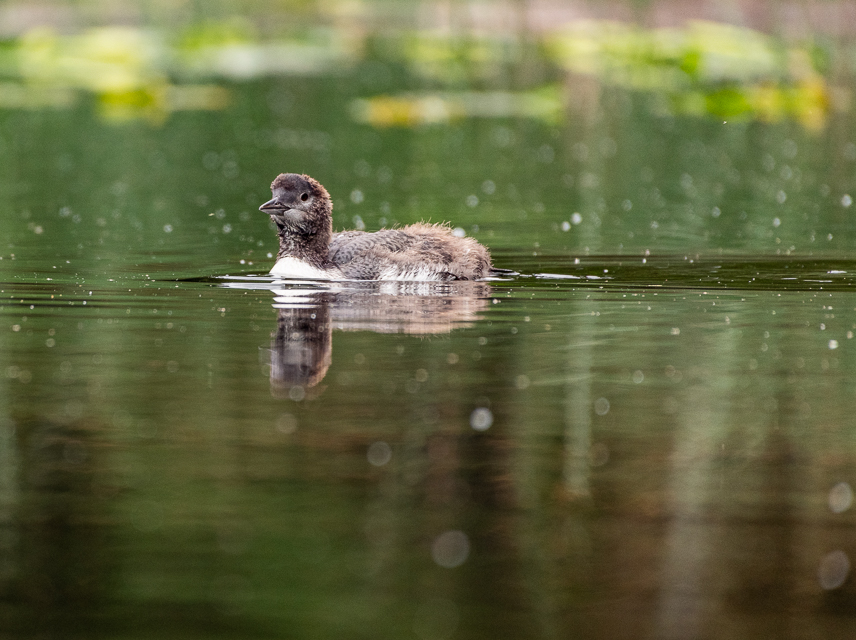
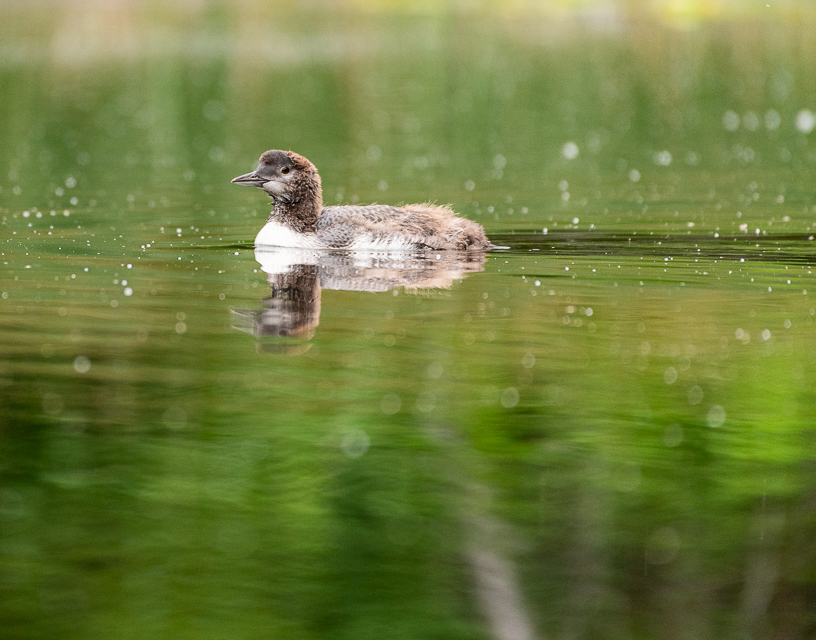
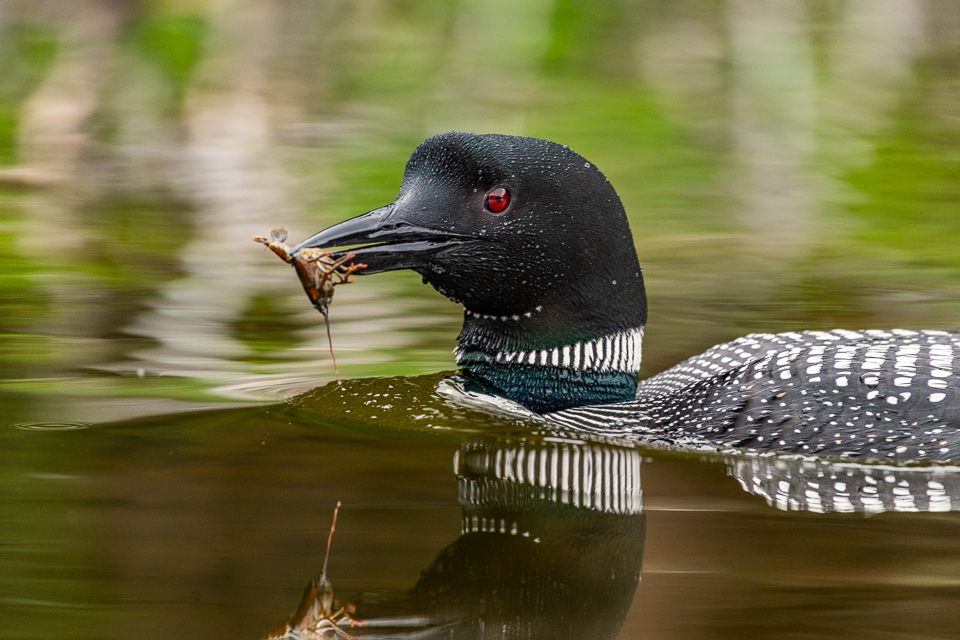
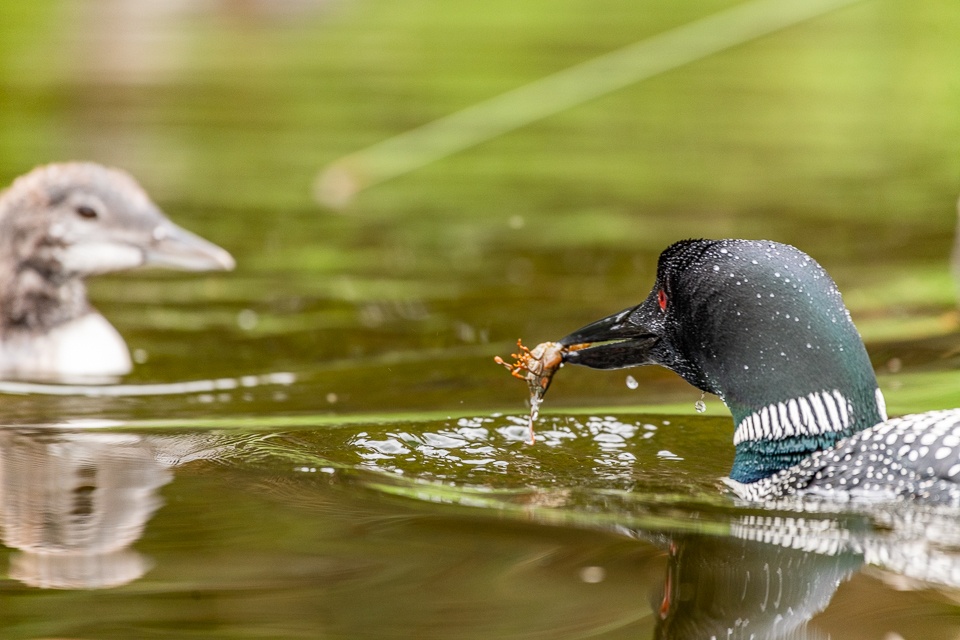
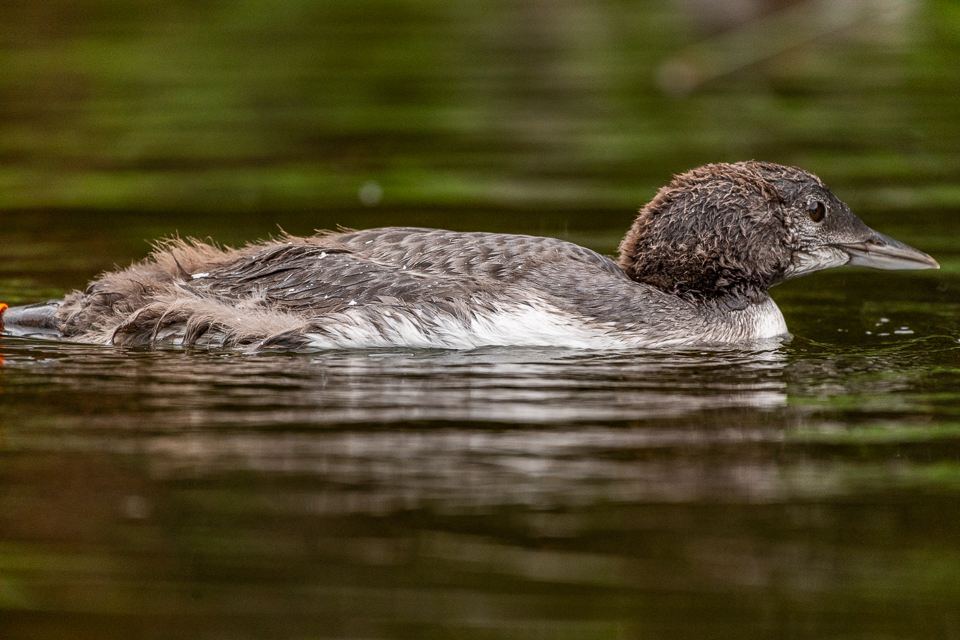
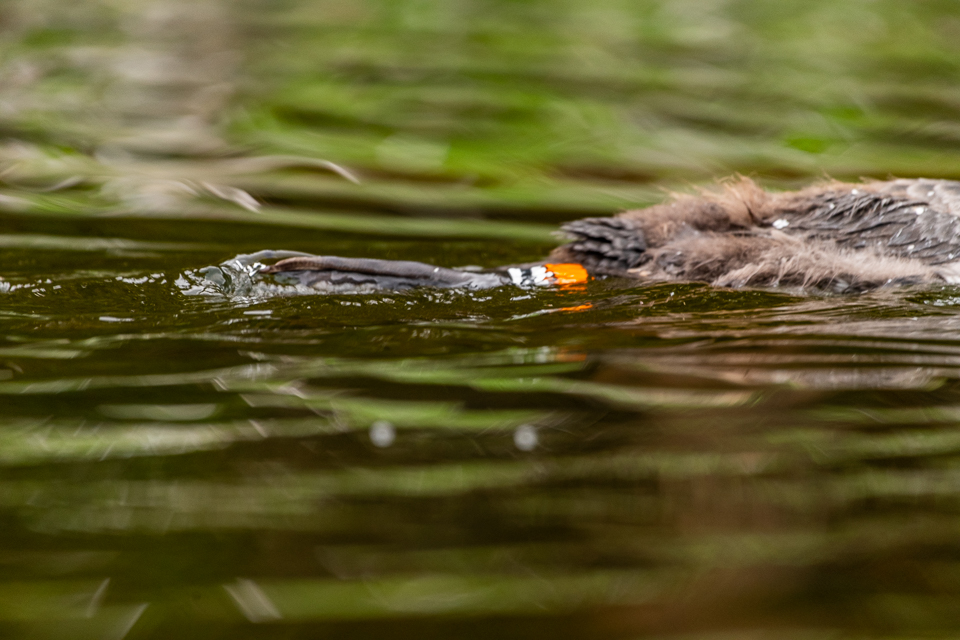
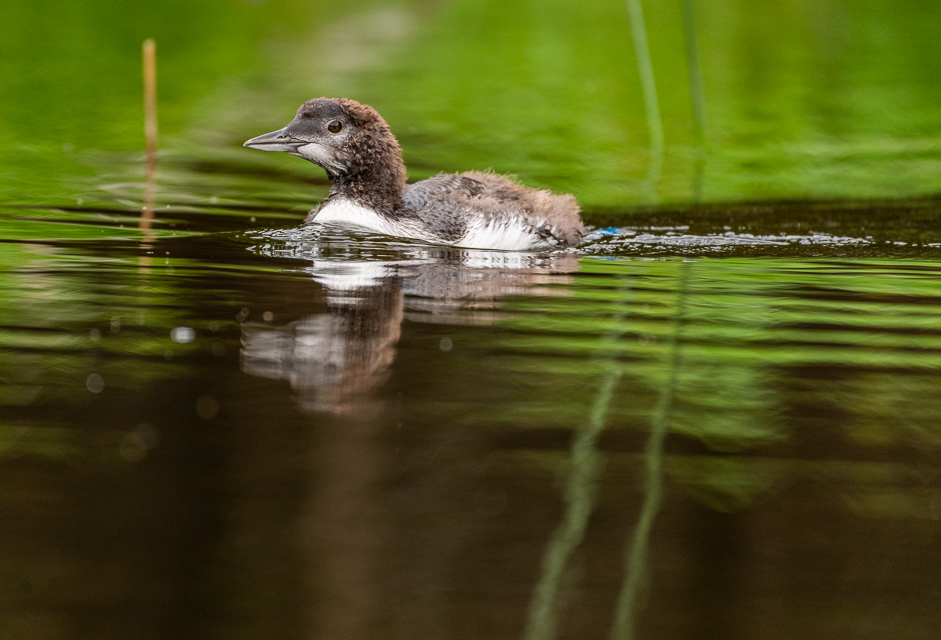
Last week, I had a chance to see the loons that I photographed early in July. The youngsters are growing up fast and growing some basic feathers. They have lost the soft gray look they had just weeks before. Now they are a bit scraggly looking but you can see that they are beginning to resemble their parents in winter plumage. The parents spend hours everyday searching for food for the little ones. They mostly seem to eat crayfish (crawdads) and occasionally a little fish. It takes a lot of little meals to fill these kids’ bellies. The youngsters are learning to dive and swim underwater. Soon they will have to feed themselves and learn to fly. They will migrate to the Columbia or perhaps the ocean and the young ones will return in three years to set up their own territories and hopefully nest, and produce a new generation. And like their parents, the young loons now wear four leg bands – three colored ones and a metal one – so that when they are seen again, they will be recognized. If you ever see a loon with color bands, try to remember the sequence of the colors on each leg. You can report the band information to the USGS banding lab.
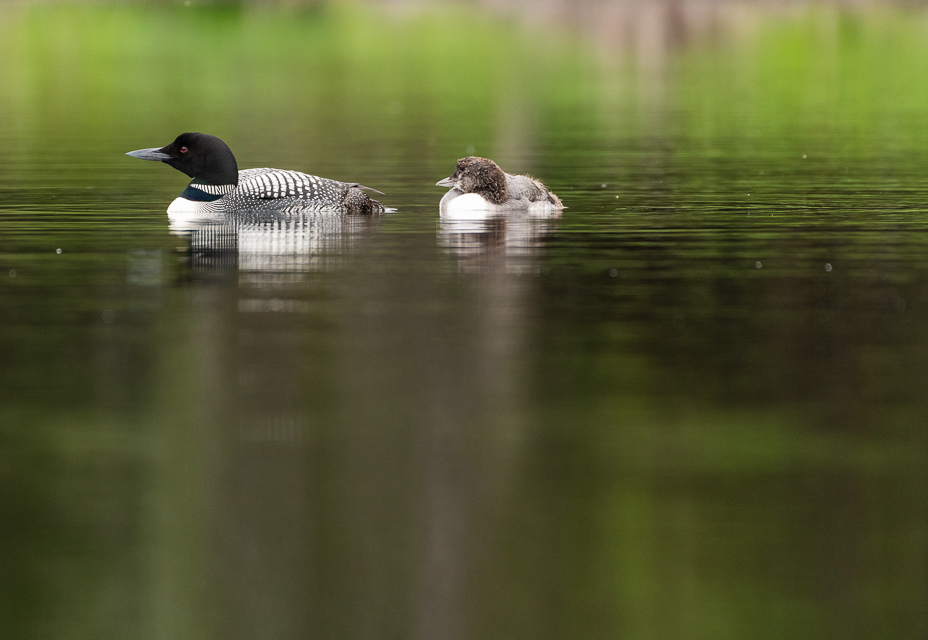
I photographed this pair last month when they were still on a nest. Presumably, at that time they had one or two eggs and since then someone did see them with one youngster. However when we were there recently, there were no babies. A Bald Eagle probably took them. It’s hard work to raise kids.
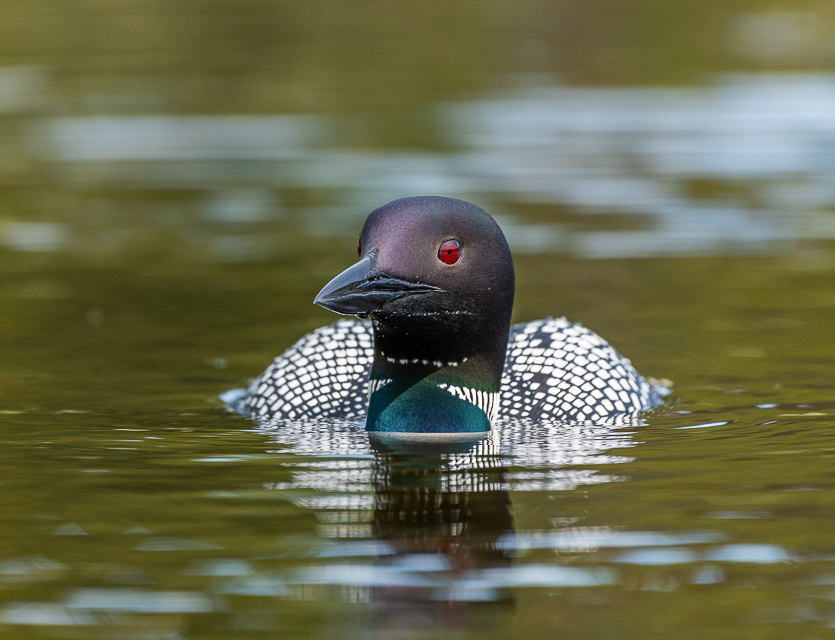
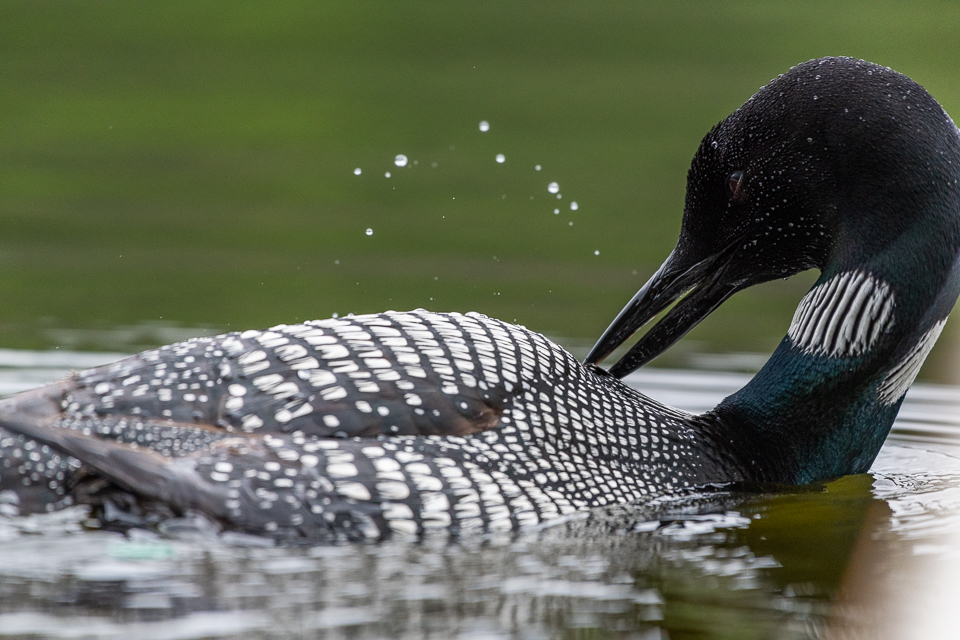
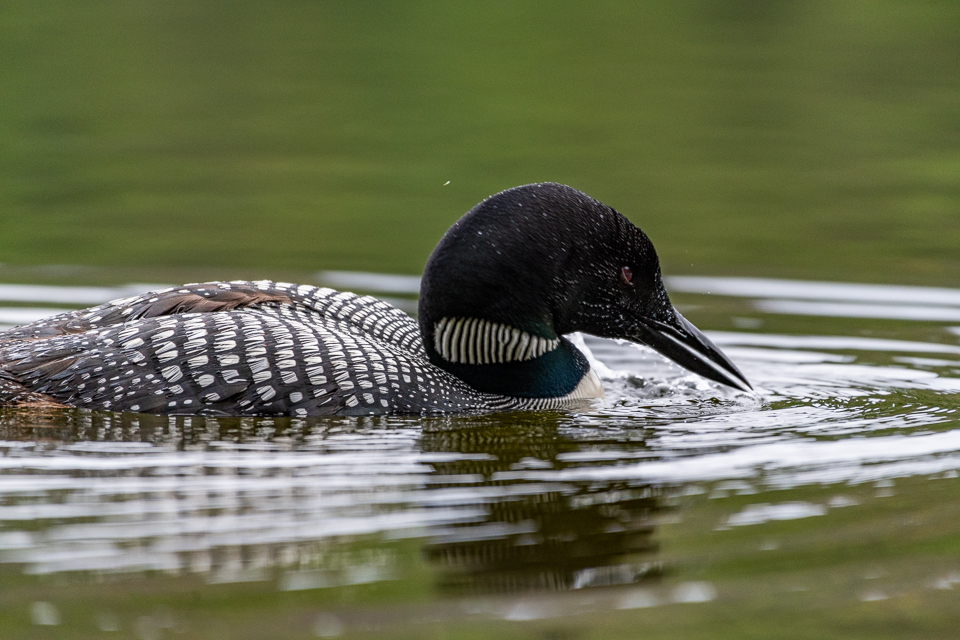
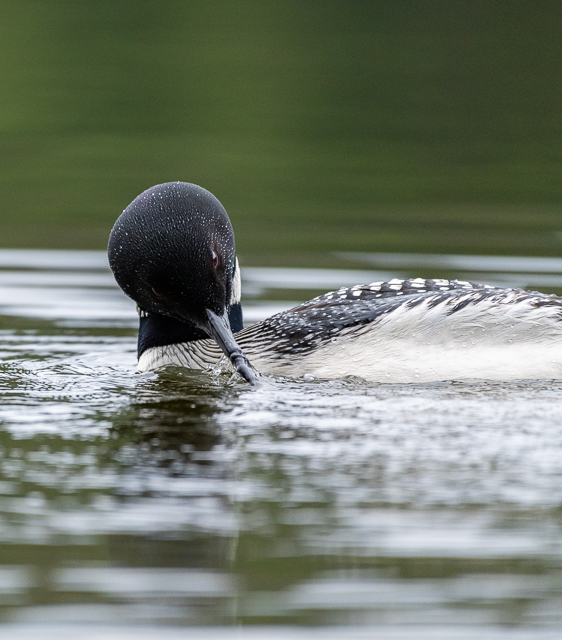
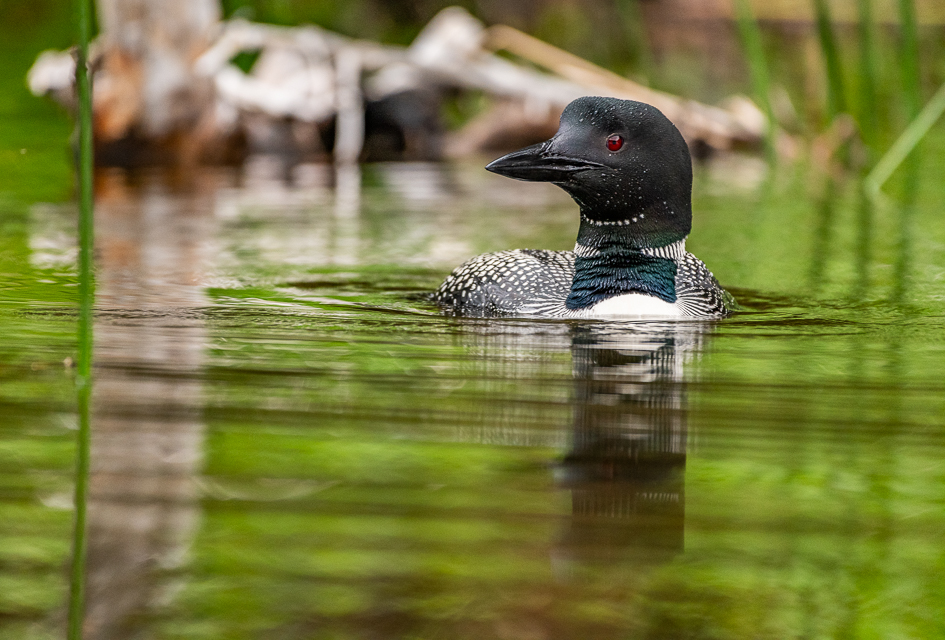
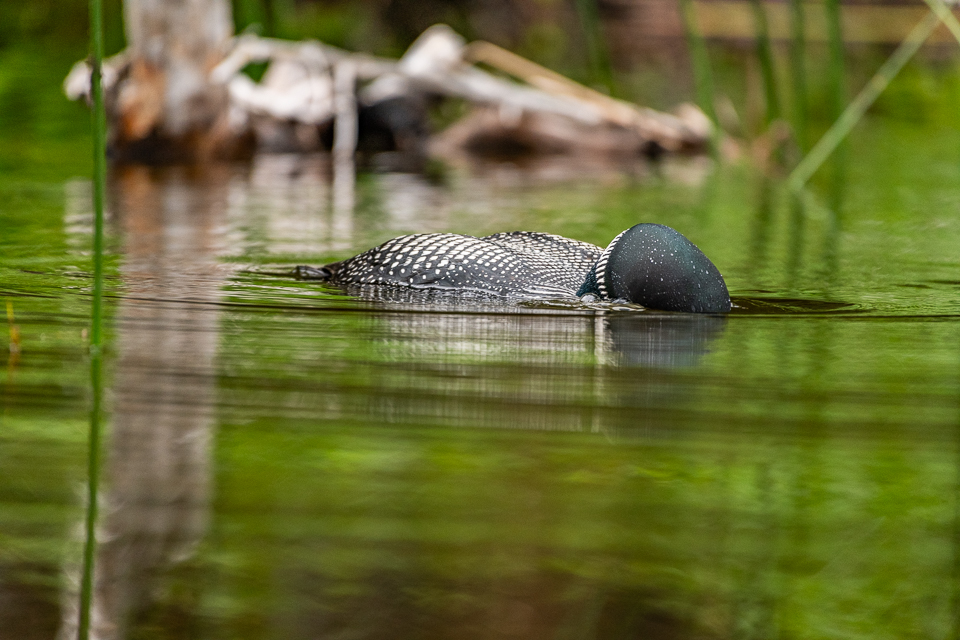
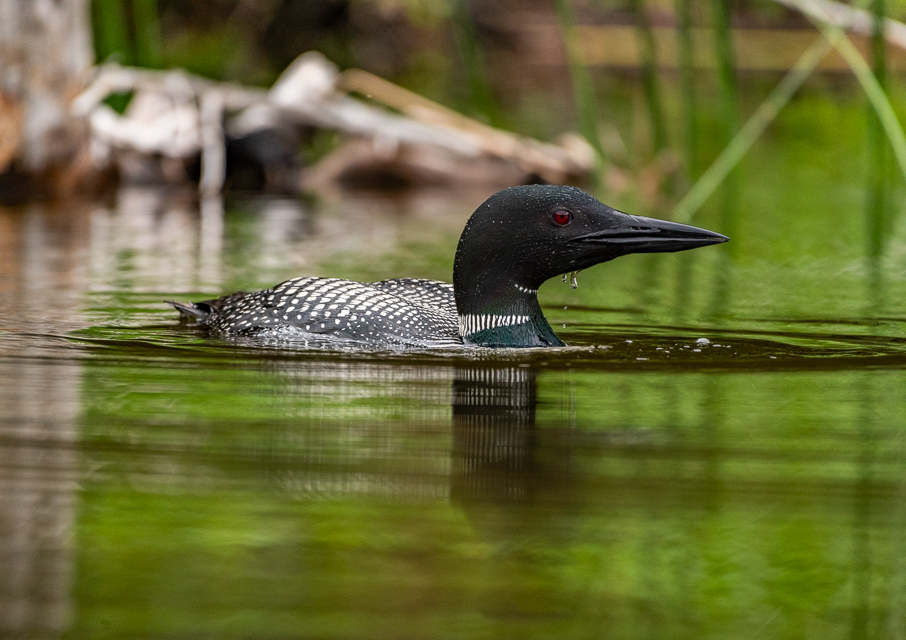
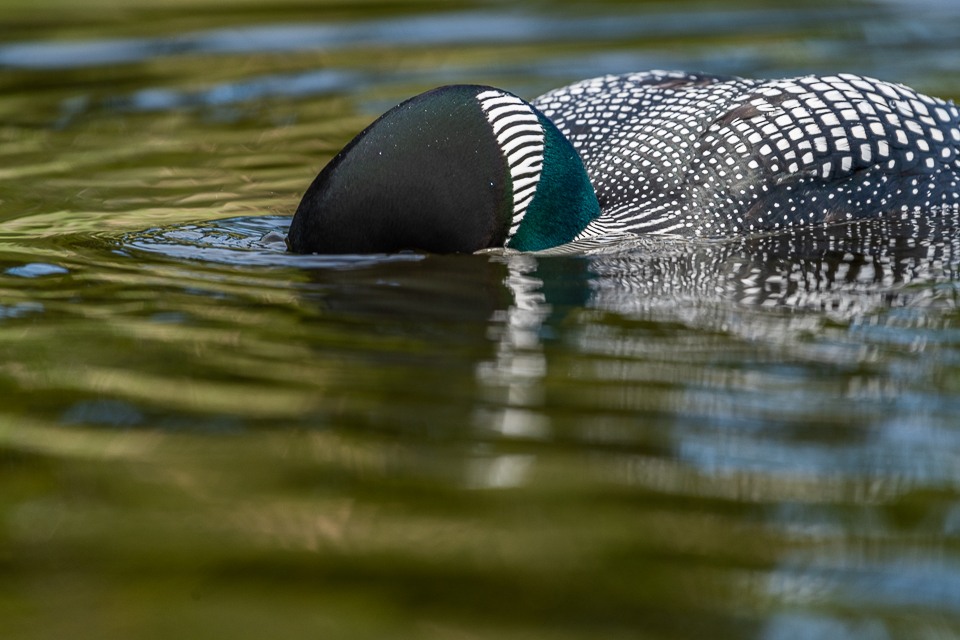
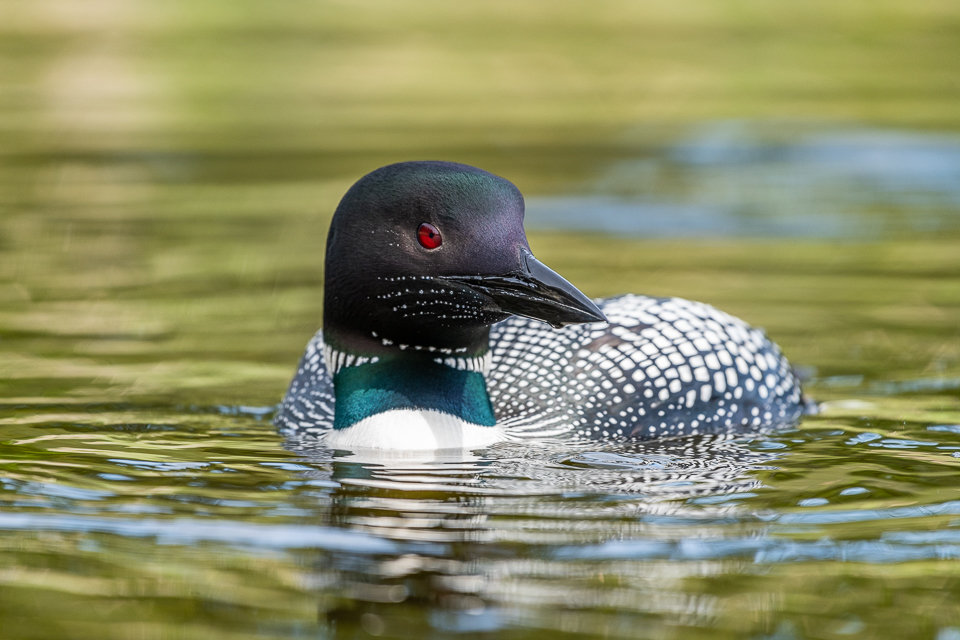
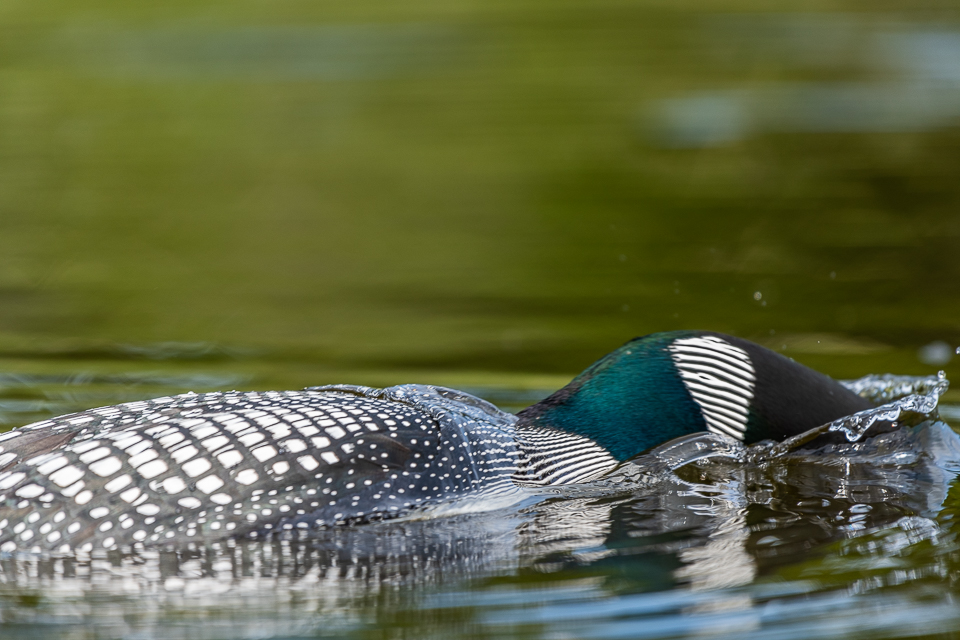
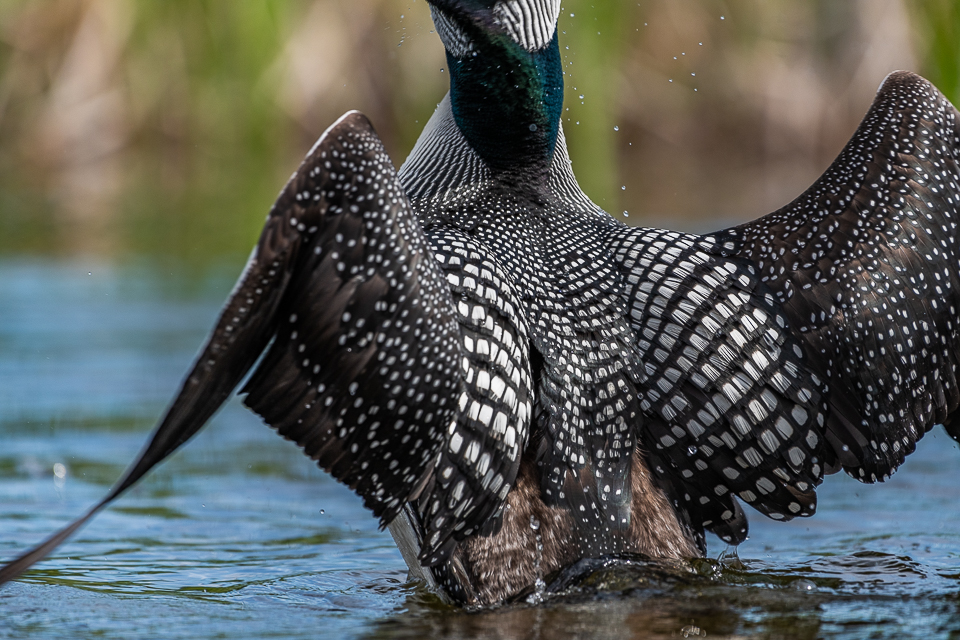
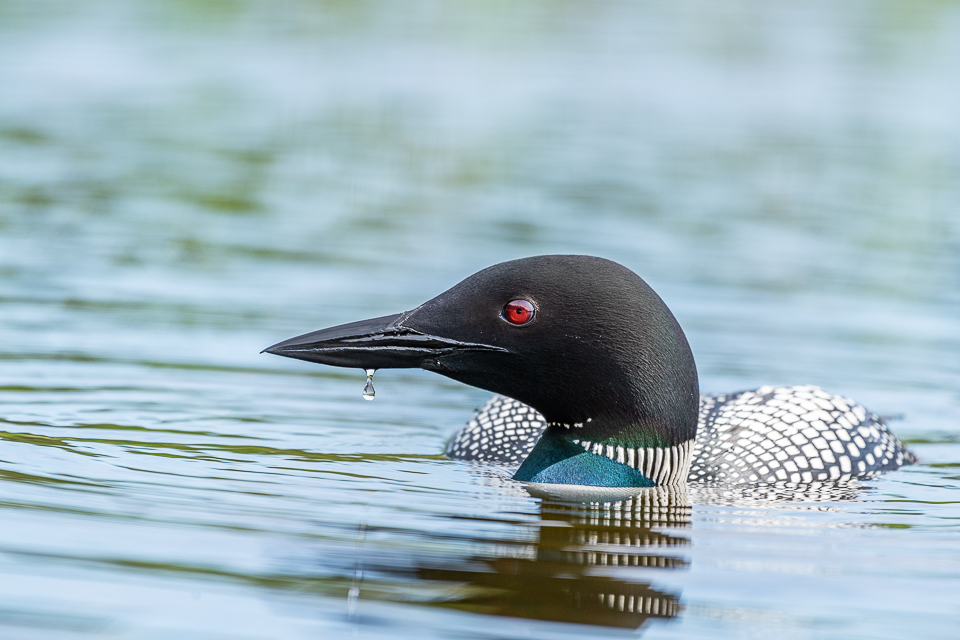
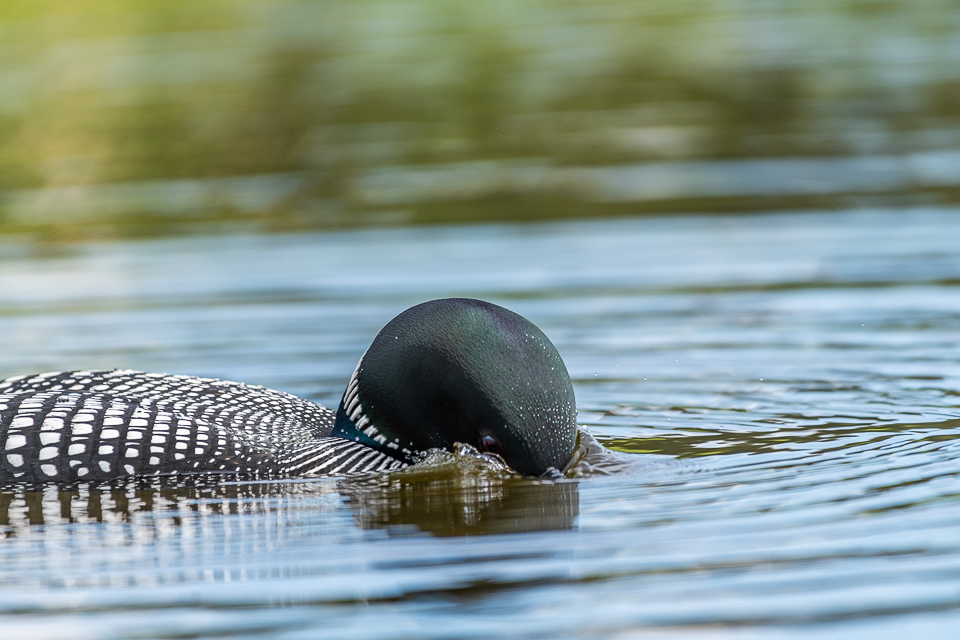
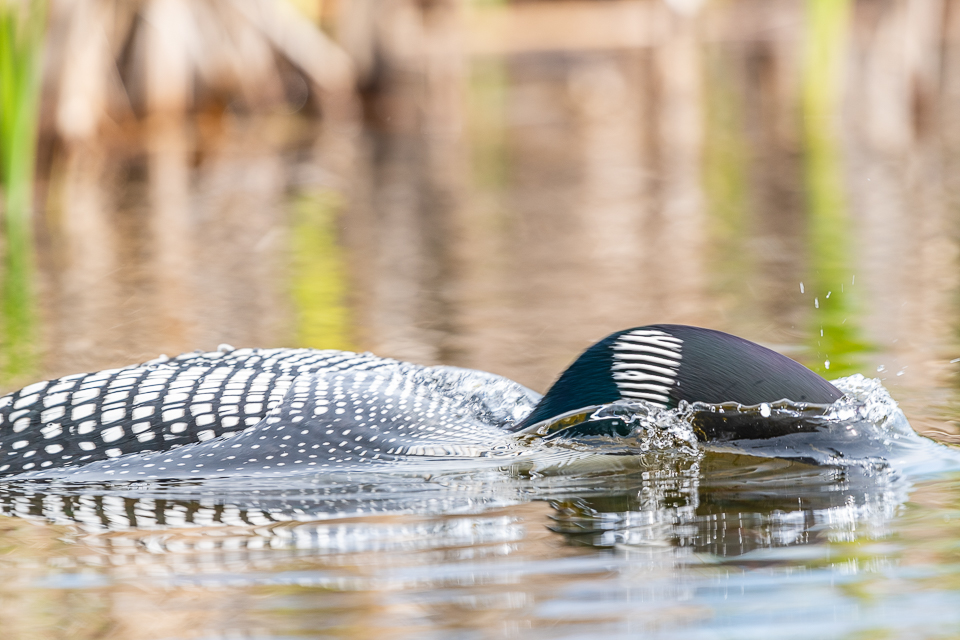
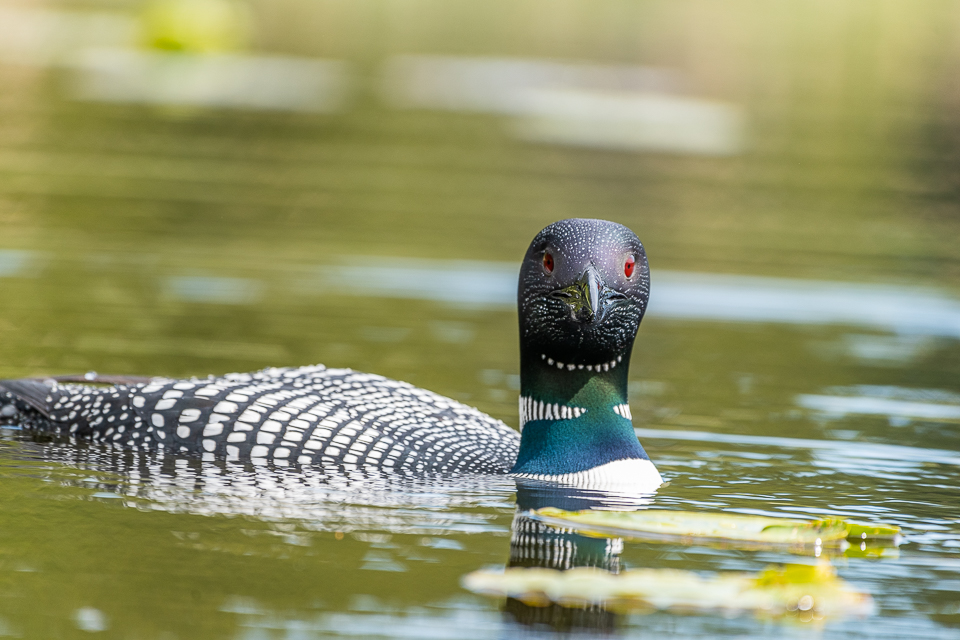
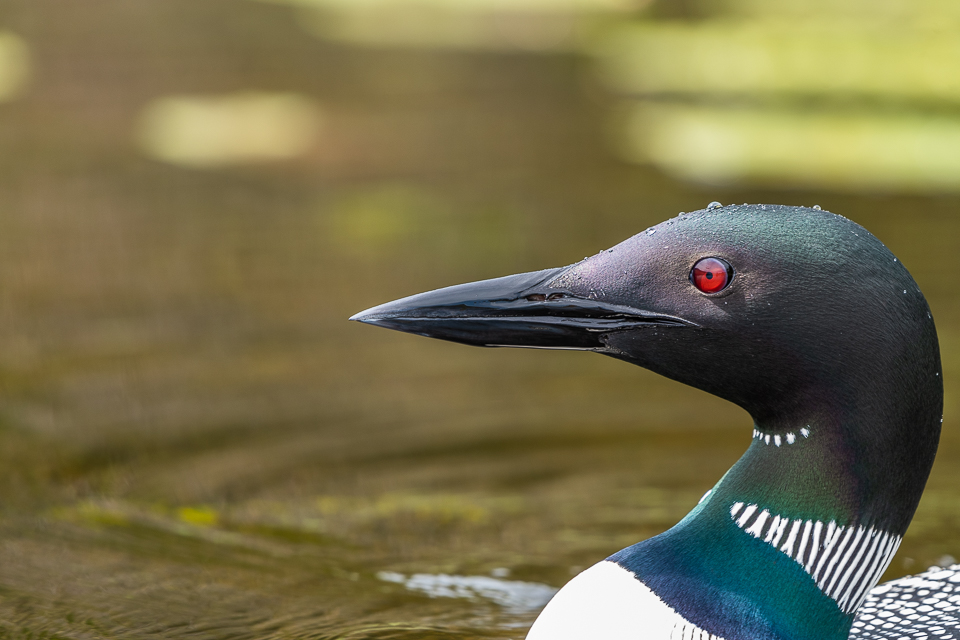
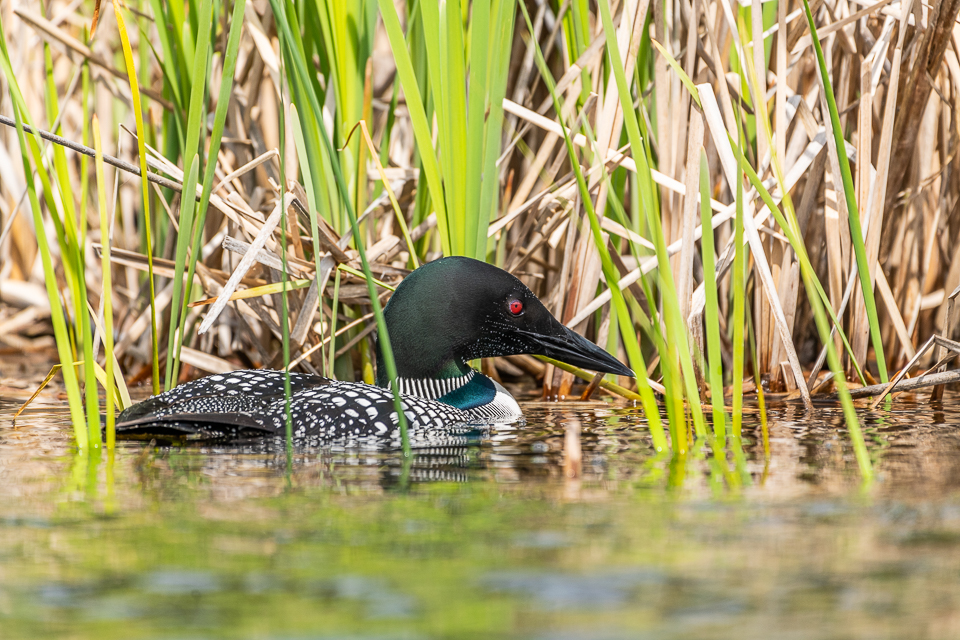
In the first photo, I thought the bird was sleeping but on closer inspection, you can see the red eye watching me. Both birds were resting in the middle of the lake so I moved on in my kayak, looking at other birds and enjoying the day. I paddled back into a marshy area where I often see Ring-necked Ducks and American Coots and if I’m lucky, I get good views of tiny warblers too. This time I found both Common Loons in the shallow water. I kept my boat as still as possible and they both approached me, diving often and popping up in front or behind me. It was exciting to watch them underwater! They never seemed to come up with food so I don’t know what they were doing except maybe showing off? They did not appear distressed and they did not make any calls. They were very interested in a patch of cattails and I wondered if it was even possible that they had a little one stashed in there, hidden from danger but I never saw any movement in the vegetation. Perhaps they were just enjoying a rare sunny spell.

Most of these images are not cropped, shot with a 200-500 mm lens from my boat.