Skip navigation

Category Archives: yellowstone

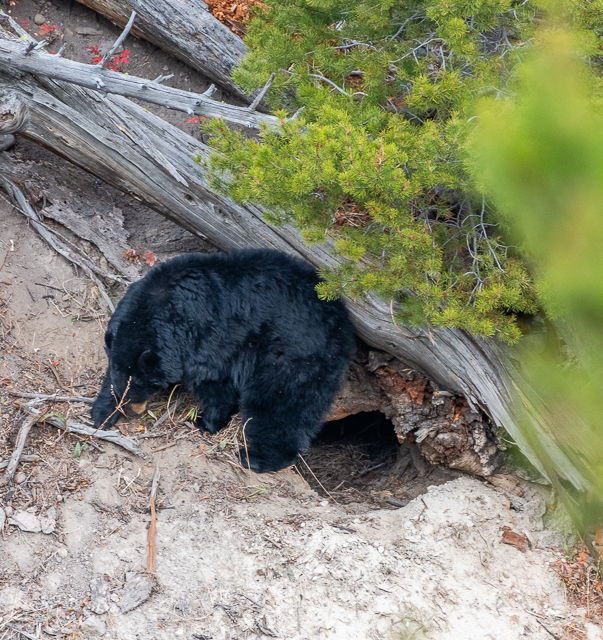
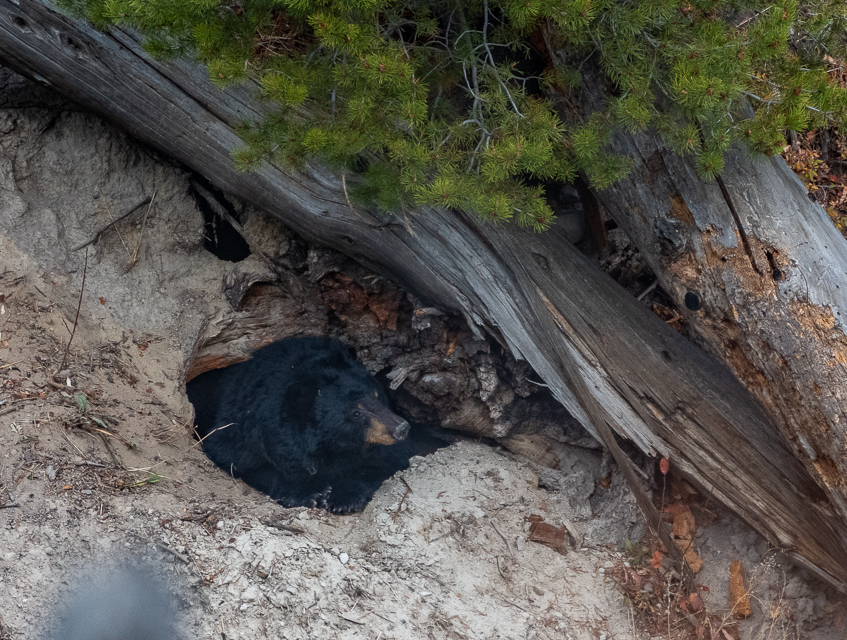
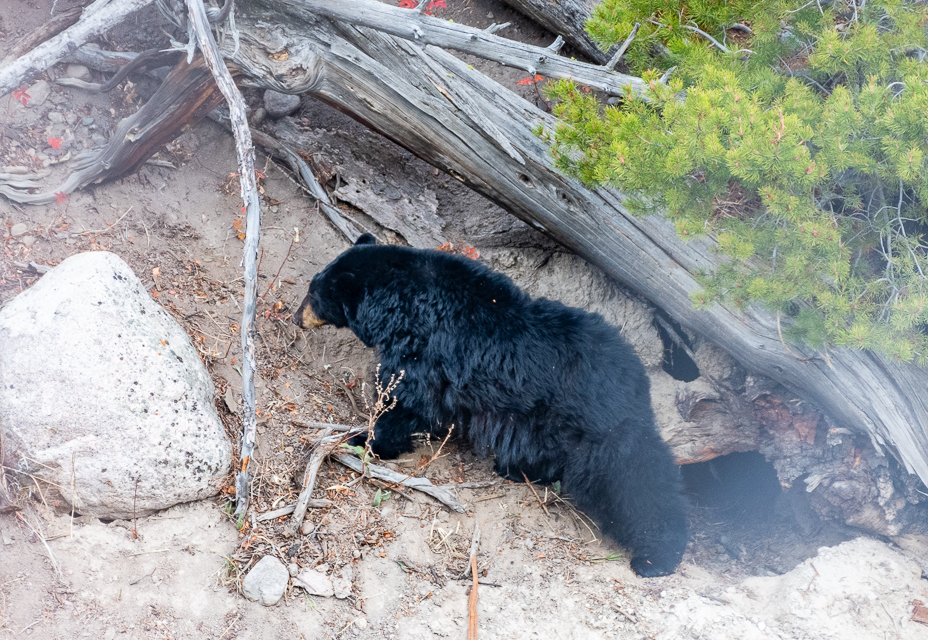
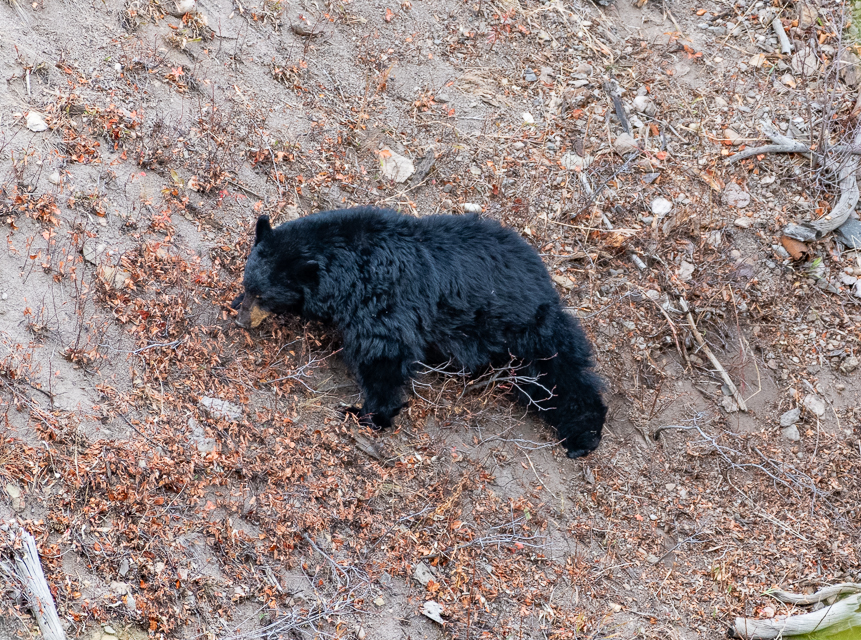
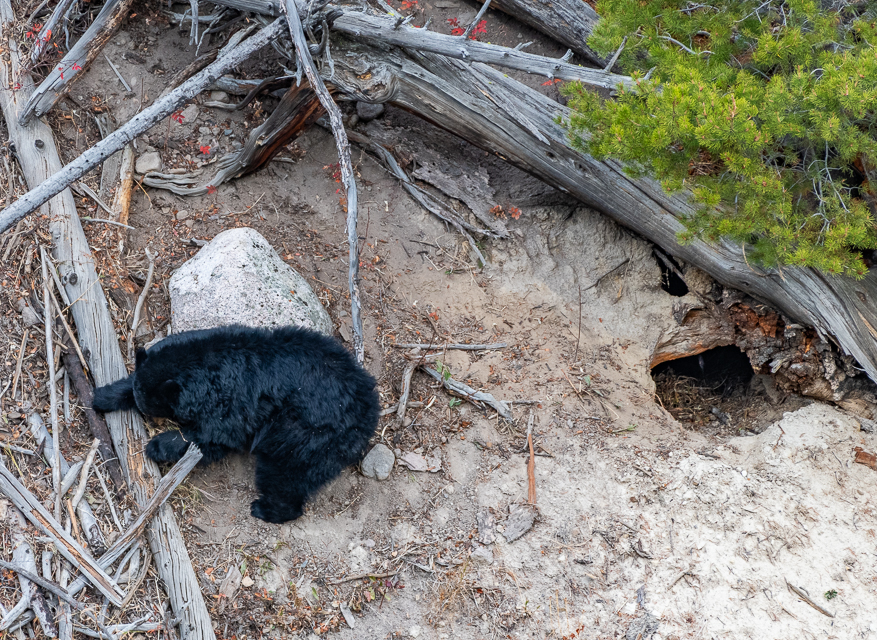
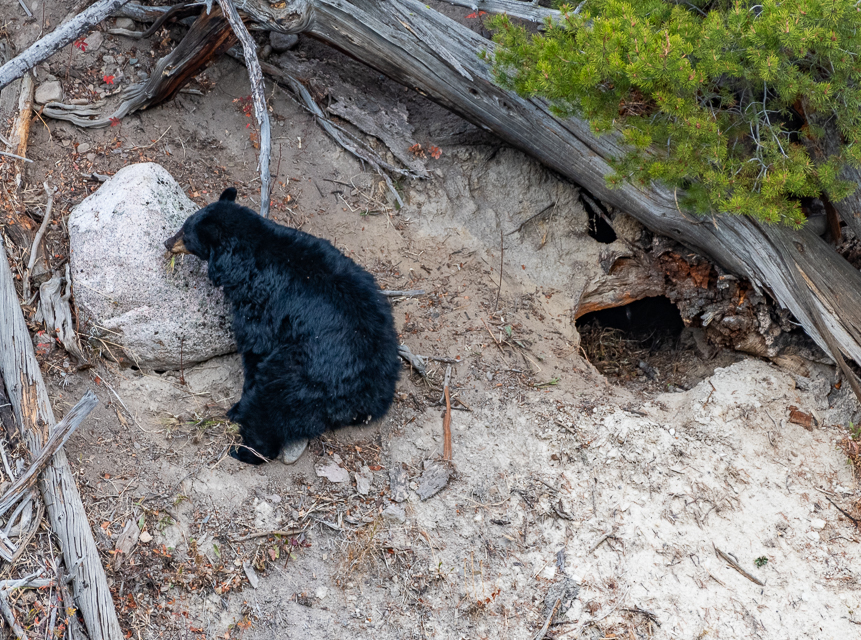
There was one overlook in Yellowstone that was often full of cars. The first time I stopped to see what was attracting people, someone told me there was a black bear in a hole across the way. It was easy to see the hole and sometimes, if the light was just right, I could see bear fur but it took several visits before I got a good look at the bear. And then, on our last day, she was outside the den! People referred to the bear as a her/she so I went along with that. She slowly moved across the ground, scraping dry vegetation that she would collect and drag and then she backed up into the hole, as if she was making a nest for cubs that might arrive in the winter. I’d love to be there next spring when she emerges and maybe get a glimpse of those cubs!

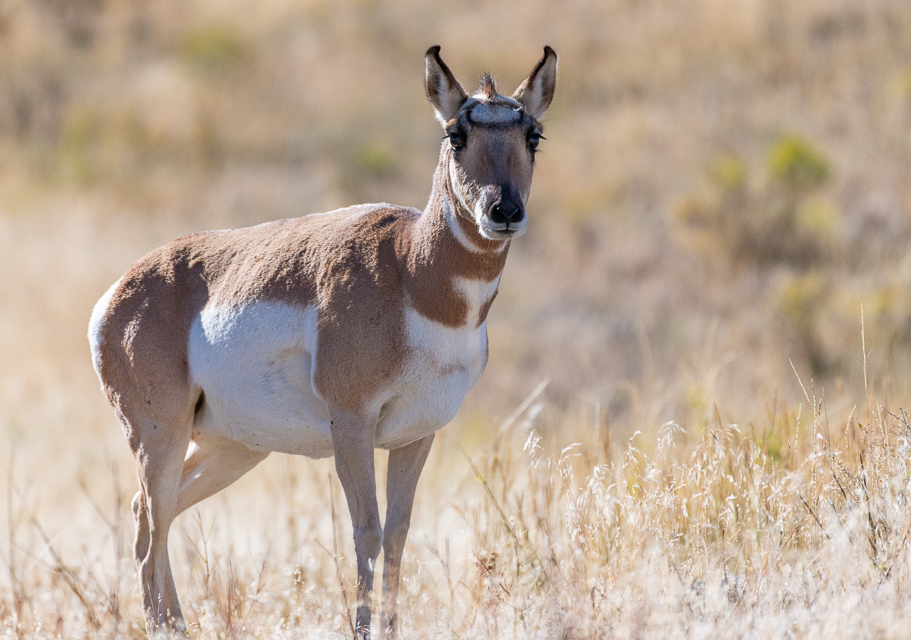
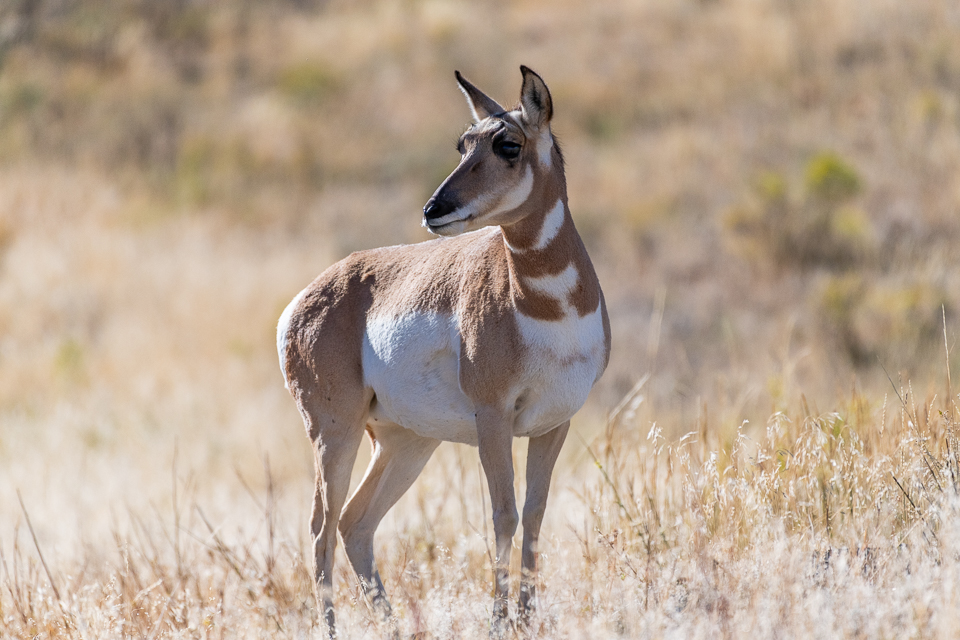
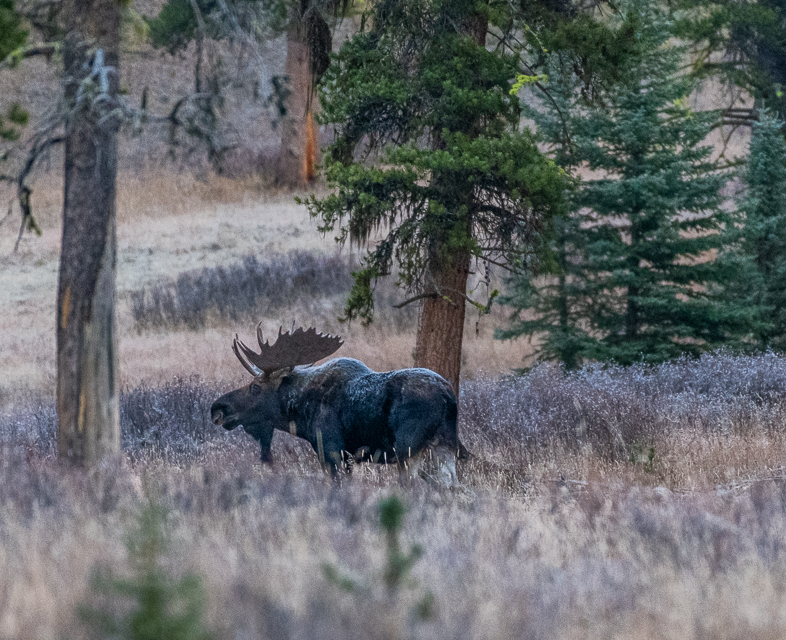
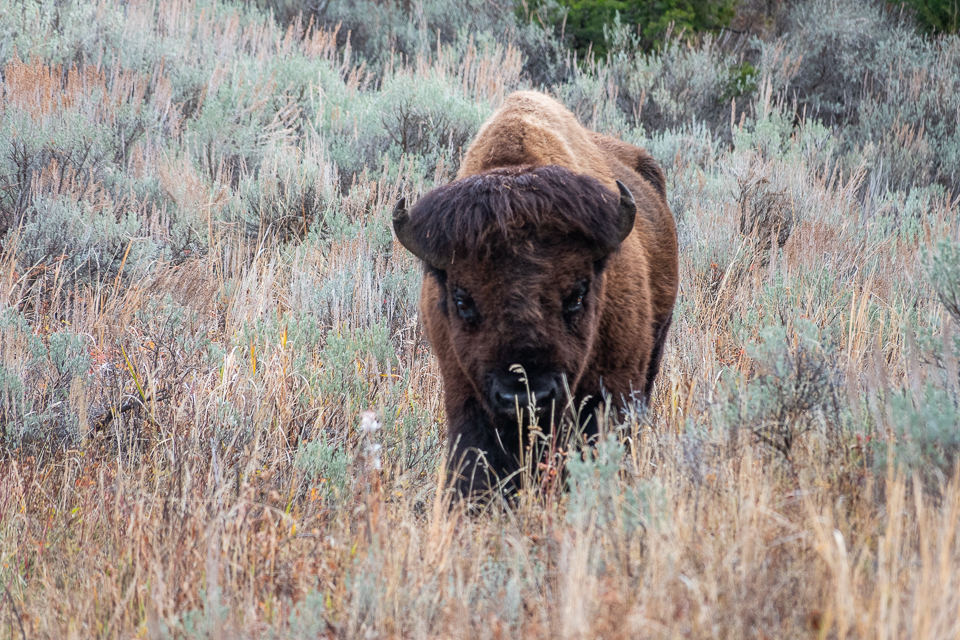
Yellowstone is famous for its wildlife. We drove around and glassed hillsides and watched for animal traffic jams. Some people hire guides (and there seems to be no shortage of guide services) so we watched for their signs too. We saw wolves several times but mostly had distant views through scopes or binoculars. Same with the mountain goats. Bison, on the other hand, were common and often close, too close for comfort. Somehow I missed getting any photos of elk although we did see a lot of them. We only saw two moose and then in the deep dark forest on a gray day. Coyotes were relatively common but generally not in camera range.

Of all the wildlife in Yellowstone, the wolves attract the most attention. There are people that live near the park who go out every single day to watch for wolves with spotting scopes, binoculars and cameras in hand. Most of the those people are incredibly friendly and ready to help tourists like us to find wolves and see them through the spotting scopes. They know wolves by name or number and they know the packs and which ones we might expect to see. Additionally, the National Park Service and Yellowstone Forever have a Wolf Project that started the week we were there and will continue through the month of March. These researchers were also happy to share any info they had about the wolves and other wildlife. We learned a lot while we were there. We also got a healthy dose of patience waiting to see the famous Lamar pack. These animals’ ancestry can be traced back to the original re-introduction in 1995 and 1996.

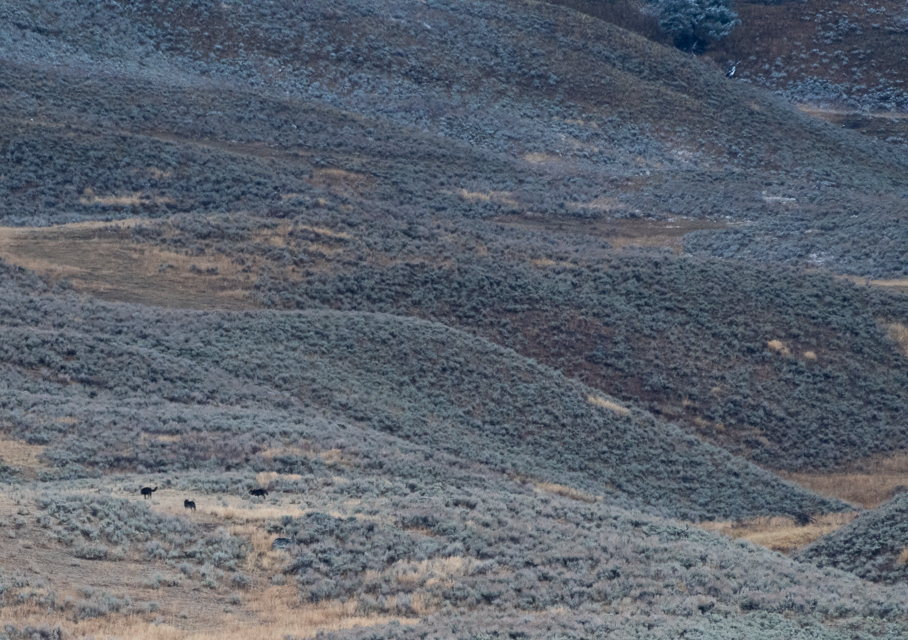
We were thrilled to see wolves hunting, eating, resting, playing and moving across the landscape. Overall we saw four different packs and three wolves from a not yet identified pack. Most of the sightings were through a spotting scope on distant hillsides. The Lamar pack had a carcass across a meadow, estimated at 300-400 yards away from the roadside where we waited to see them for hours. At last, near dusk when many of the wolf-watchers had left, they emerged to eat for a while before melting back into the woods.

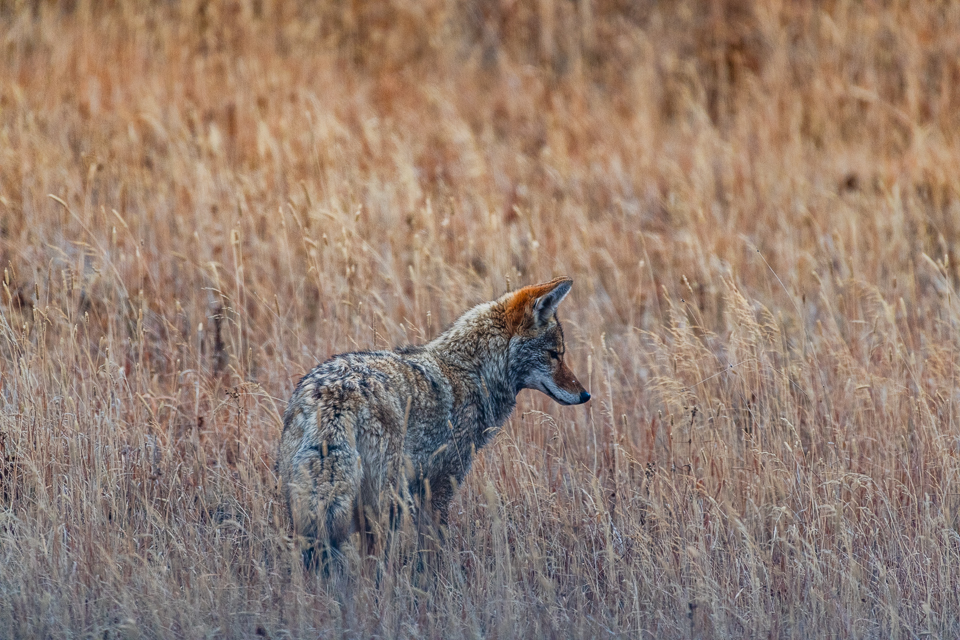
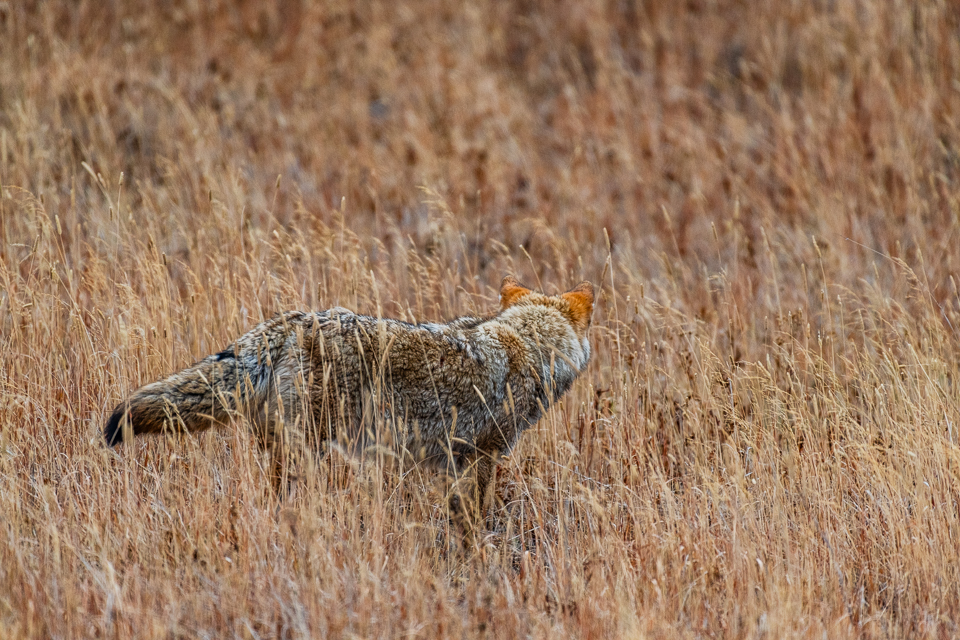
There were lots of opportunities to watch coyotes in Yellowstone. I’ve read that their population decreased after the wolves returned so maybe we were just in the right spots to see them. They often scavenge on remains of wolf kills. There was a dead, probably winter-killed bison near the road and each time we drove by it, there were two or maybe three coyotes nearby.

I like coyotes and admire their tenacity and adaptability. And I enjoy hearing them howl. They live here but since it always seems to be open season on coyotes, they are very furtive and don’t let themselves be seen very often. Who can blame them?

Here are a few snapshots from our trip to Yellowstone. I was struck by the vast vistas and towering mountains all around us. Every time we stepped out of the car, there was another jaw-dropping scene. The weather was mostly cold with temperatures dipping as low as minus twenty at the start of the trip with sunny skies. Later in the week it warmed up to the twenties and even thirties and there was snowfall, heavy at times. But we were prepared with all of our cold weather gear. I found that my feet got cold in the car while I was wearing my big boots so when we’d drive somewhere I’d remove them and keep the blood flowing to my toes. Occasionally my fingers got cold when I was busy looking through the scope or making photos.

We stayed outside of Gardiner for three nights and in Cooke City for two nights. Cooke City is interesting. It is ‘the end of the road’ for the long winter season. The main transportation around there is by snow machine. We were the odd ones out because we like walking! It was pretty obvious that we were tourists.