Skip navigation

Author Archives: Teri J Pieper

What is that saying – all good things must come to an end? Well, our vacation had to end too. If you’ve been following these posts then you can probably tell that it was a memorable one for us. On the last day we walked on the beach one last time and then checked out of the Sandpiper and headed back to civilization. But not before walking on another beach! We went to the south end of Ocean Shores – to a long spit that extends southward into Grays Harbor. It was an unseasonably warm day for the end of March. Snowy Owls spend the winter on this beach and last year reports indicated that they stayed til nearly mid-April so I thought we might have a chance to see them. I was not SO optimistic that I carried my big camera and long lens though. That was a good indicator that we would see something interesting. And indeed we did – three Snowy Owls and a Short-eared Owl! What fun.
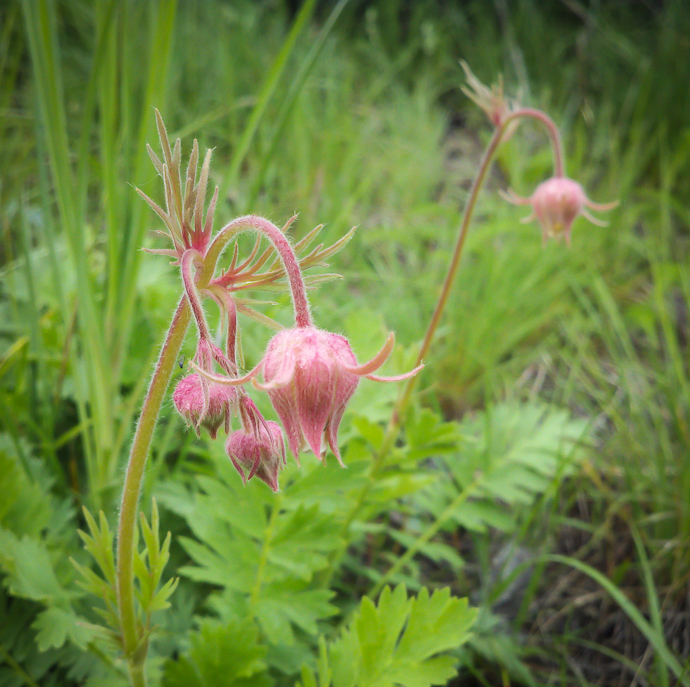
Can you see the Snowy Owl flying through the beach pines?

P1060358


There are two owls in this image – the close one on the right and another on the far left that shows as a white spot

P1060367


Our state capitol surrounded by cherry blossoms

P1060374


And magnolias

P1060383


Close-up of the cherry blossoms

P1060387


It’s time to go now dear

P1060384


A lucky thing happened last month. There was a razor clam season during our vacation! Razor clams on the Washington Coast are carefully managed by the Washington Department of Fish and Wildlife. If you want to know how they manage the seasons – read this. As far as I know razor clams are limited to the Pacific Northwest up through Alaska. They are considered a delicacy – a delicious clam for frying, baking at high heat and chowder. Unlike a traditional clam, they are rectangular – long and kind of flat looking. They are also strong diggers so when you are digging for razor clams you are also chasing them as they dig down into the watery sand. It’s quite fun! The seasons are limited to the lowest tides of the month and often times those tides are at night. The only other time we got to dig for them was in December a few years ago, after dark and the temperature hovered near freezing. It was quite the adventure but we were able to get our limits (fifteen per person per day) and our taste for them was whetted.

Razor clam digging seems to be tradition passed down from generation to generation. We noted many families with grandparents, parents and kids all digging and having fun. Dogs too!


The view from our room as the dig got started before the tide was all the way out

033013_0350


Heading to their spot on the beach

033013_0356


It can be a dirty job and proper clothing is important. Some people like this fellow, use shovels.

033013_0361


Even with hundreds of people on the beach, it doesn’t seem crowded and there were lots of clams for everyone

033013_0365


Dogs like it

033013_0366


This dog looks like he wants to help

033013_0368


This young man was clamming for the first time

033013_0371


He was happy to show me his biggest clam

033013_0376


Some people work alone

033013_0379


A couple of clam guns. To use this device, you look for a clam show – a small dimple in the wet sand – and then carefully angling towards the ocean you center the cylinder around the ‘show’ and then push it into the sand. There is a tiny hole that you cover with your finger as you pull the gun, now loaded with wet heavy sand, out and with any luck, the clam will be in that sand. Or not. You may have to repeat. Or you may have to reach down in the hole and grab the clam as it tries to dig away from you.

033013_0382


Classic digging style

033013_0386


The tide will come in and all traces of the digging will disappear.

033013_0387


They are using the team approach

033013_0392


This dog was wet and dirty

033013_0407


Family fun

033013_0408


Another group heads out

033013_0411


Now that we have our limit, what do we do?

P1060165


Cleaning clams is the hard part

P1060185


The clam and fish cleaning shack

P1060186


How much fun can you have at the beach? Since we rarely get to go, we managed to have LOTS of fun and even more fun when our friends and their dog joined us from Olympia!


Here’s Ken outfitted to catch sand shrimp

032813_0555


There’s one!

032813_0560


Up close with a sand shrimp

032813_0558


Gulls are always close by, hoping something good to eat will be left behind

032813_0581


Betty and Gregg join Ken in his quest for sand shrimp. The tire tracks are from people digging razor clams earlier in the day.

P1060170


Dixie wants to be part of it

P1060178


Sand shrimp are used for bait to fish for surf perch. Dixie is making sure Ken is doing it right

033013_0415


Fishing

033013_0442


An intrepid angler!

033013_0428-2


Crows also wait on the beach

P1060136


Dixie is looking for one of her peeps

033013_0514


Dune grass

032813_0550


These volcano-like depressions are from sand shrimp

P1060350


Sand dollar

P1060332


Razor clam shell

P1060329


One of many creeks

P1060145


Another great day at the beach

P1060131


P1060142


Lots of kites

033013_0412


This one was attached to a log and flew by itself all afternoon

P1060244


We had fun with this kite

P1060247


At sunset, it’s time to put it away

P1060250


Gregg painted

P1060251


Betty danced

P1060268


Good times with good friends

P1060282


The end of another beautiful day!

P1060304


There are a series of numbered beaches in the Olympic National Park. I have always wondered why they did not have proper names. The beach at LaPush is First Beach. The next one to the south is Second Beach. And then there is Third Beach. Imagine that. Getting to Second and Third Beaches requires a hike through the coastal rain forest; about 3/4 of a mile to Second Beach. The great thing about that is that fewer people visit these beaches and it’s possible to have a level of solitude not available at the beaches with parking lots right next to them. And fewer distractions like litter and ATV’s.


Trail through the forest

P1060047


Trillium

P1050978


P1050979


On the beach

P1060020


Erosion from centuries of waves

P1060011


Sea weed growing on the rocks

P1050987


Sea star and anemone

P1050984


Sometimes the sea stars are in clusters

P1060013


Sea anemones

P1060019

Mussels attached to rocks

P1050995


Ruby sands

P1060030


P1060034


P1060006


P1060005


P1060007


It’s hard to leave such a beautiful place

P1060037

According to the Olympic National Park website, the rain forests of the Olympic Peninsula are some of the most spectacular examples of primeval temperate rain forest in the lower 48 states. These rain forests once stretched from southern Oregon to southeast Alaska, but little remains outside of protected areas. The region gets 150 inches of rain every year and with moderate temperatures trees grow amazingly big. And there’s not just trees. Shrubs and ferns and fungi of all types are prolific and often seen growing out of trees and dead logs. Some logs are known as ‘nurse logs’ and support an entire group of trees and other plants. We spent part of a day in the Hoh Rain Forest and were also able to explore a bit of the rain forest near Crescent Lake and along the coast.


P1050794


Maple trees

P1050825


Mixed conifers

032613_0086


It’s a long ways up there

032613_0083


Alders growing close to the river

032613_0211


Another gnarled maple

032613_0116


Nurse log

032613_0117


We walked this trail

032613_0078


I don’t know if these are mosses or something else?

032613_0175


Moss spores

032613_0162


And lichens on an old fence

032613_0112


032613_0076


Ferns grow everywhere!

032613_0118


Out of tree trunks

032613_0124


Way above me

032613_0128


And out of a small branch

032613_0104


This tiny mushroom was barely an inch tall

032613_0134


Lots of big three-leaf clovers

032613_0146


Skunk cabbage grows and blooms where there is standing water

P1050783


P1050973


A tiny blossom – possible another berry?

032613_0094


032613_0194

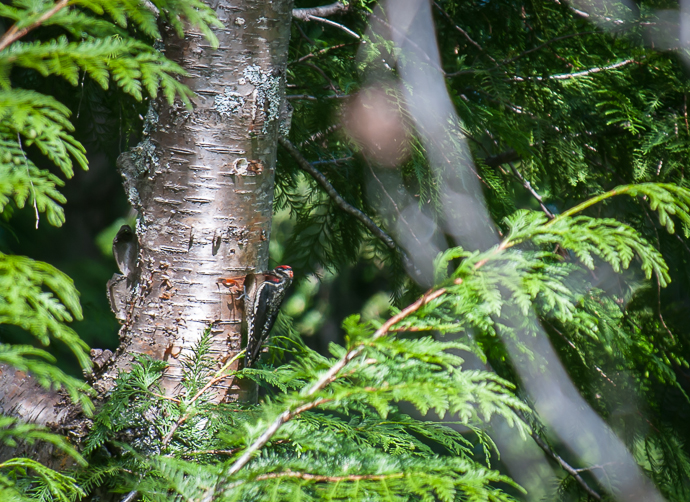
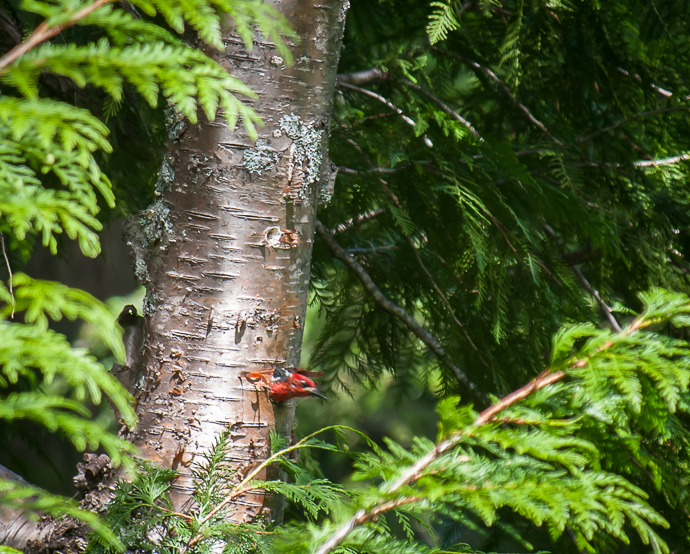
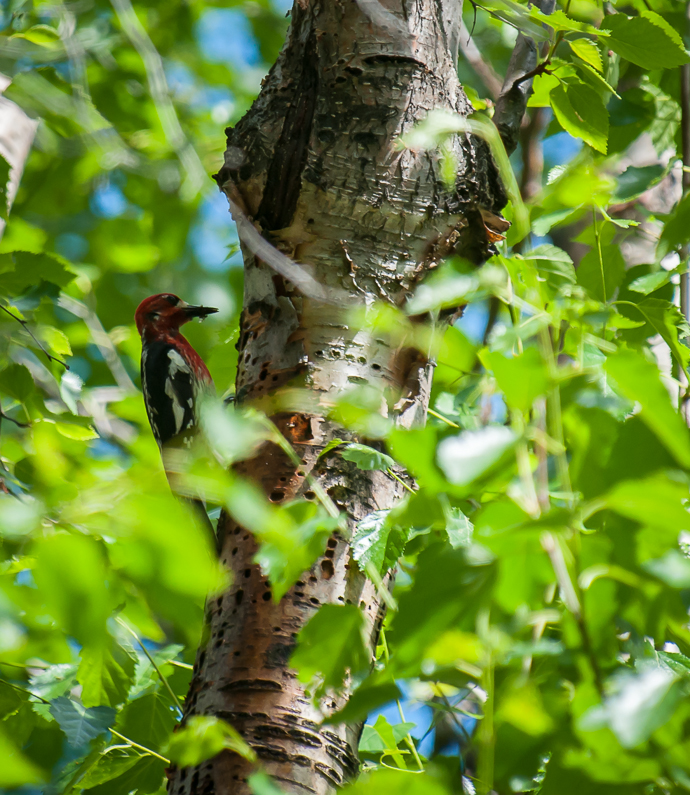
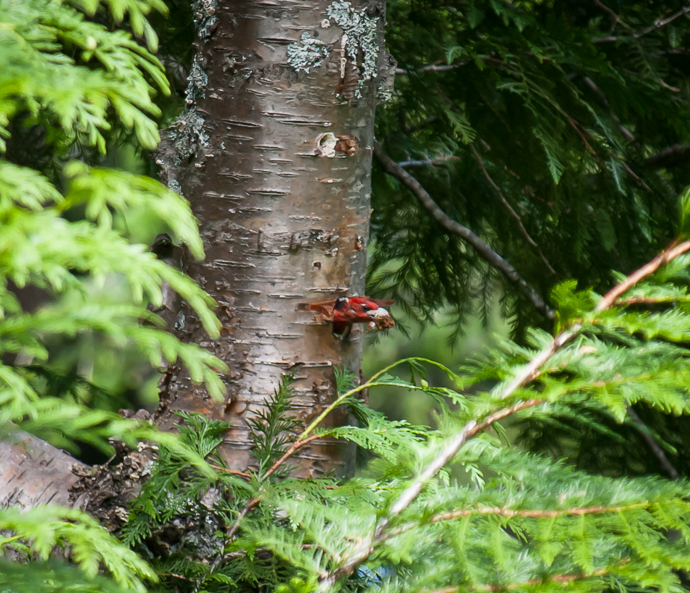
Sapsucker holes

032613_0190


Pacific Wrens serenaded us everywhere

032613_0152


Have you heard of Salmon in the Trees? I found this salmon jaw under a big tree. We were nearly a mile from the river.

032613_0059