Skip navigation

Category Archives: birds

Ruffed Grouse on Lester Road yesterday. I love their slooowwww, measured steps. It’s almost as if the bird is thinking ‘if I take it easy and don’t make any sudden moves, no one will notice me on this snow-covered road’.


To get to the other side, silly.


Less than desirable photo quality is due to shooting through the windshield.

Empidonax species. I have never mastered the ID skills for this group of birds. I’m not alone. There are several Empidonax flycatchers that appear in this area including Hammonds, Dusky, Gray, Willow, and Pacific-slope (Western). There’s a Cordileran too but I’m not sure how the Pacific-slope, Western and Cordileran all fit together. They are either one species or two. Not to confuse the matter further. (insert smile here) Obviously, I’ve not been taking this matter of Empidonax identification seriously.

Anyway, these two birds have a nest at a house on the river by the cottonwood forest. This is the same place that had the Cedar Waxwing nest. If you have a thought on their ID, do let me know. For those that pay attention to these things, the bird on the wire bobbed its tail up and down. Maybe Hammonds?

From someone who knows these birds better than me: Lots of yellow on the belly during the breeding season, strong eye-ring with a bit of tear drop look, large and wide bill with orange lower mandible, and the nest is on a building (probably lined with moss or lichens) means ‘western’ type, probably in our area Pacific-slope although there is a possibility of Cordillean Flycatcher here as well.

A lady who lives up river a ways from us gave me a call the other day to say there is a nest of Cedar Waxwings at their house and would I like to photograph it. Well, yeah. Just had to find the time this busy week. This morning I got down there around 8:30 and was delighted to see four babies squeezed into the nest and also got to see a parent come to them three different times. The adult never stayed long. These young birds are almost fully feathered and will soon be on their own, trying to figure out where the food comes from. The nest is in an old apple tree so maybe they will return in the fall when the fruit is ripe.


Many thanks to Nancy for sharing!

Four of us made a big birding loop down the Methow, up the Columbia, across the Okanogan and then up into the rocky, potholed highlands of the Colville Reservation. From there we dropped down to the Columbia River Road and then passed by Omak Lake and back down to highway 97 and then over the Loup to return to the Methow.

It was a good day of birding. We saw nearly sixty species including a pair of Long-billed Curlews shown here. They are one of my old favorite species and always a delight to see and hear and can be a challenge to find in this county.


This Chukar was in the middle of the road and we wondered if it was sitting on eggs or injured or something else. As we began to drive around it to the right, the bird popped up and joined another that was in the weedy grass on the left side of us. It looked like some sort of courting effort for the pair.

We saw many species of waterfowl, several types of raptors and few small birds. It seems that with the cold spring, the migration is slow to start. Besides the curlews, we saw only two other shorebirds species – Killdeer and Greater Yellowlegs. We heard a Ruffed Grouse. There were numerous Common Loons on the lower Methow. Two Osprey were calling to each other at the mouth of Methow, so loudly we could hear them with all the windows closed in the car.

All in all, a fun day of birding.

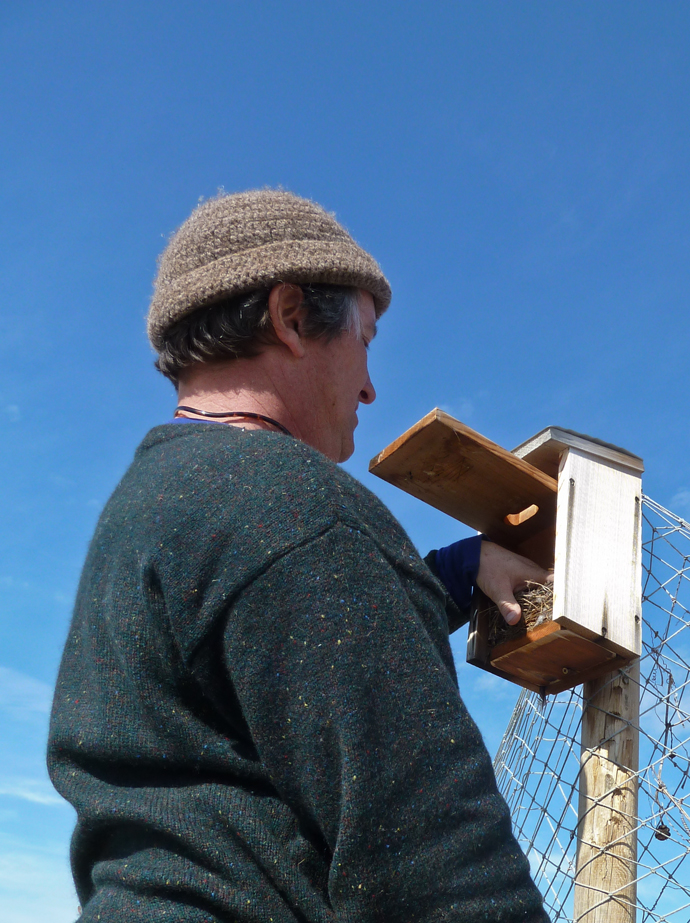
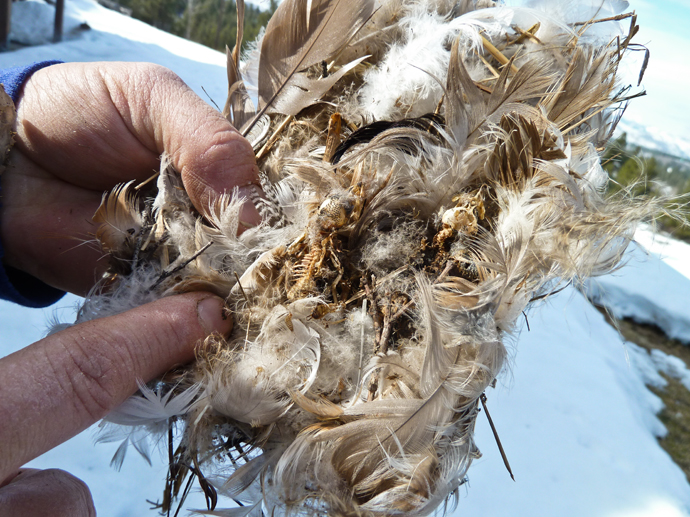
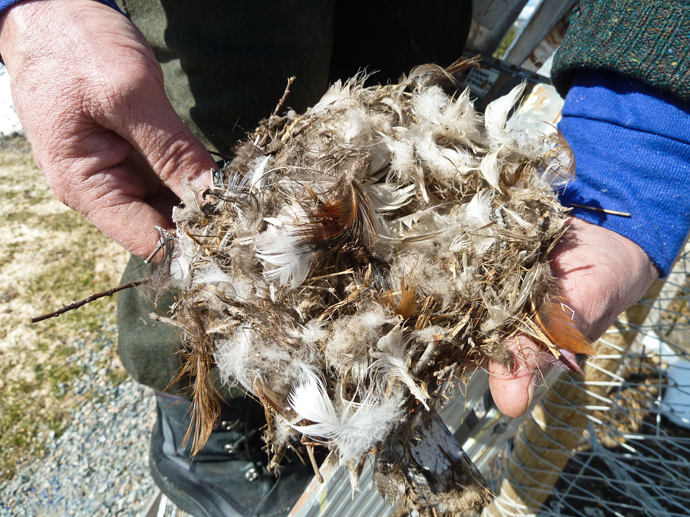
We have quite a few nest boxes on our place and a Spring ritual is to go around with a ladder and various tools and clean them out. Some people like to do this in the Fall. We think birds might like to roost in the boxes during the winter so the old nesting material may provide them a little extra warmth during the cold season. Most of the feathers in the nests are ones from ducks and geese that we ate during the previous winter. When the swallows are flying and gathering material for their nests, we toss the feathers into the air and they swoop down to catch them and take them to the boxes!

Spring is the time to clean out nest boxes

Spring is the time to clean out nest boxes


Sadly, some birds don’t make it out of the nest.Spring is the time to clean out nest boxes


Wasps in the boxes will discourage nesting.Spring is the time to clean out nest boxes


This nesting bird found a Northern Flicker feather to add to its nest.Spring is the time to clean out nest boxes


Swallow nest – Tree or Violet-green?Spring is the time to clean out nest boxes


Some baling twine from the straw we used to mulch our garden.Spring is the time to clean out nest boxes


Tiny House Wrens like to fill boxes with sticks before they build a tiny nest on top. They will also simply fill boxes with sticks to keep other birds from using them. If we see them doing this with several boxes, we try to clean the sticks out so that swallows and bluebirds can also use the boxes.Spring is the time to clean out nest boxes


A House Wren nest.

Spring is the time to clean out nest boxes


Here is a House Wren nest on top of a bluebird nest. Both nests looked sucessful.Spring is the time to clean out nest boxes


The bluebird nest.

Spring is the time to clean out nest boxes


Spring is the time to clean out nest boxes