Skip navigation

Tag Archives: North Cascades

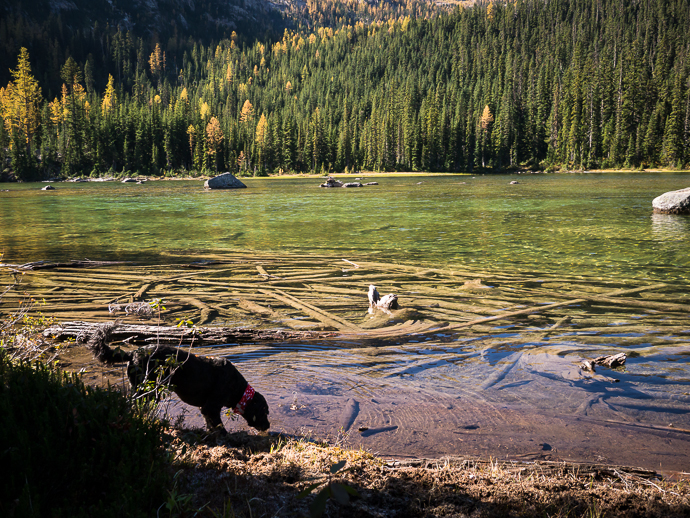
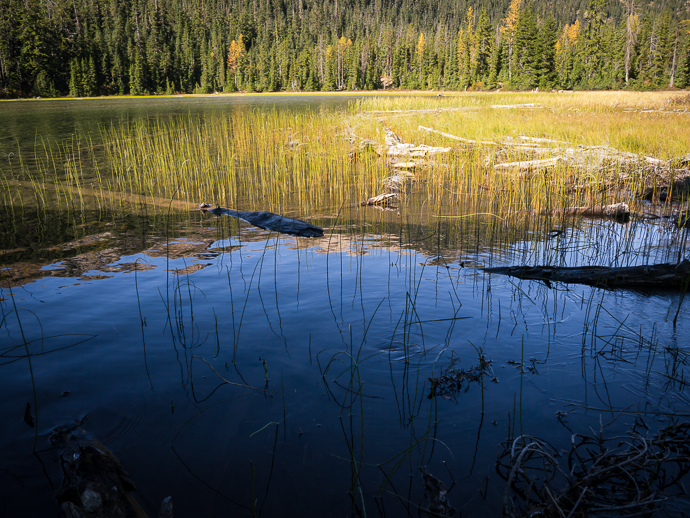
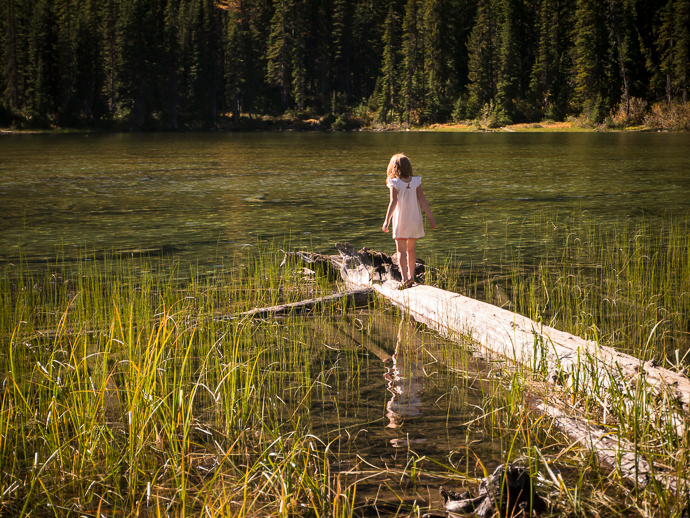
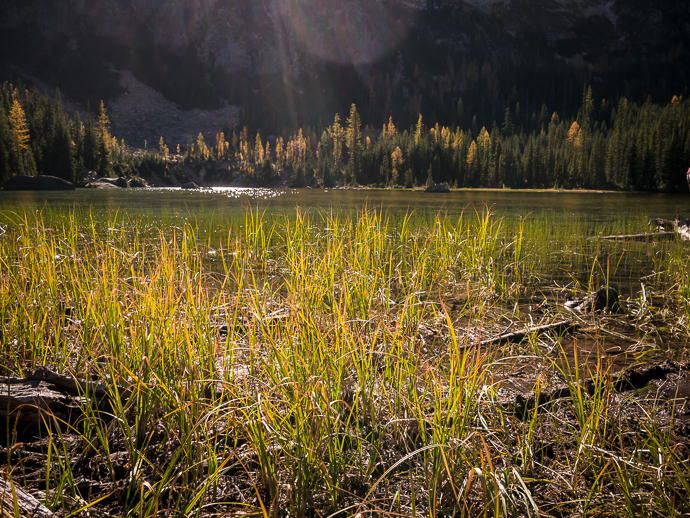
Yesterday was Luna’s sixth birthday! It just doesn’t seem possible that she’s officially middle aged. What does that make me? We celebrated with a hike to Cuthroat Lake – a gem of a lake in the North Cascades. It’s an easily accessible trailhead off of highway 20 and it’s only a two mile saunter to get to the lake. I’ve only been there once before, years ago and in the middle of summer. The mosquitoes chased me away in no time and I never returned til yesterday. Fall is definitely the time to visit Cuthroat Lake. The trail was not overly busy yesterday, surprising for a three day weekend with fine fall weather.


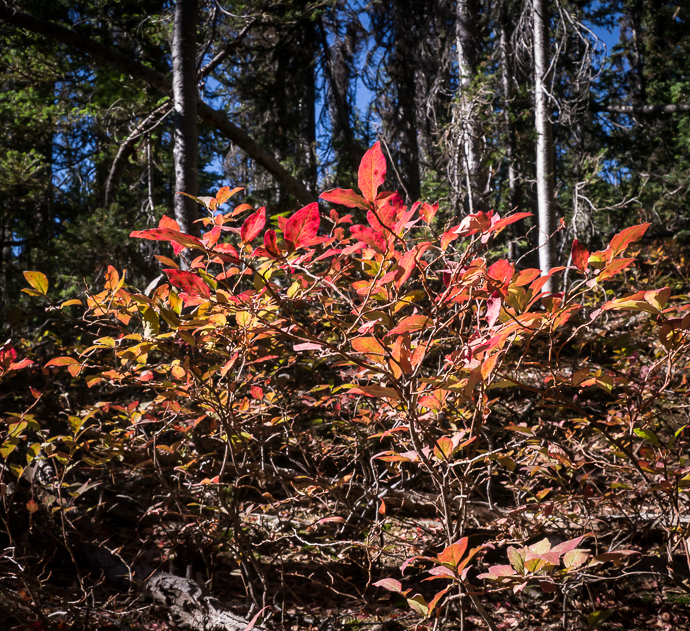
Beautiful colors


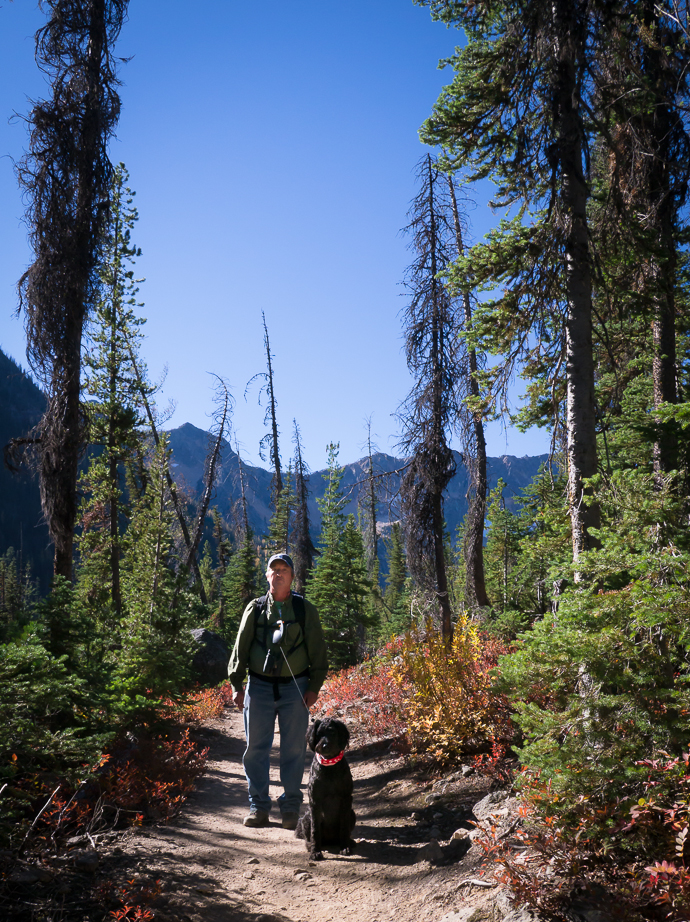
On the trail


Most of the small creeks are dry.


After no rain for weeks on end, the trail is very dusty


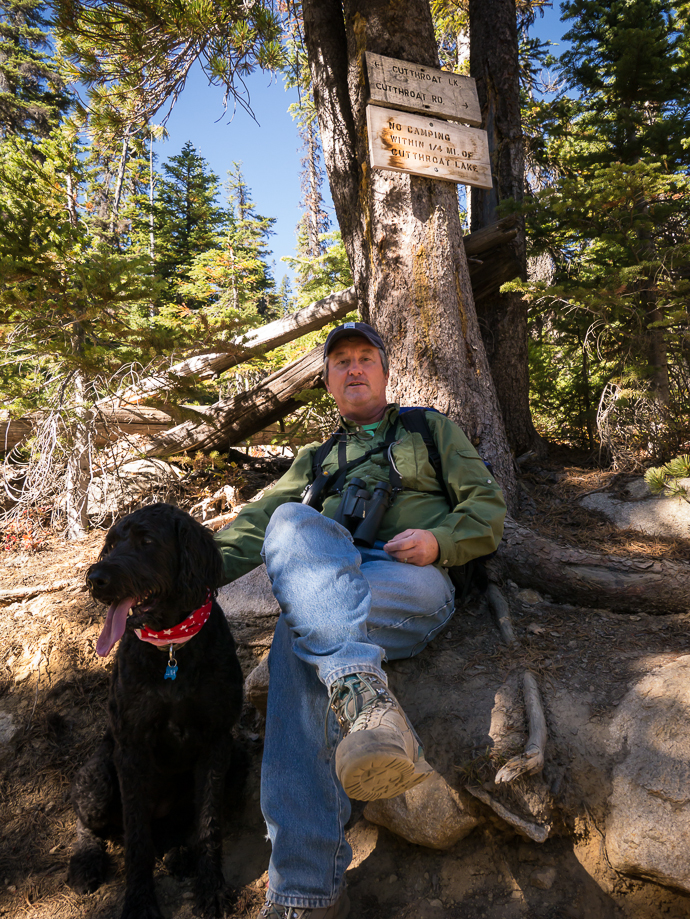
They needed a break


Pretty


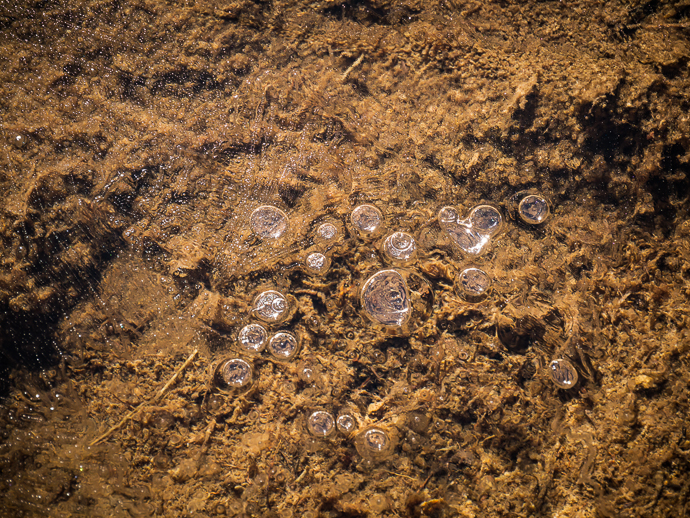
Frozen bubbles


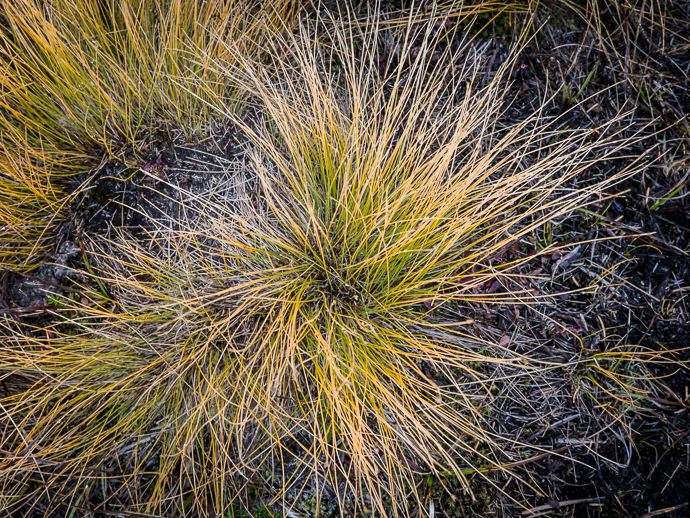
This grass was still frosty at midday


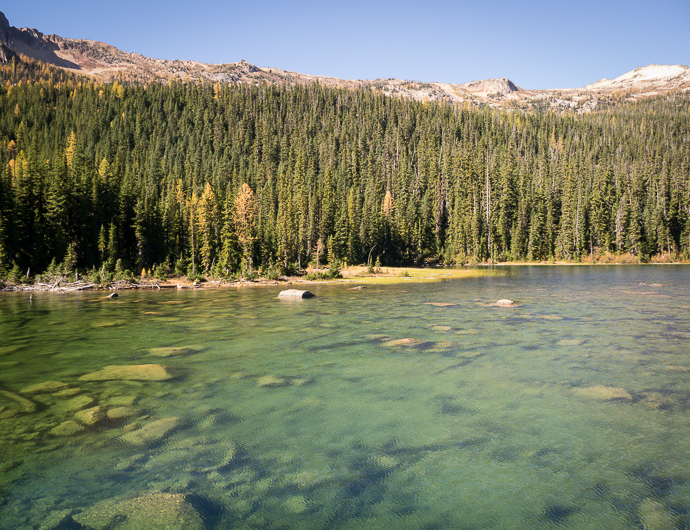
Fall larches color the forest


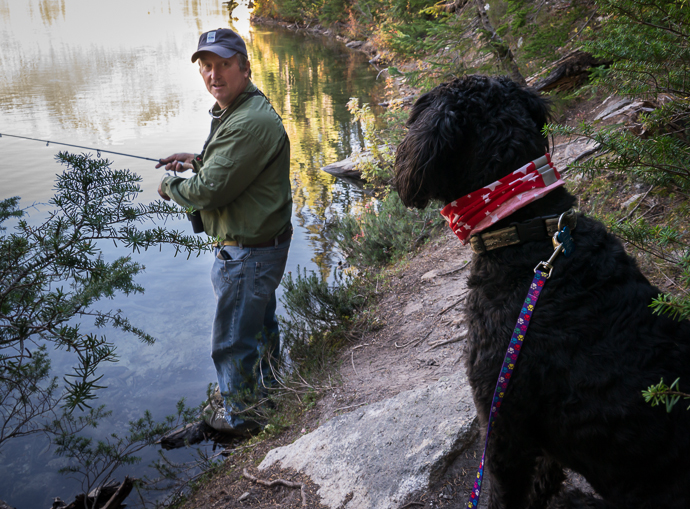
Ken had to wet a fly


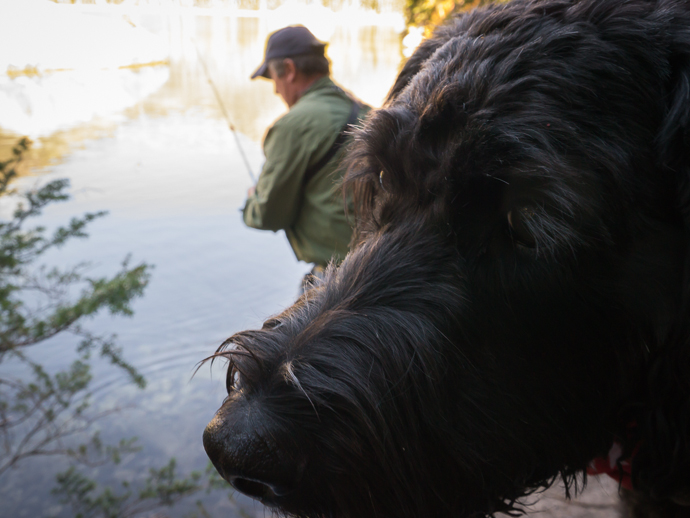
Luna thinks maybe this is a little boring


That’s a tiny trout


Luna’s not sure if this is the highlight of her day


More pretty


Birthday girl with her birthday buff


Fall lighting is the best


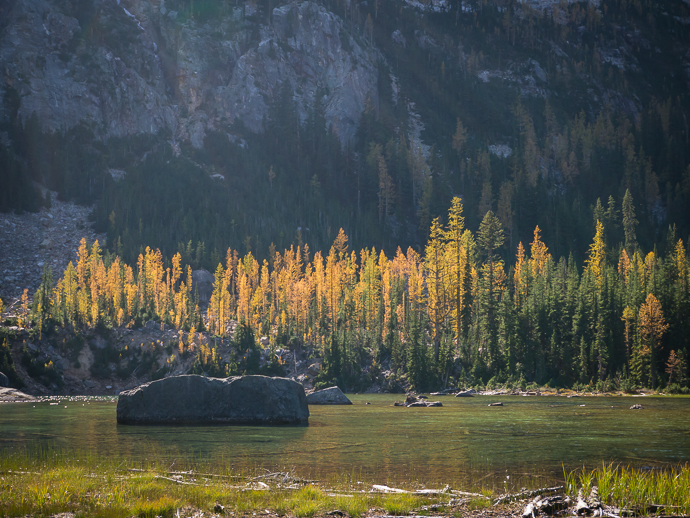
Love the way it lights up the larches


A breeze ripples the clear water


More fall colors


Ice crystals force up through the moist soil along the shady side of the lake


The water is so clear – there is no sneaking up on the trout


Blue and yellow – my favorite color combination


Larches are my favorite trees


Exploring


And still more pretty


Treasures


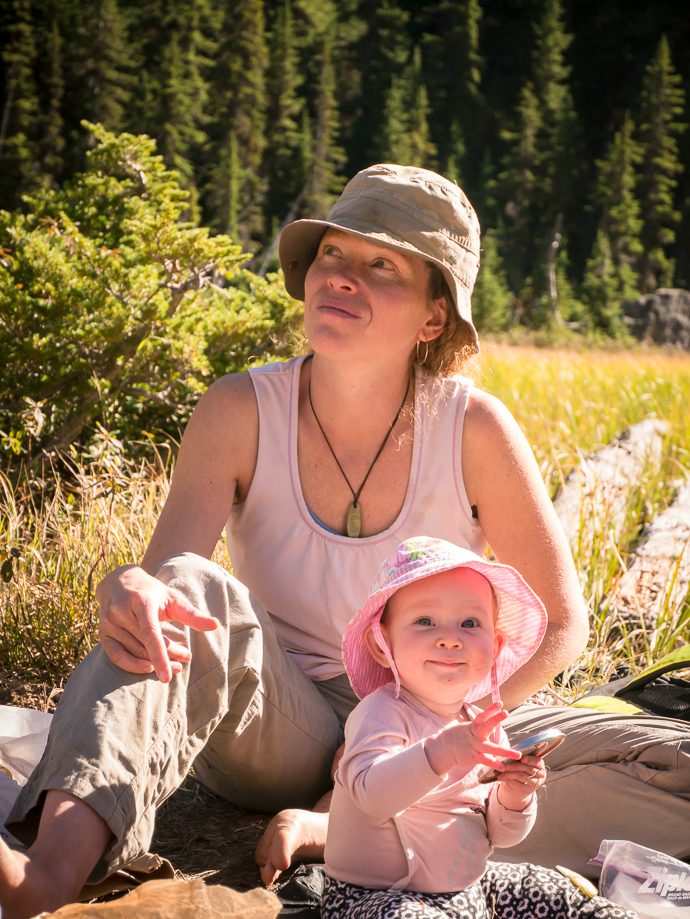
Mom and baby sister


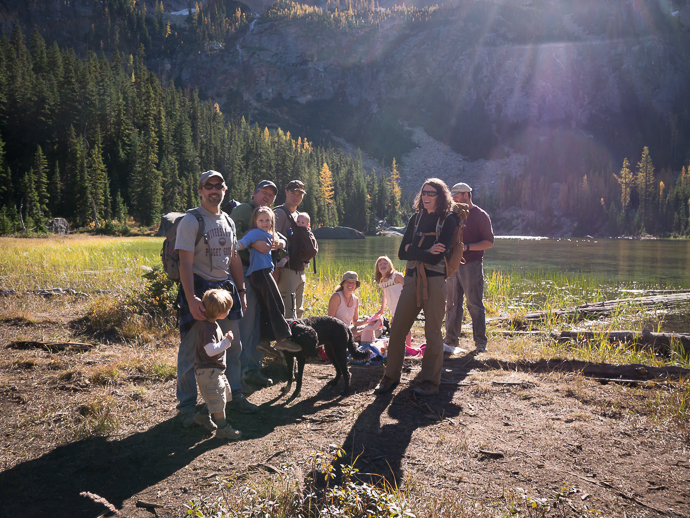
Lots of local Methow folks made the trip to Cuthroat Lake yesterday.


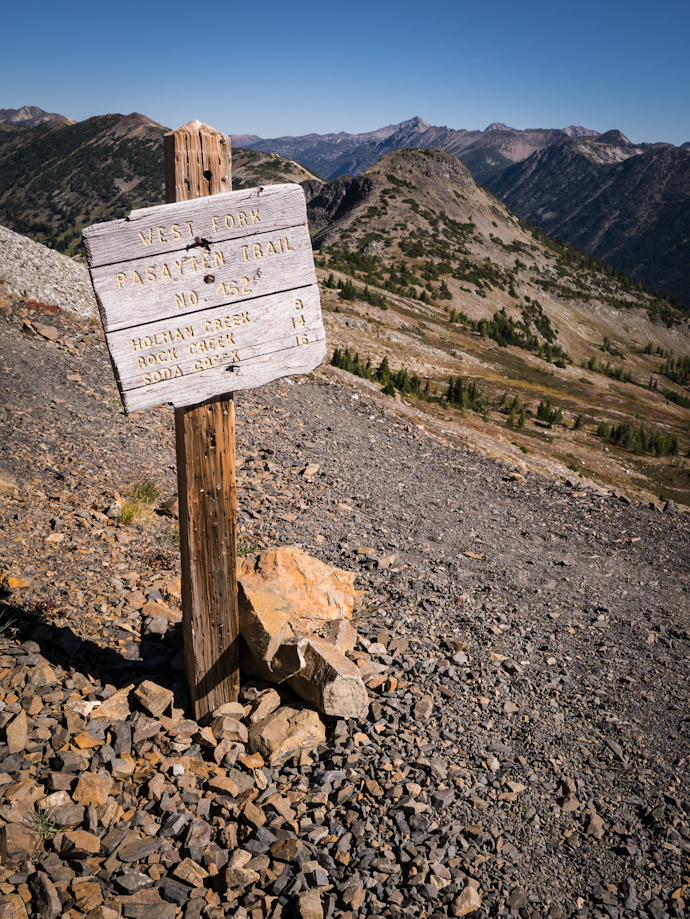
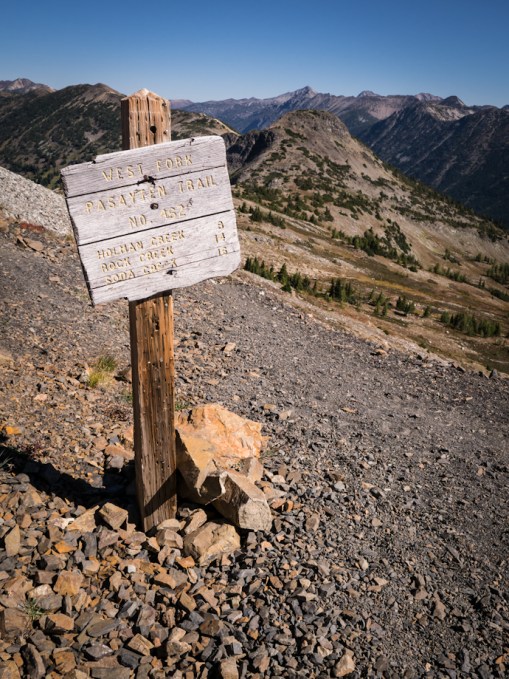
It’s been a few weeks since I had a nice hike in the mountains. I had grand plans for a hike every week this summer and have fallen far short of that goal. Yesterday’s hike was a good one. With the passing of Labor Day and the start of school, it sems that summer is over. Nights are cooler and days are way shorter. The light is marvelous and the air is crisp making for perfect hiking conditions. Luna and I drove most of the way to Slate Peak and then took the Buckskin trail down into the basin below the lookout. We left the trail and rambled through the basin and then up to the ridge where we found the West Fork of the Pasayten trail and returned to the road and walked back to the car. It was not a long hike but it was long on views and surprisingly, quite a few flowers. There were also lots of migrating birds – in particular I noticed Cooper’s Hawks, American Pipits and White – crowned Sparrows. Also many finches in flight that I could not identify.


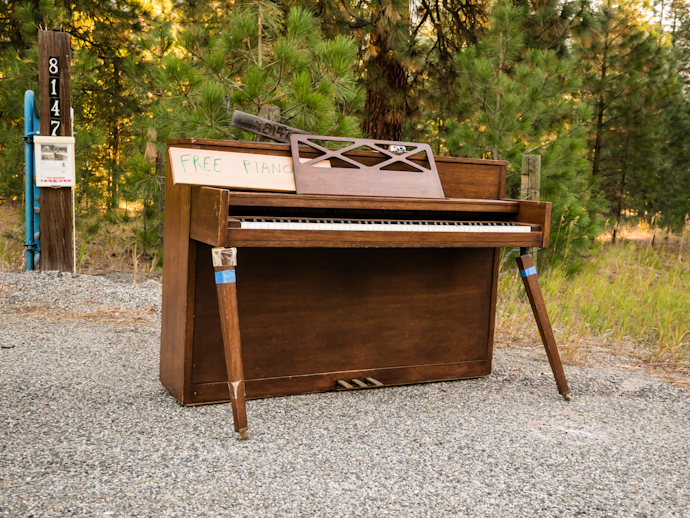
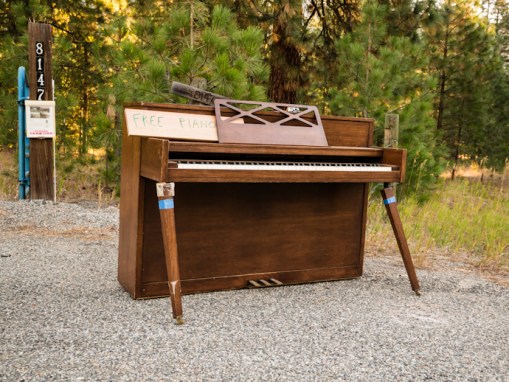
Almost to Mazama on highway 20 I saw this free range or feral piano, abandoned by the side of the road. There was a package of castors to replace the broken ones. I’ve seen bbq’s, out dated tv’s, couches, even old satellite dishes; but this is the first time of seen a piano on the side of a road.
 

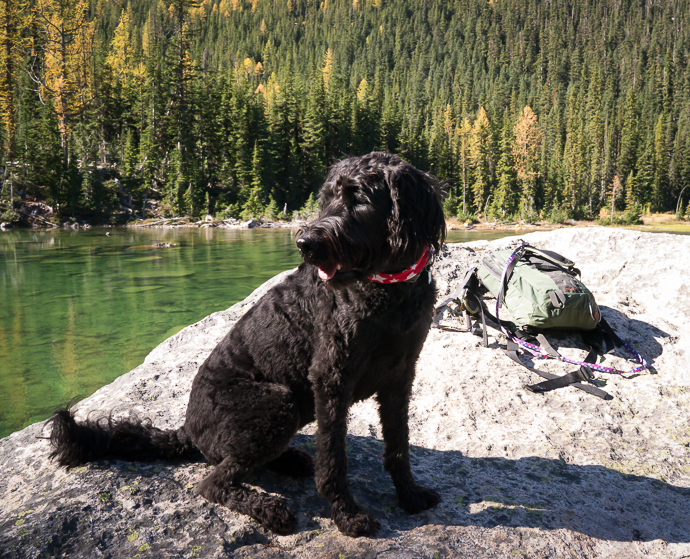
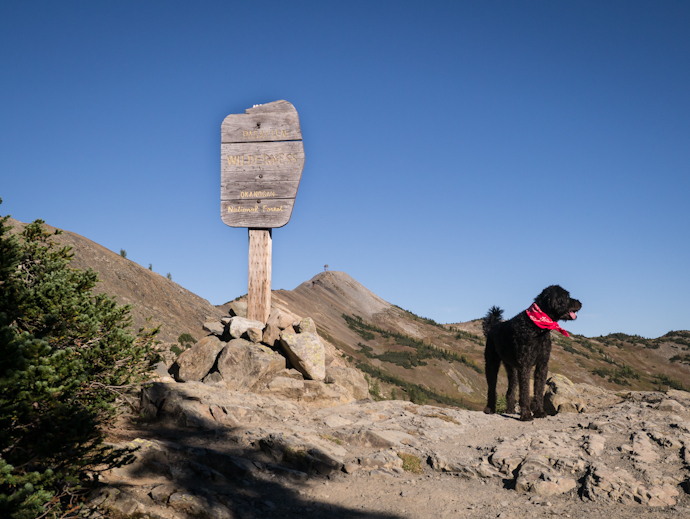
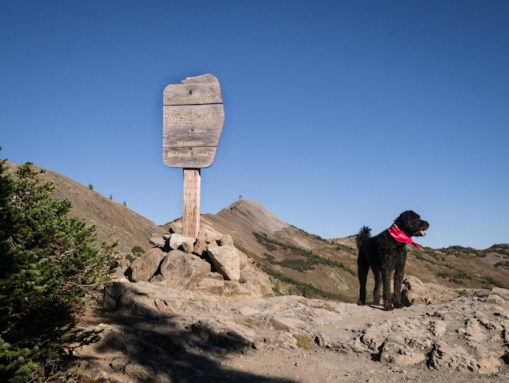
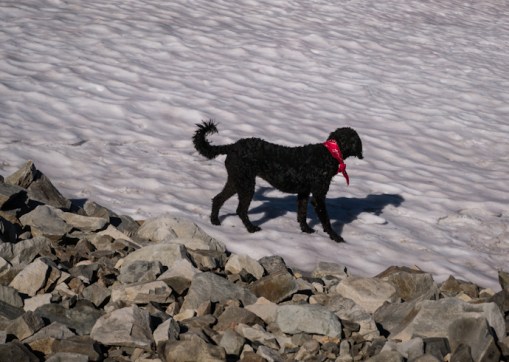
Luna is wearing red because it’s hunting season and more than once I’ve benn told that she looks like a black bear.
 

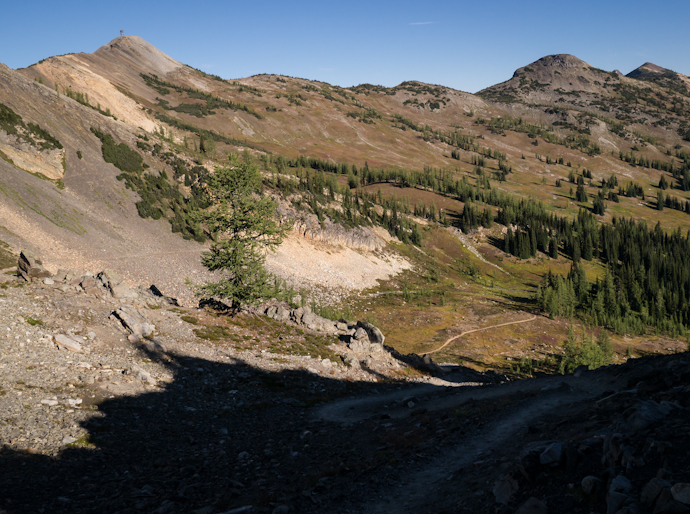
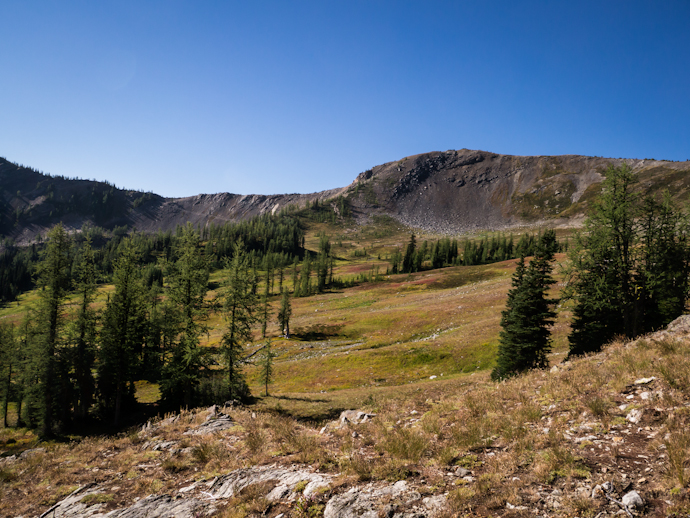
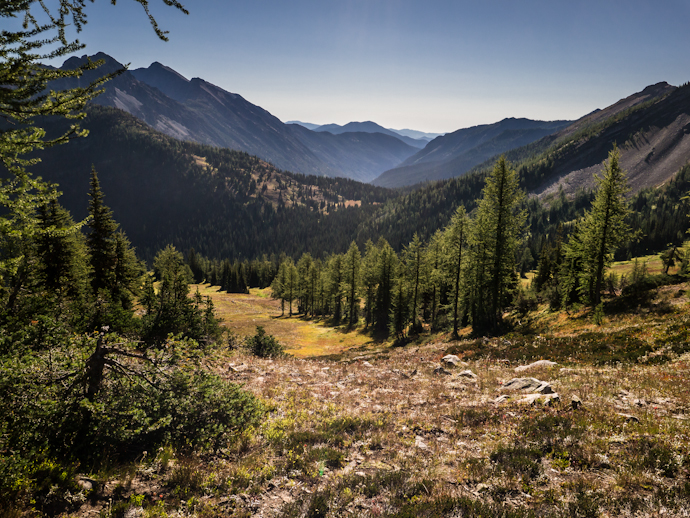
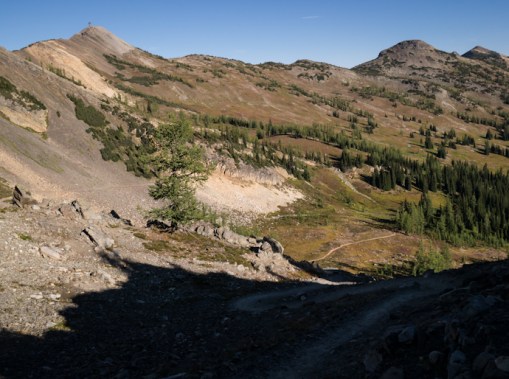
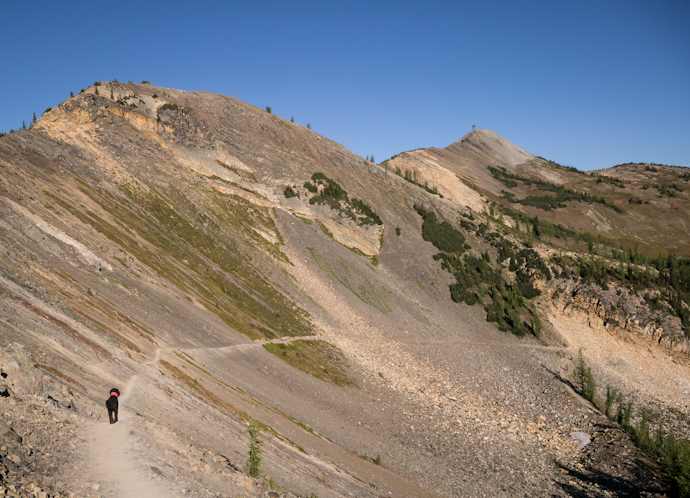
This photo needs some arrows to show our route. Our trail drops down there in the shade on the bottom right of the image and then you can barely see it crossing the talus (rock) slope to the left before it drops down into the meadow. We crossed through the larch trees and on the other side of them left the trail to ramble up through the basin and to the ridge, where we joined the second trail and it took us to the road just below and to the left of the lookout on the high point.
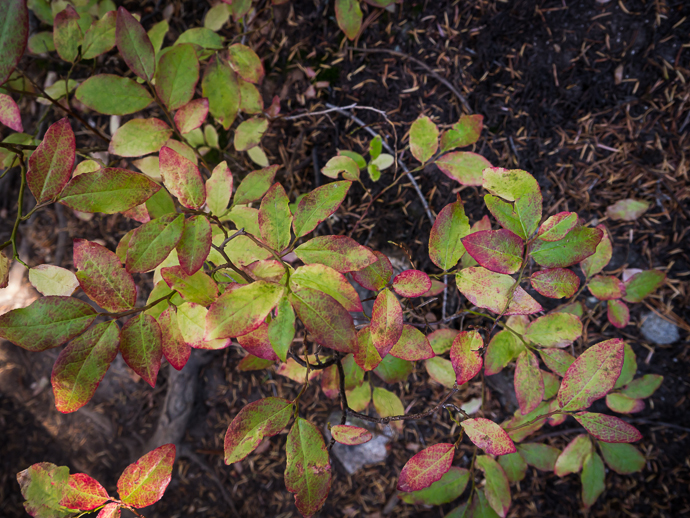
Red leaves show that there’s already been a frost. It was 42 in the sunshine when we started our hike. I was glad I had a jacket and wool gloves.


Luna is already out on the trail.


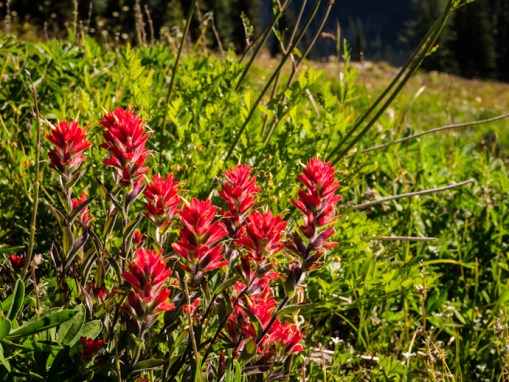
In the meadow there were lots of flowers. Here is a paintbrush (Castilleja sp) with blue gentian in the background
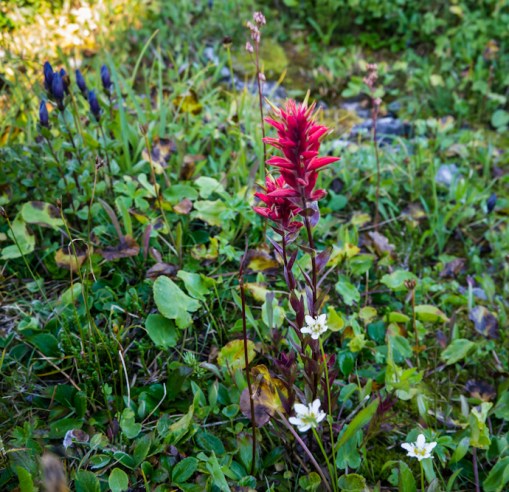
 

I love the dark blue gentian, a late summer flower in the high country.


Looking back at the trail as we enter the trees.

There was a family of Cooper’s Hawks calling loudly and flying around in this area.
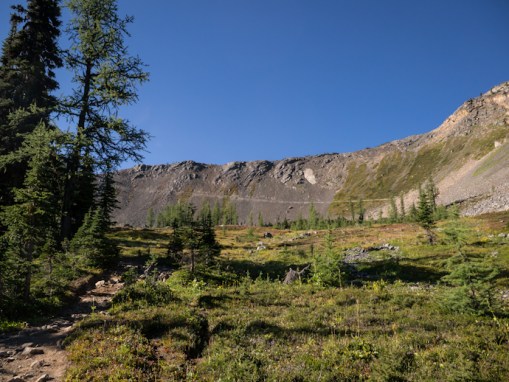
 

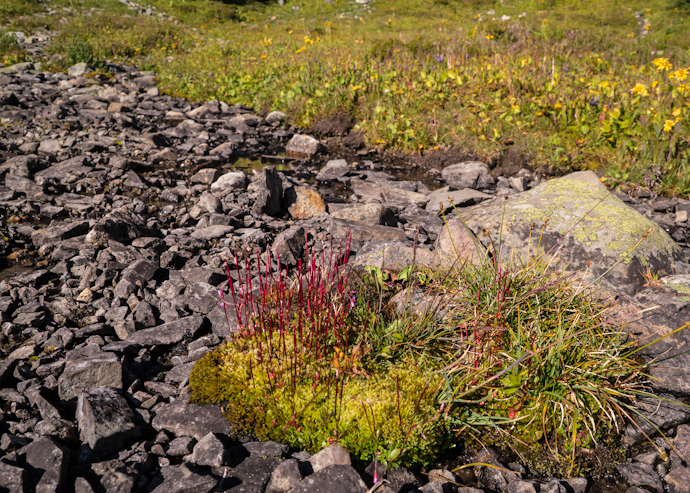
Moss shows that the area is still wet despite the fact that we’ve had no rain in a month or more.
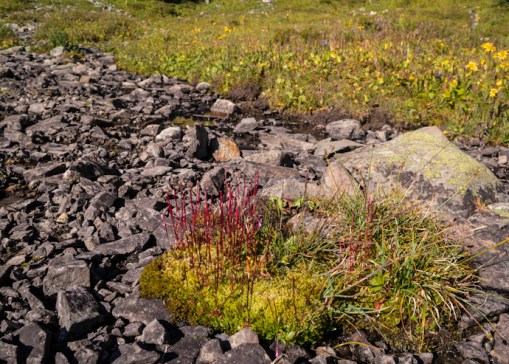
 

I could not resist this tiny scene
 

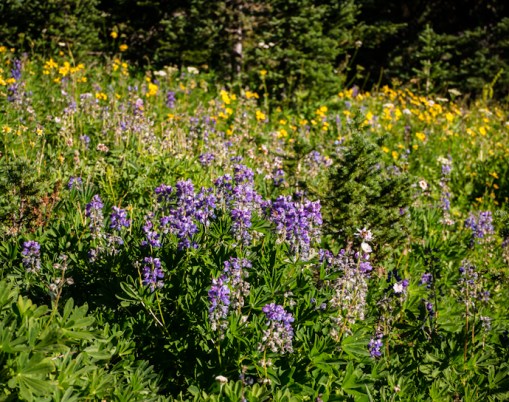
How many months of lupine are there? Seems like I’ve been seeing it since April!
 

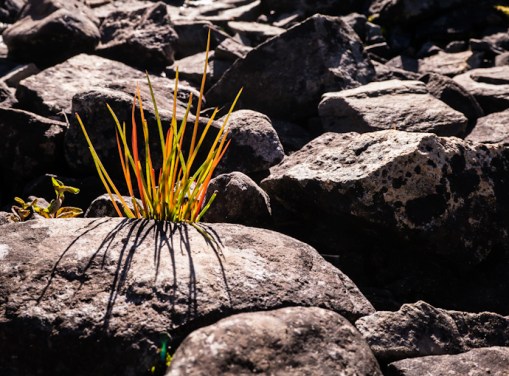
Pink monkeyflower and its shadows.


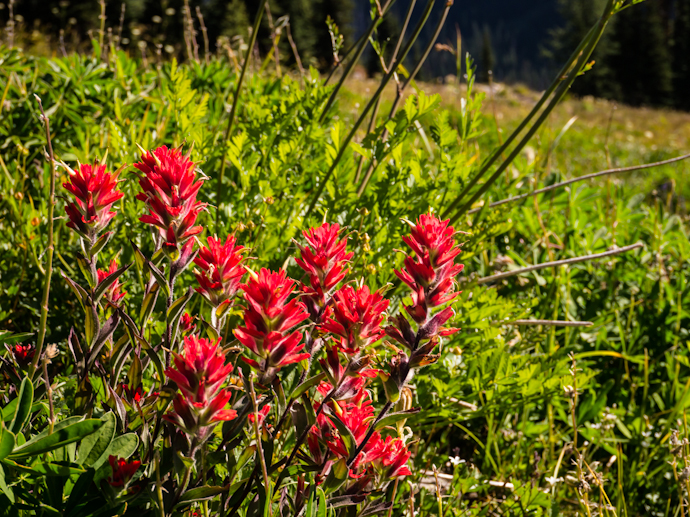
More paintbrush. I saw at least three different colors of it.
 

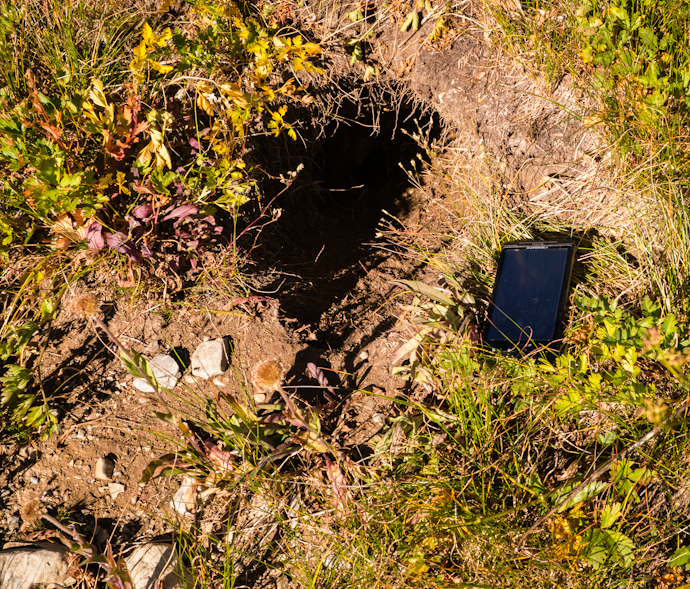
Someone’s burrow. It is pretty good sized. Maybe a marmot? I think they live in rocks. A wolverine?


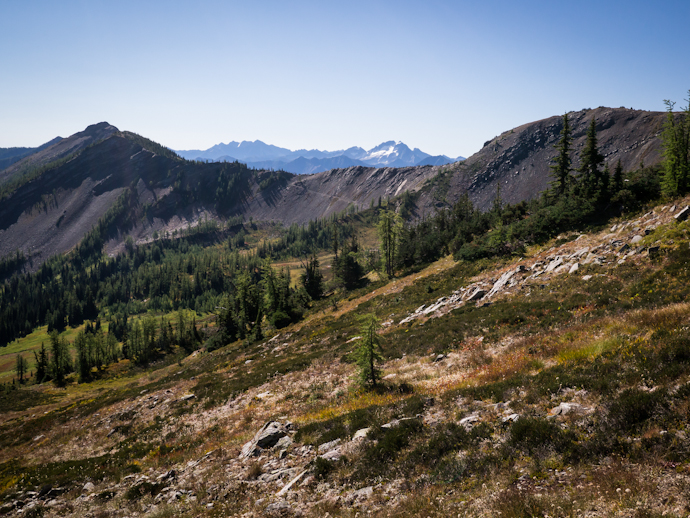
Another view looking back. We’ve left the trail and are heading up now.
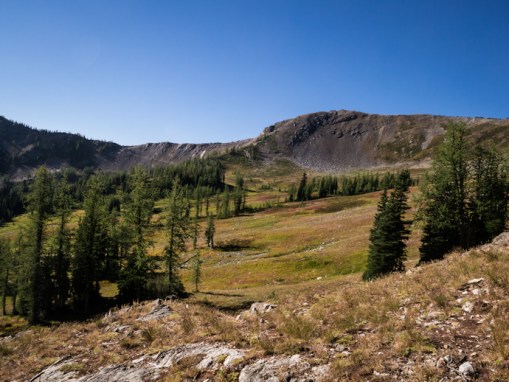
 

And looking down valley. Within a month all those larch (tamarack) trees will turn golden and their needles will begin to drop.


A much-needed rest in the shade.


Now we are higher than when we started.


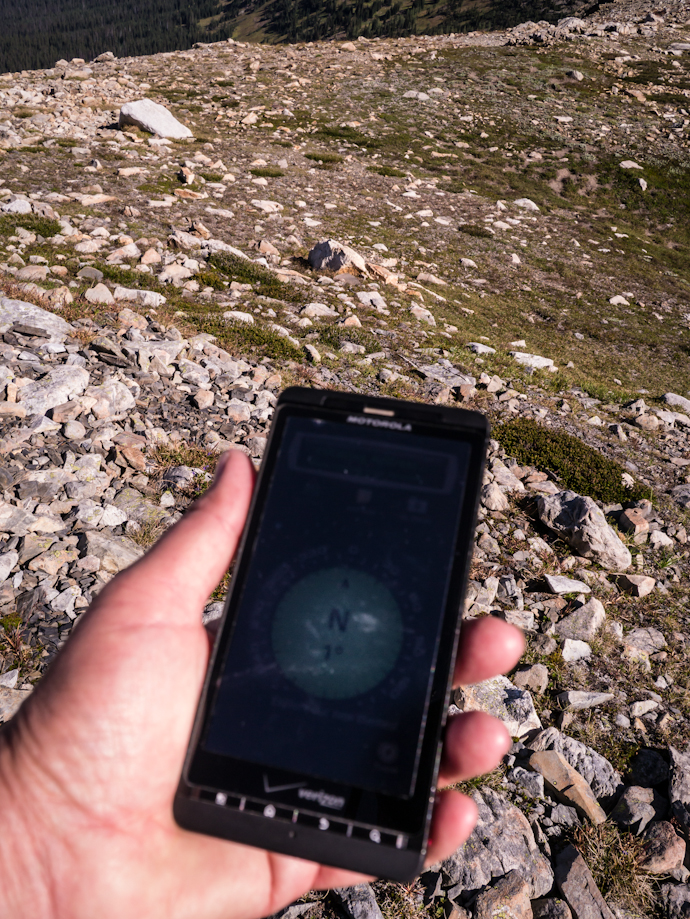
My cell phone has a compass app. I wonder how it works even without a cell signal? Any ideas?


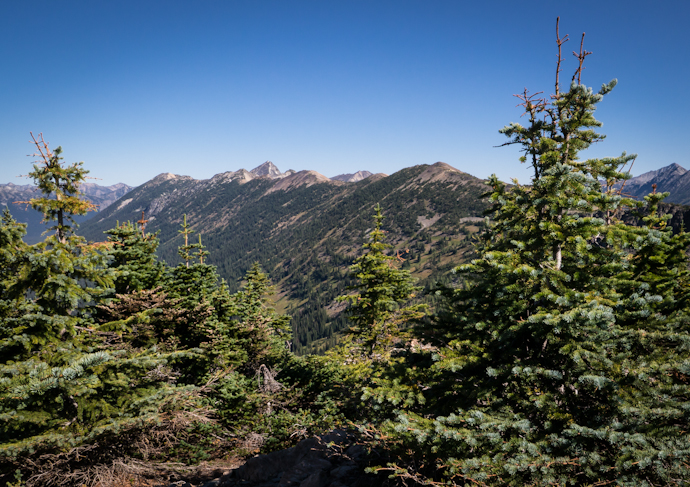
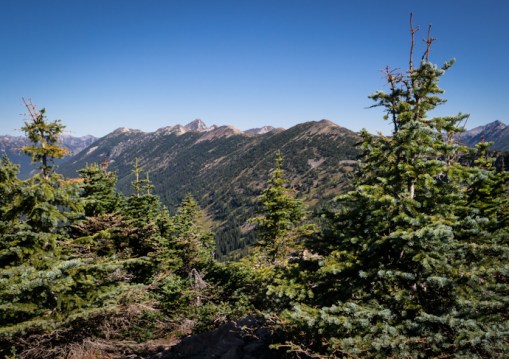
Looking north towards Canada. The stunted spruce and other species of trees at high elevations are sometimes referred to as krumholtz – crooked, bent or twisted
 

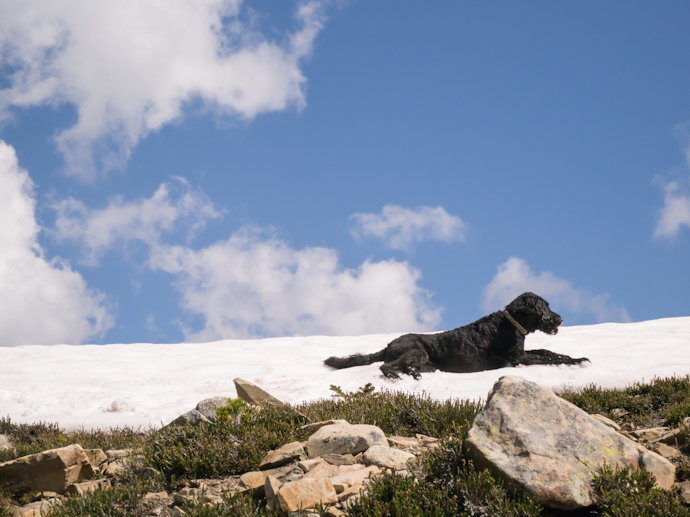
Luna was happy to find two lingering snow patches
 

And up to the road. It was almost a mile walk back to the car.
 

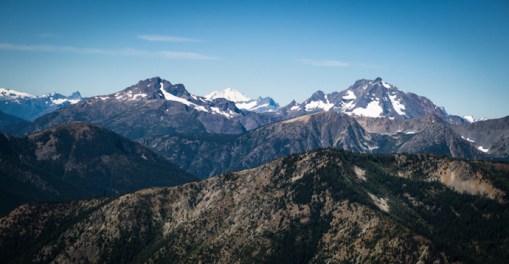
Views to the west from the road. That’s Mount Baker in the middle.
 

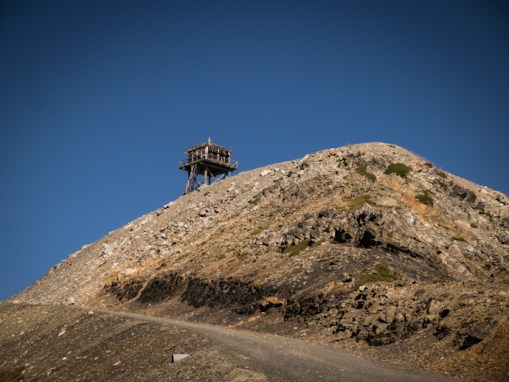
And a last view of the lookout
 

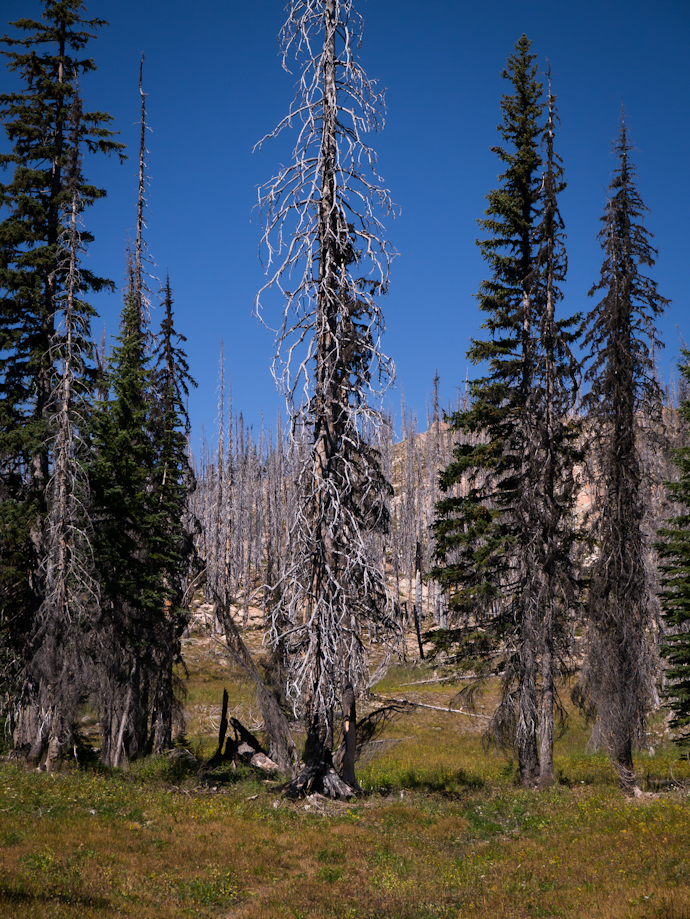
We stopped in a silver forest to look for birds. Mostly Yellow-rumped Wablers. Also a Townsend’s Solitaire.


An aster next to the creek.


Ahhhhhh.


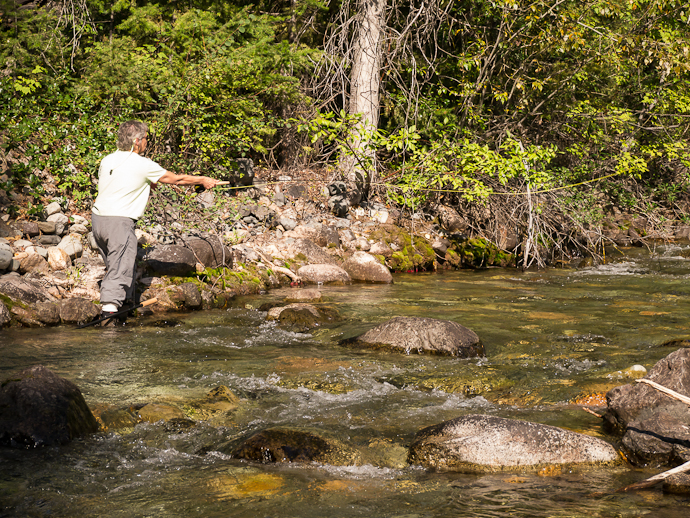
Last weekend my friend came up from the hotter part of the state in hopes of cooling off a bit and doing some fly fishing. The weather was not cool at all with the thermometer hitting 100 degrees both days! However, mountain streams are cool and refreshing and she was able to wet her line in a couple of them over the weekend.


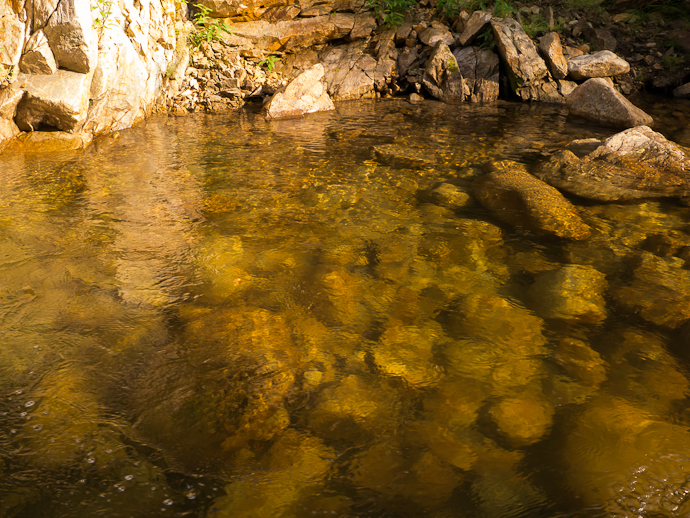
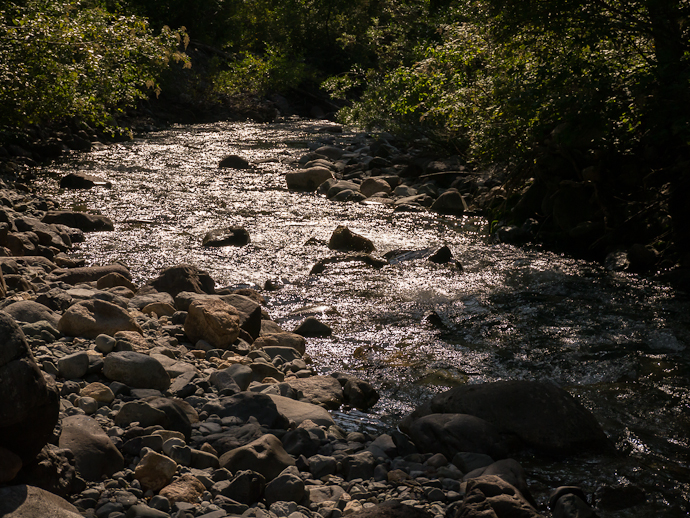
Saturday afternoon’s creek


A nice deep pool


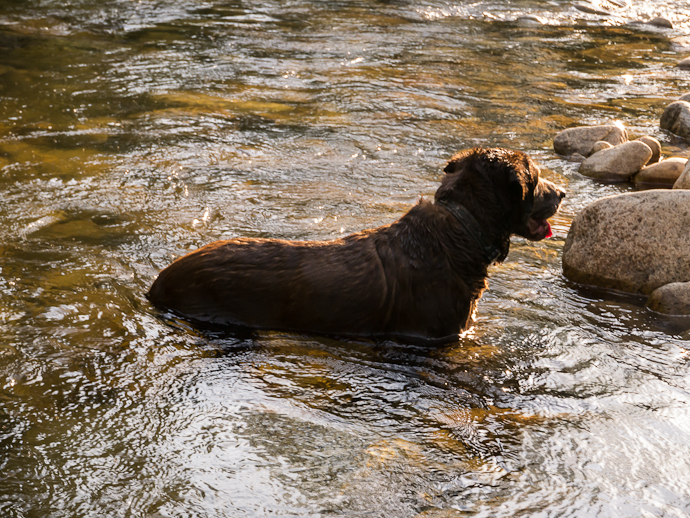
Sam enjoyed the cold clear water


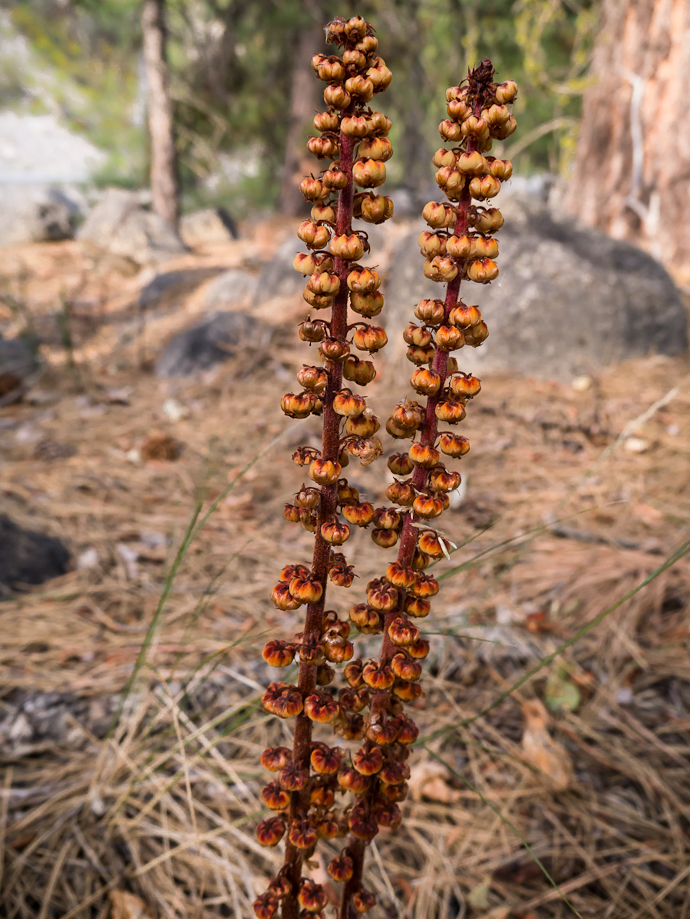
Pine drops, Pterospora andromedea


According to the USFS, Pinedrops is a member of the Indian-pipe family  (Monotropaceae). Pinedrops is a root parasite, depending on its association  with a mycorrhizal fungus that is also associated with a pine tree. Pinedrops produces  very little chlorophyll and is therefore not green in color and does not  conduct photosynthesis.


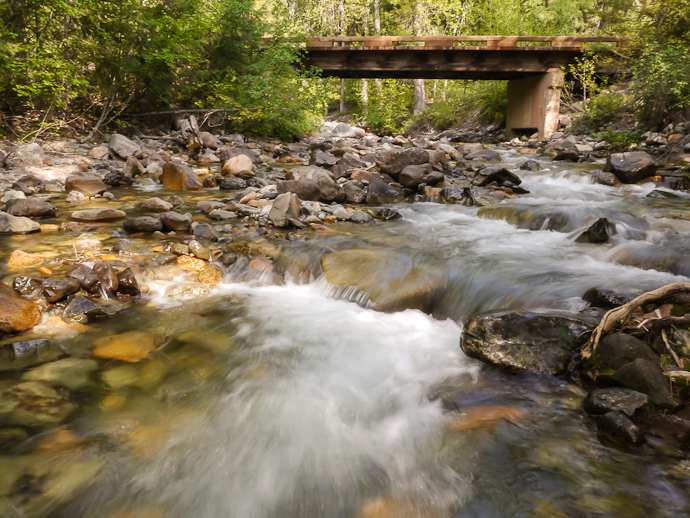
Sunday morning creek. The dogs didn’t get to go this time.


This water was even colder than the previous day’s water.


I was fascinated by the patterns of water and rocks


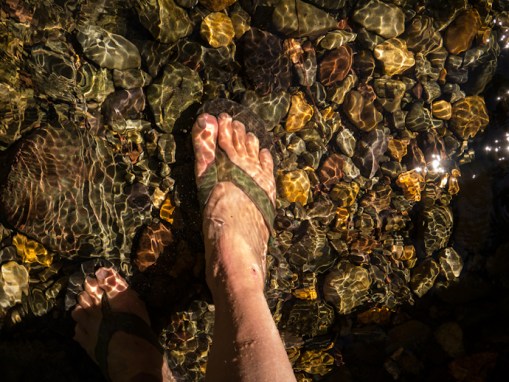
Cold foot


I played with capturing moving water although I had left my tripod at home.


There is an insect inside that tiny bundle of sticks and stuff


A cutthroat, caught and released.


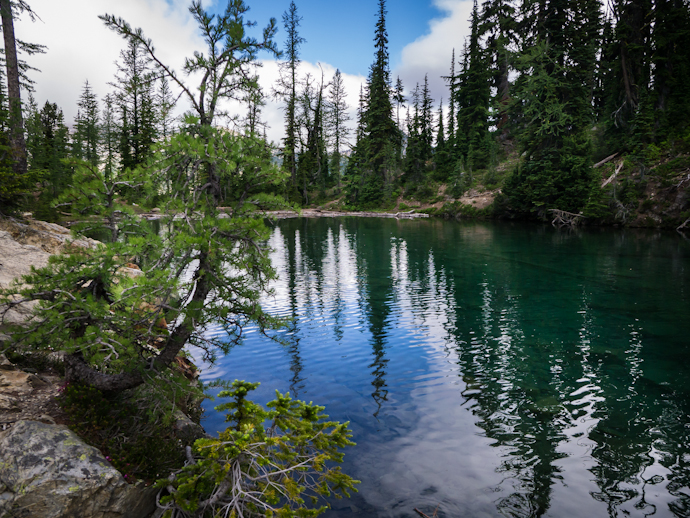
Last year I went to Blue Lake twice in the fall so this year I wanted to make sure and get there during its short summer season. The snow has only recently receded and still covered the trail in one place – maybe an avalanche chute. There were still a couple of small icebergs floating too. And given that the weather up there on Thursday was cool and cloudy, it was very early in the short summer for Blue Lake. Winter is the major force in the North Cascades, lasting from October through July; well that’s when there is snow on the ground.


Looking towards the lake outlet


And back at the talus slope still mostly covered with ice and snow


Small iceberg. My hiking partner said it would be fun to swim out to it and climb up on it. She didn’t do it.


Luna swam


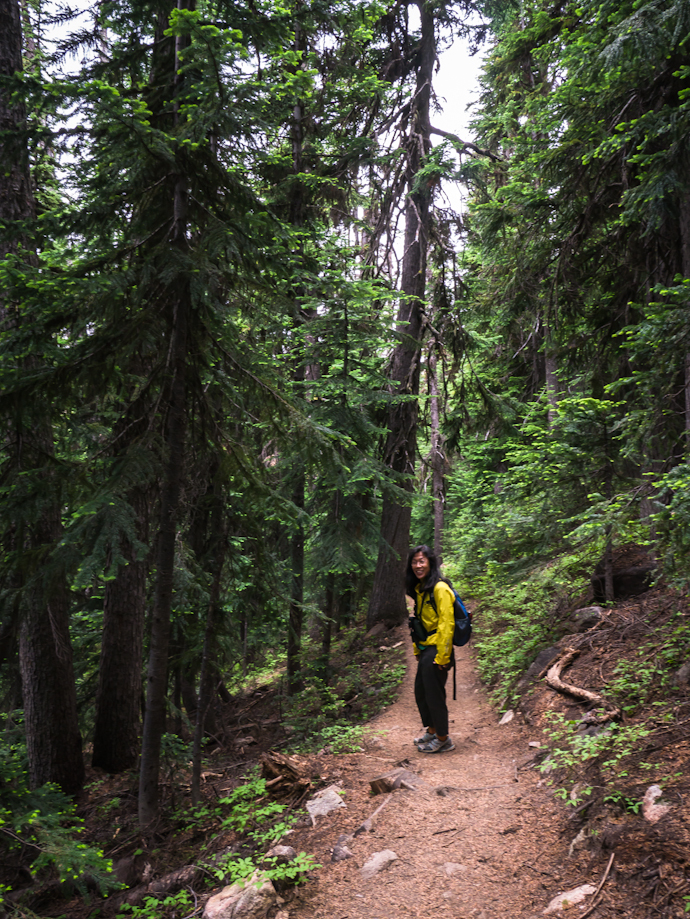
Chilly on the trail. Down in the valley it was near 90.


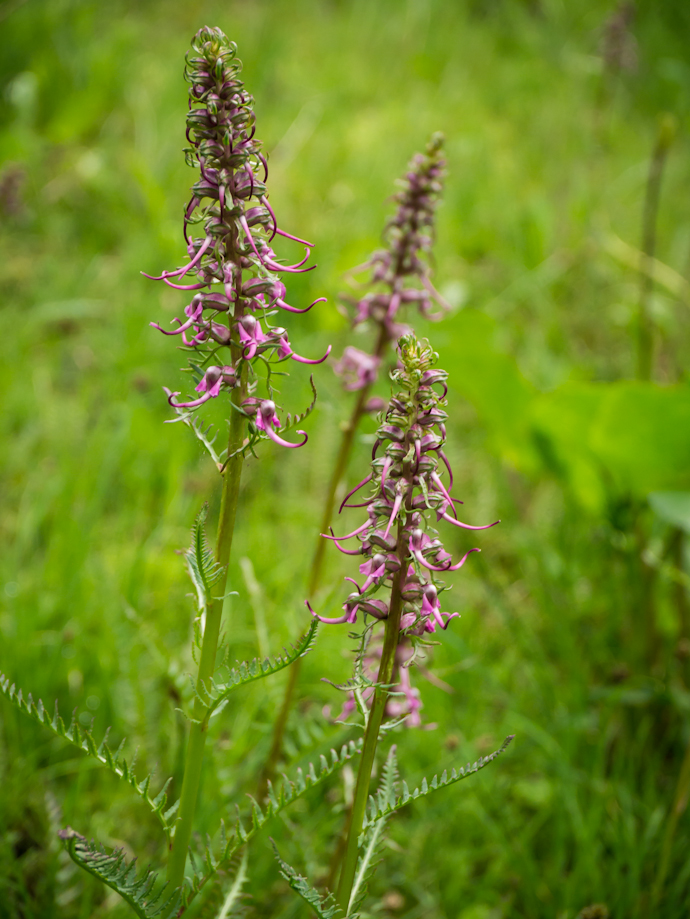
These elephant’s head lousewort, Pedicularis groenlandica, were blooming in a bog at the trailhead, along with white bog orchids, Platanthera dilatata


The Pacific Crest Trail (PCT) stretches from Mexico to Canada along the crest of the mountains – from the Sierra Nevada in California to the Cascades of Washington. It intersects roads in many places so day hikers can get a taste of what the through hikers do everyday for months on end. One of my favorite pieces of the PCT follows a ridgeline to Grasshopper Pass. I like this trail for a variety of reasons – one, it’s never steep; two, the views are outstanding; three, the wildflowers are grand; and four – later on the larch trees change to a lovely shade of orange before dropping their needles. Oh, there are also lots of marmots and ground squirells and pikas! Pikas, if you are not familiar with them, live in talus slopes and are the smallest member of the lagomorph family; they are tiny rabbits. They do not hibernate like many of the mammals of the high alpine country. Instead, during the summer and fall months, they gather grasses and vegetation and create little hay piles to keep them nourished through the LONG winter! And it is long. The snow has only just recently melted from this region.

Only 35 miles to Canada. Doesn’t sound so bad.

The trail starts out crossing this rocky talus slope where the pikas live.

Anemone

I do not know this pretty blue flower

I think this is Lewisia columbiana

Its tiny delicate flowers up close

A vibrant red Castilleja (paintbrush)

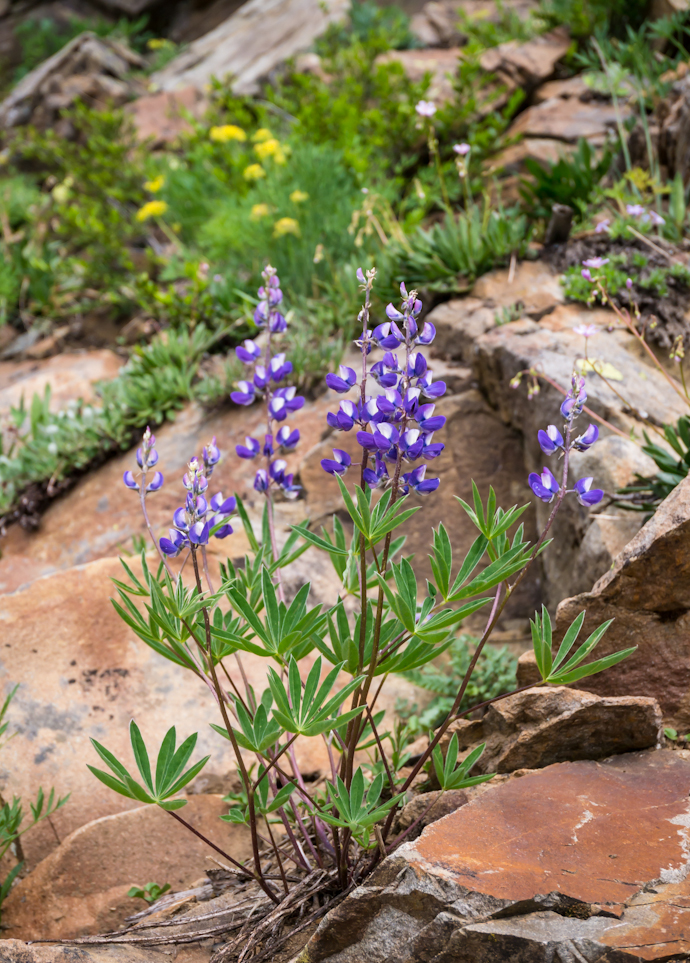
Really, do I always have to include an image of lupine?

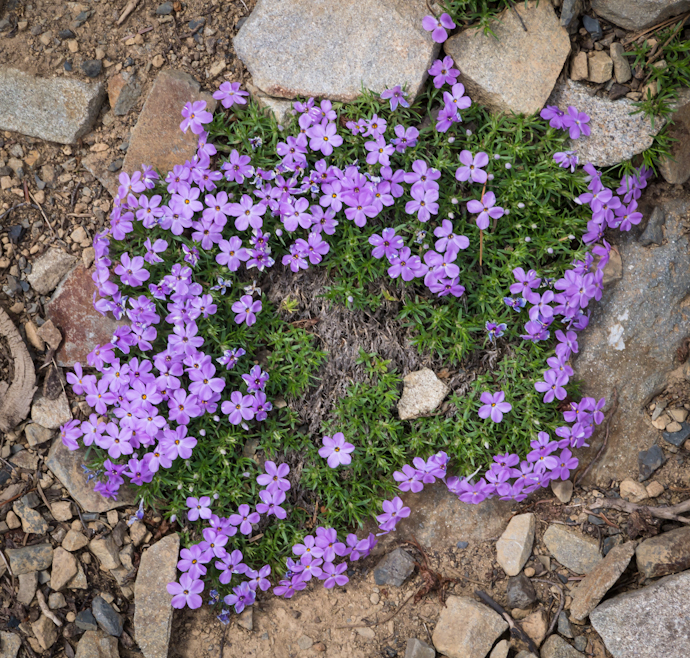
Ground hugging phlox

I think this is a penstemon

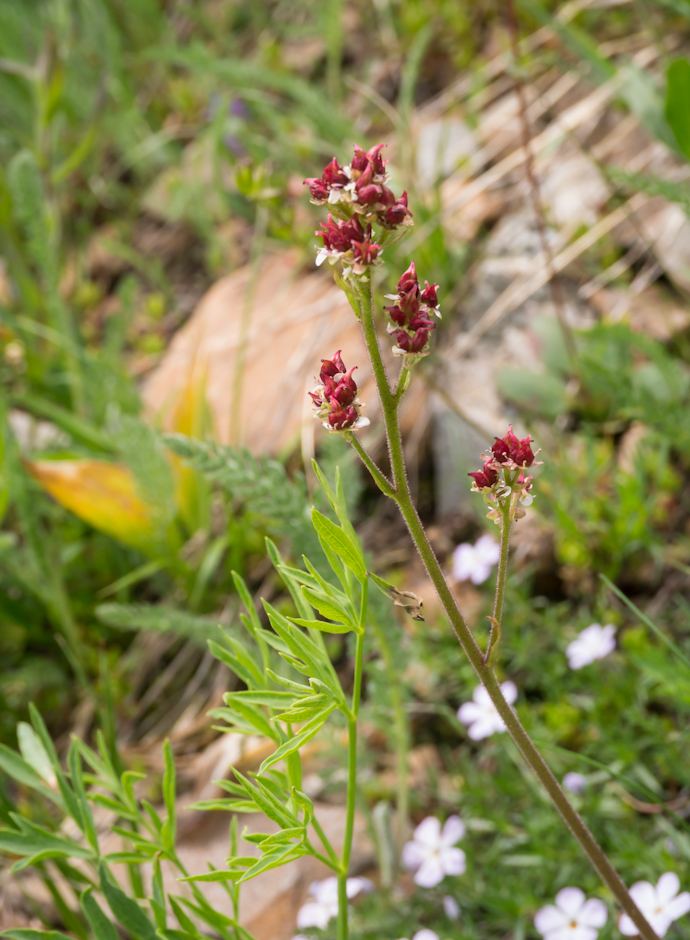
I knew this one last year!

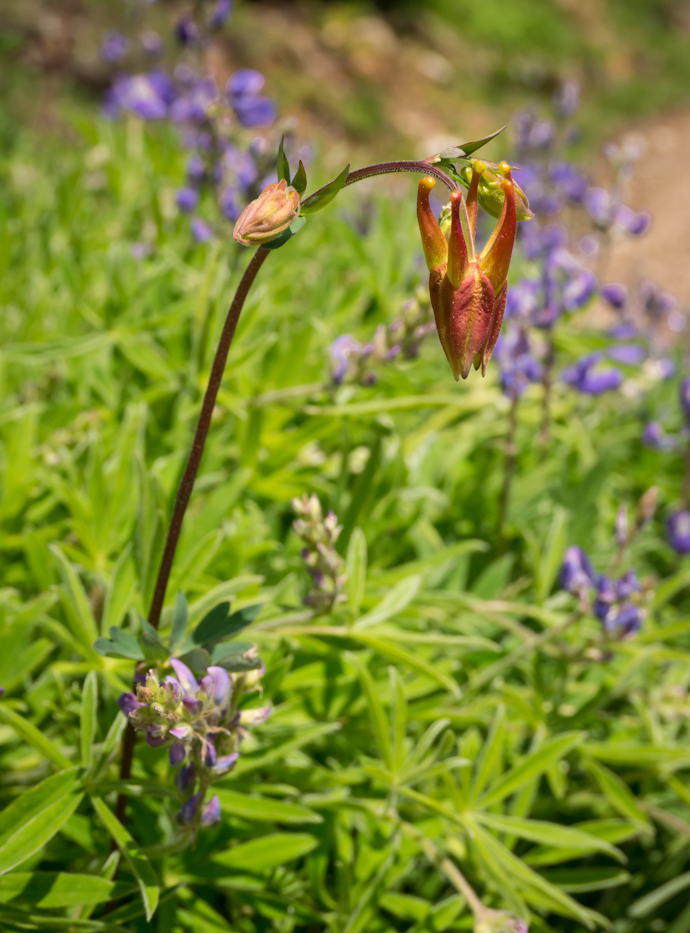
Columbine

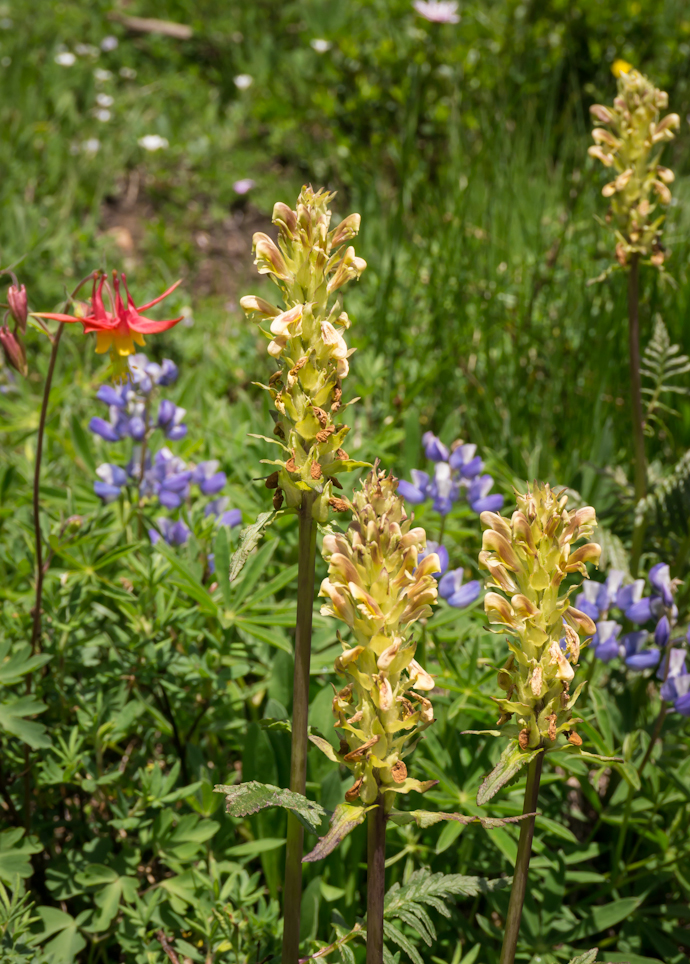
Maybe a lousewort?

The trail is carpeted with last year’s needles from the alpine larch trees that are now covered in fine green foliage.

Nothing better than finding a snow field on a July hike!

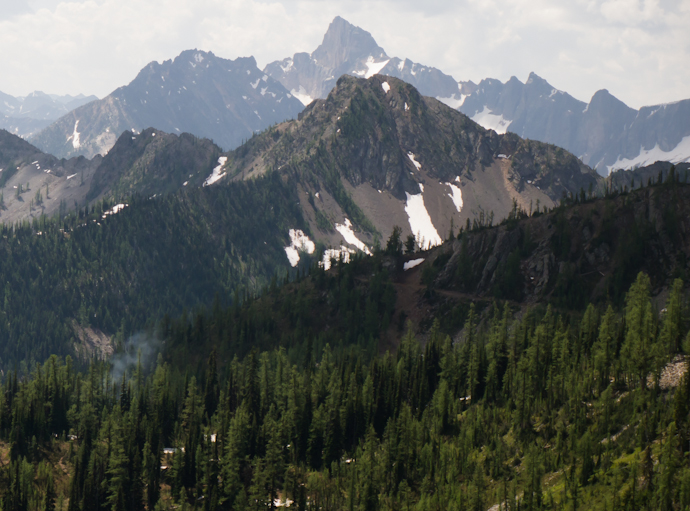
See the smoke in the lower left hand corner? Probably a result of the previous night’s lightning storm.

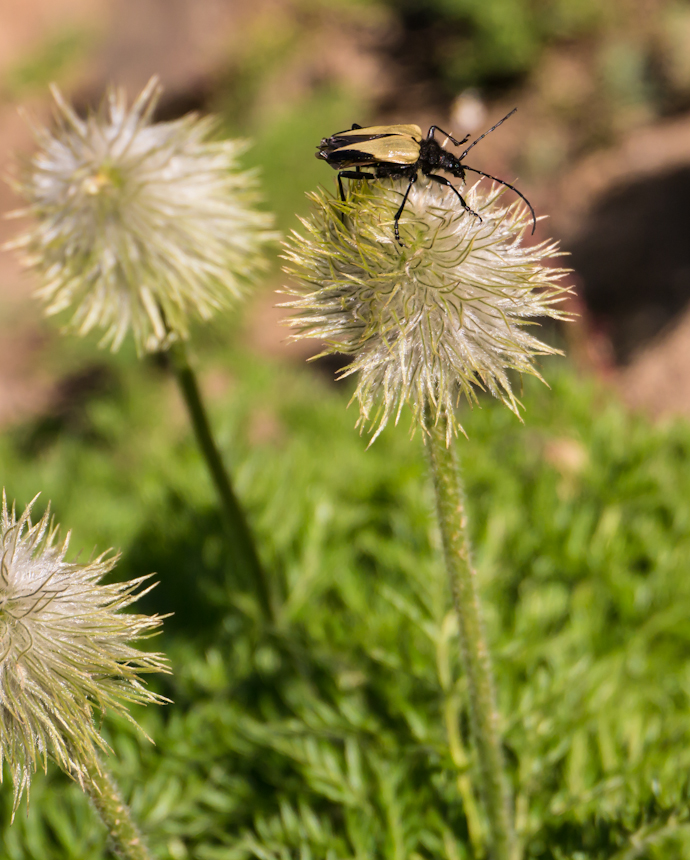
Bugs do it.

Anyone know what kind of bug does it? The flower is an anemone seedhead.

Looking back on the trail across the talus slope

Ahhhhh.
Thistles are not well liked by most but they are attractive

Cow parsnip?

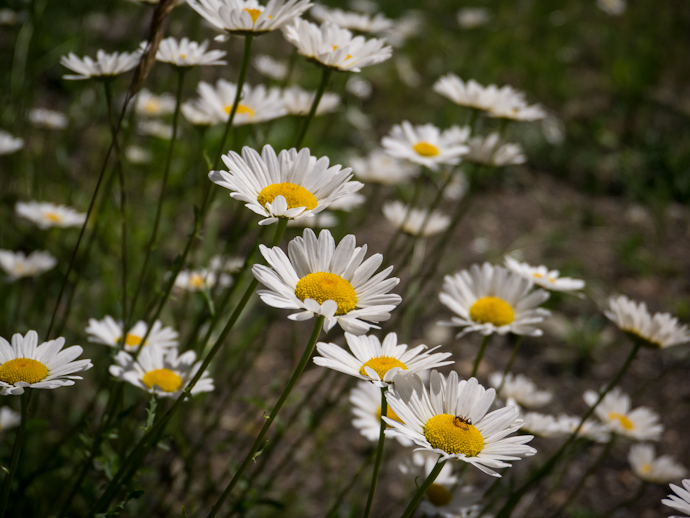
I think these are non-native daisies but they sure are pretty little things.