Skip navigation

Tag Archives: American Kestrel

It’s been a slow summer for me so far. I had a lung infection that slowed me down and then forced me to stop my activities altogether for ten days. Now I am struggling to regain my fitness and get on with summer fun.

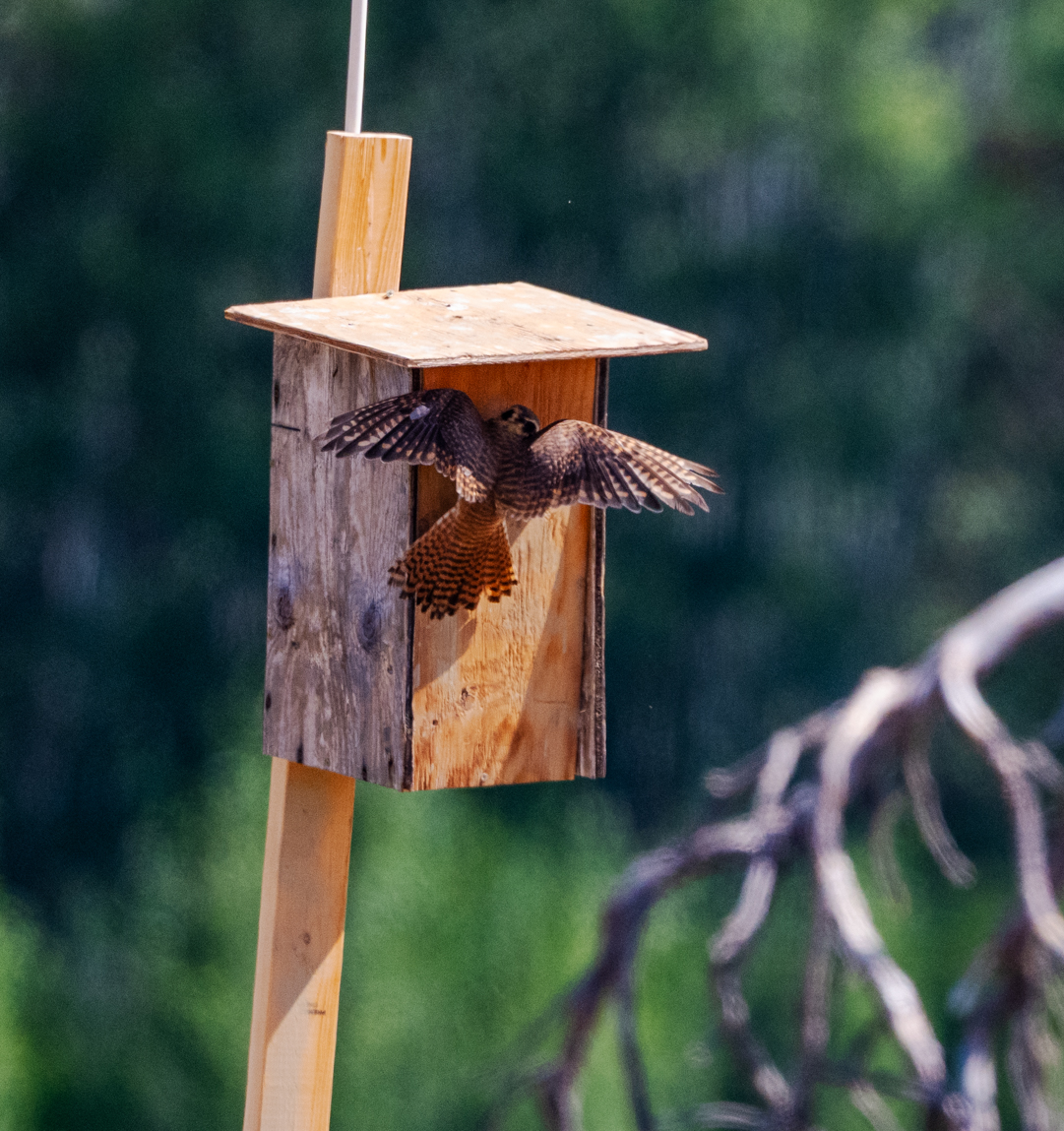
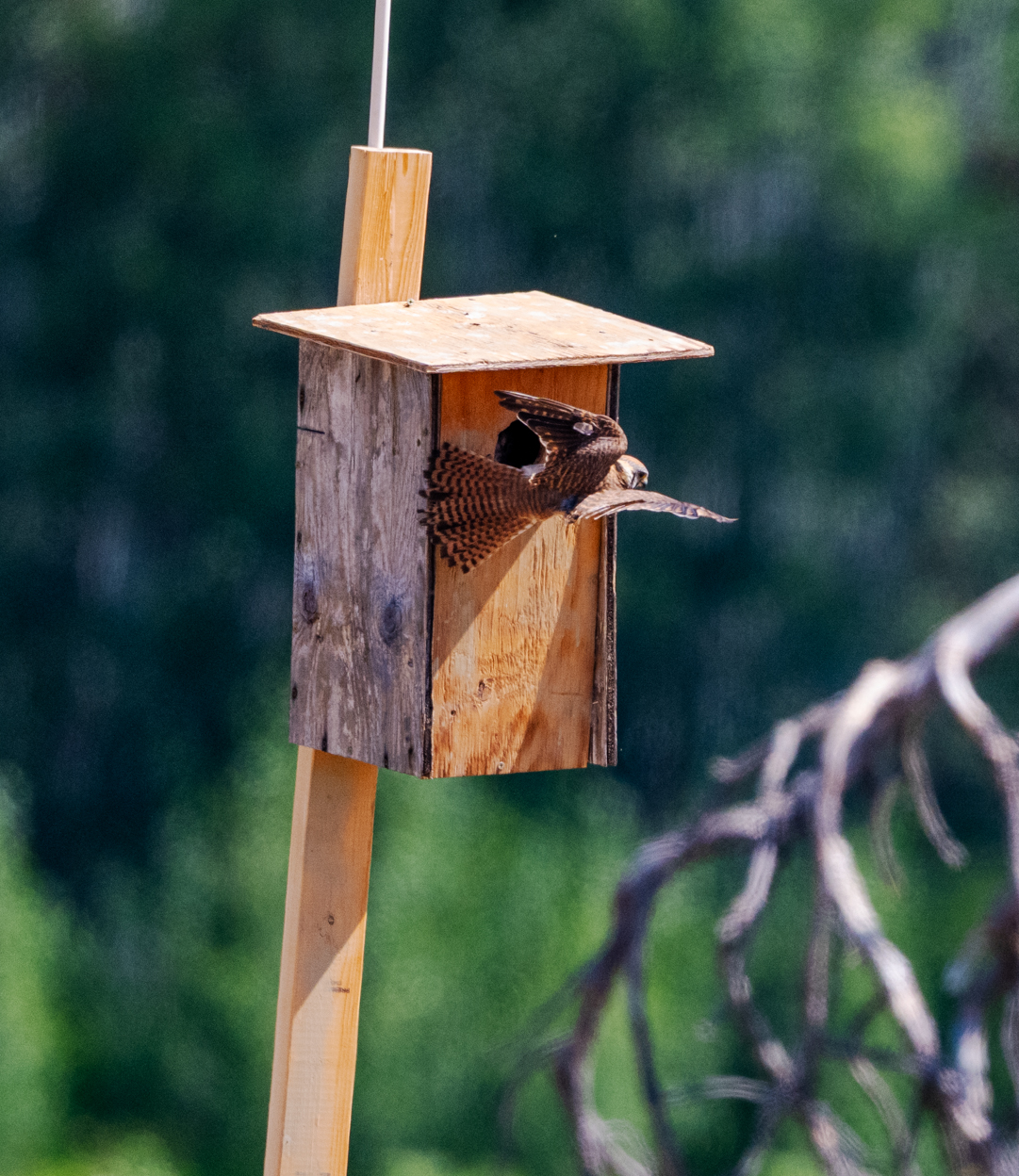
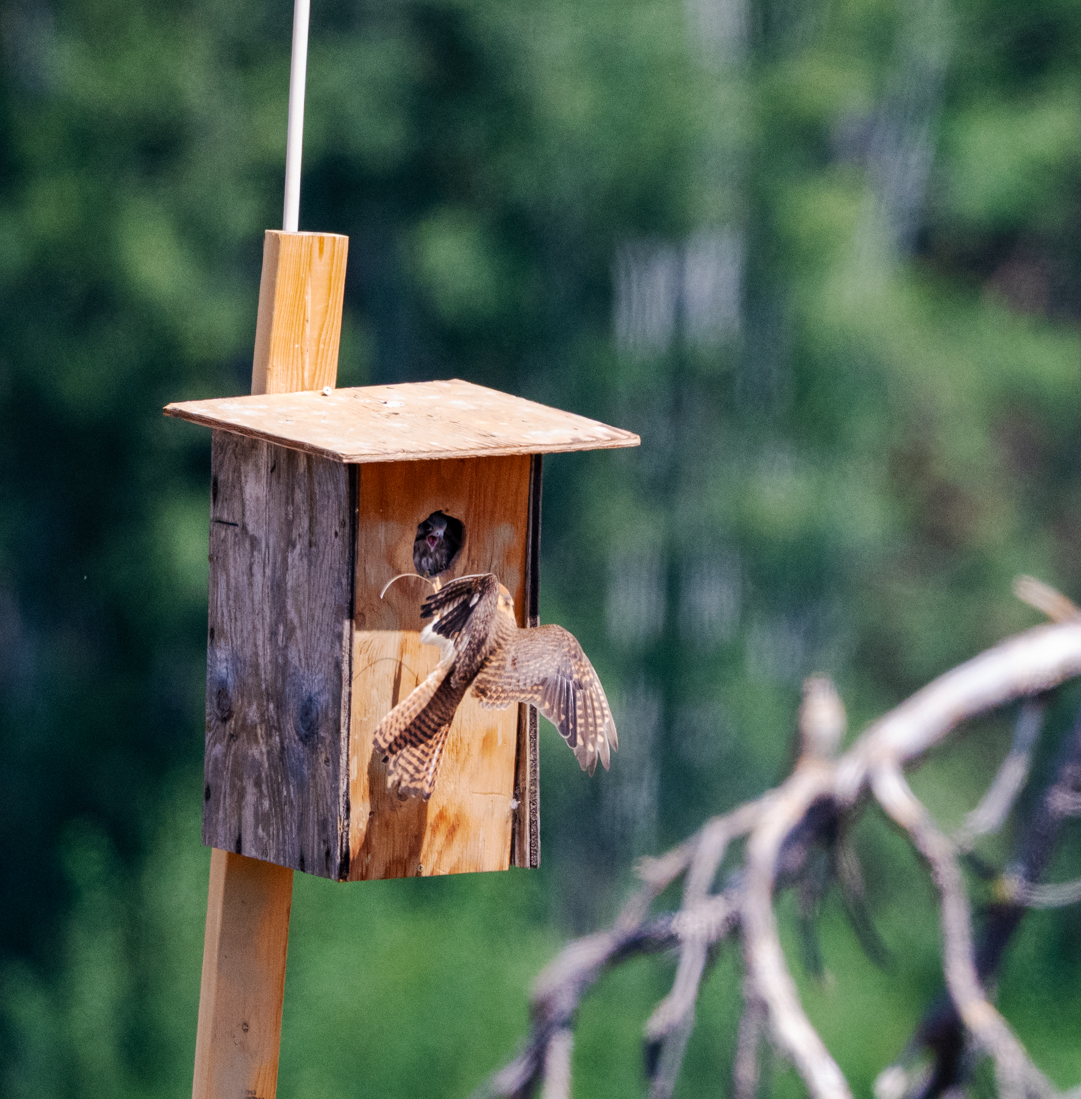
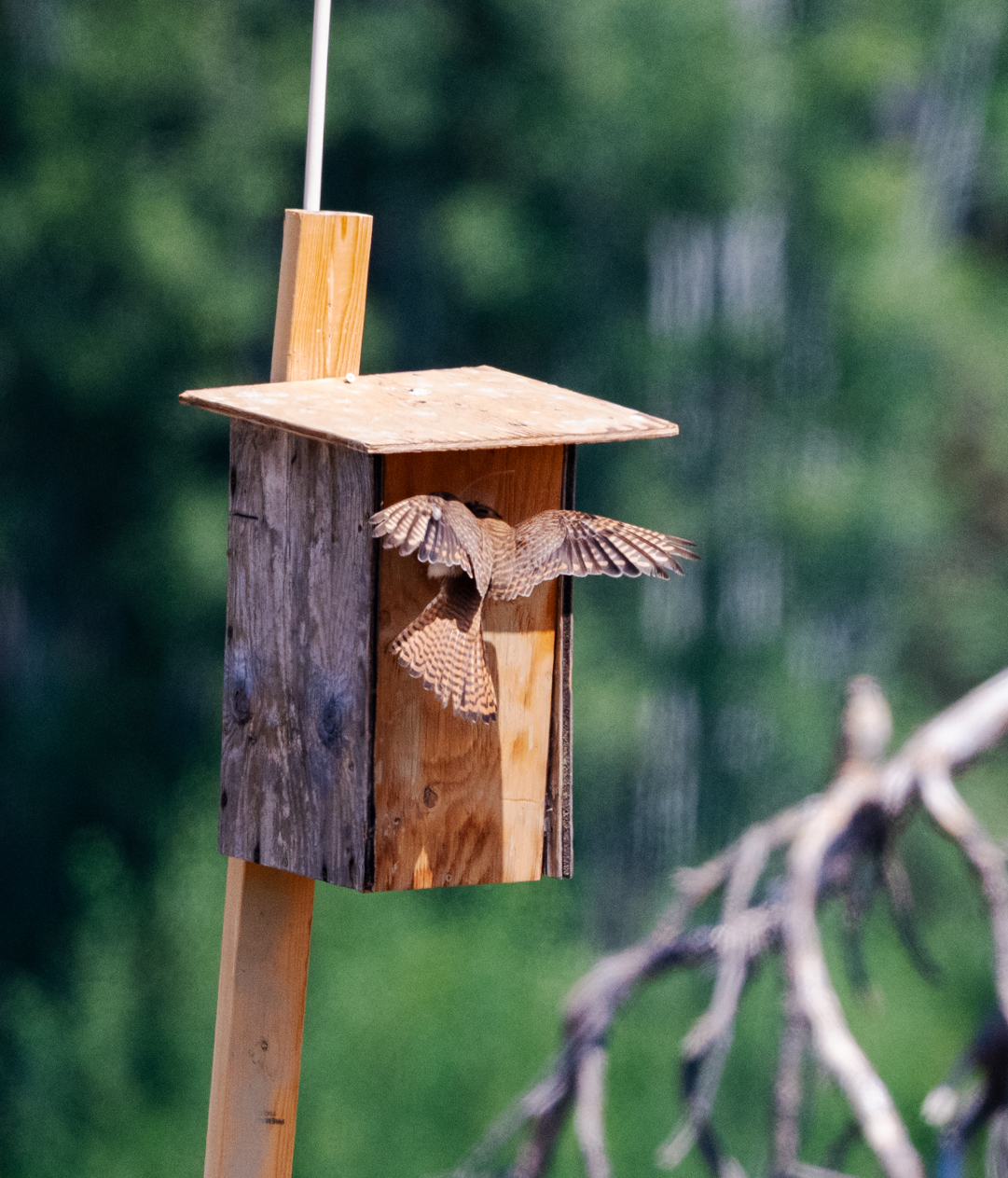
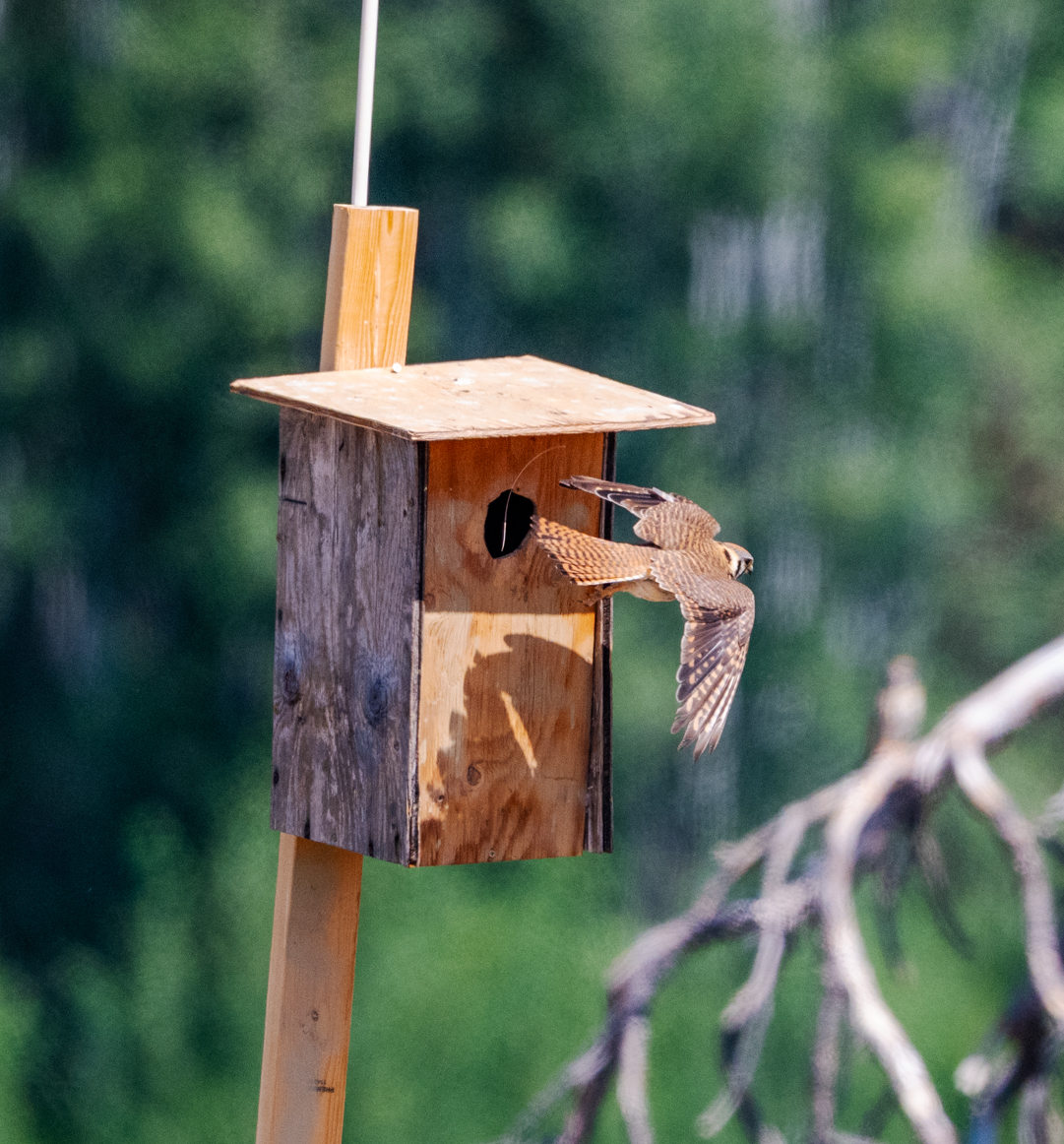
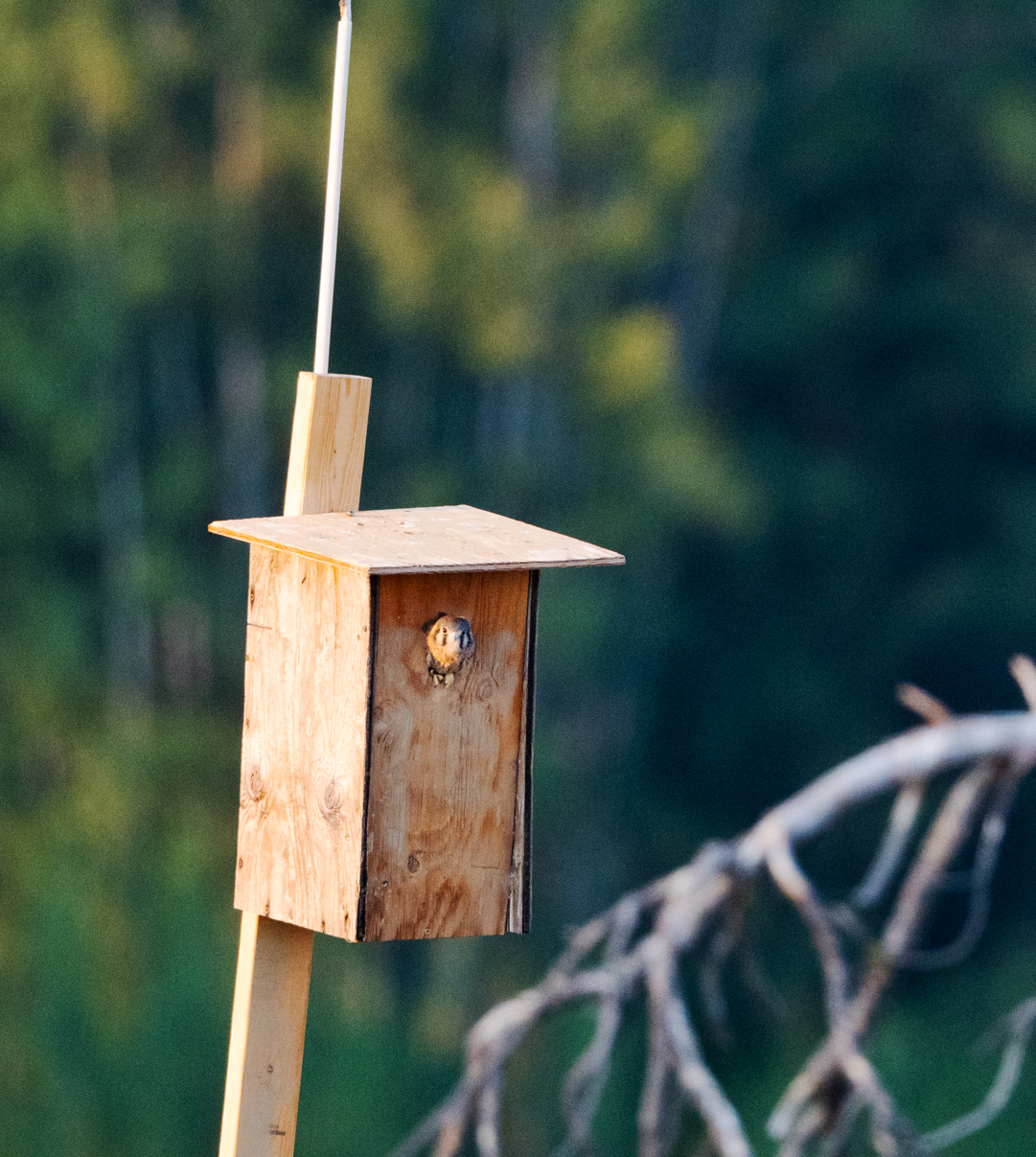
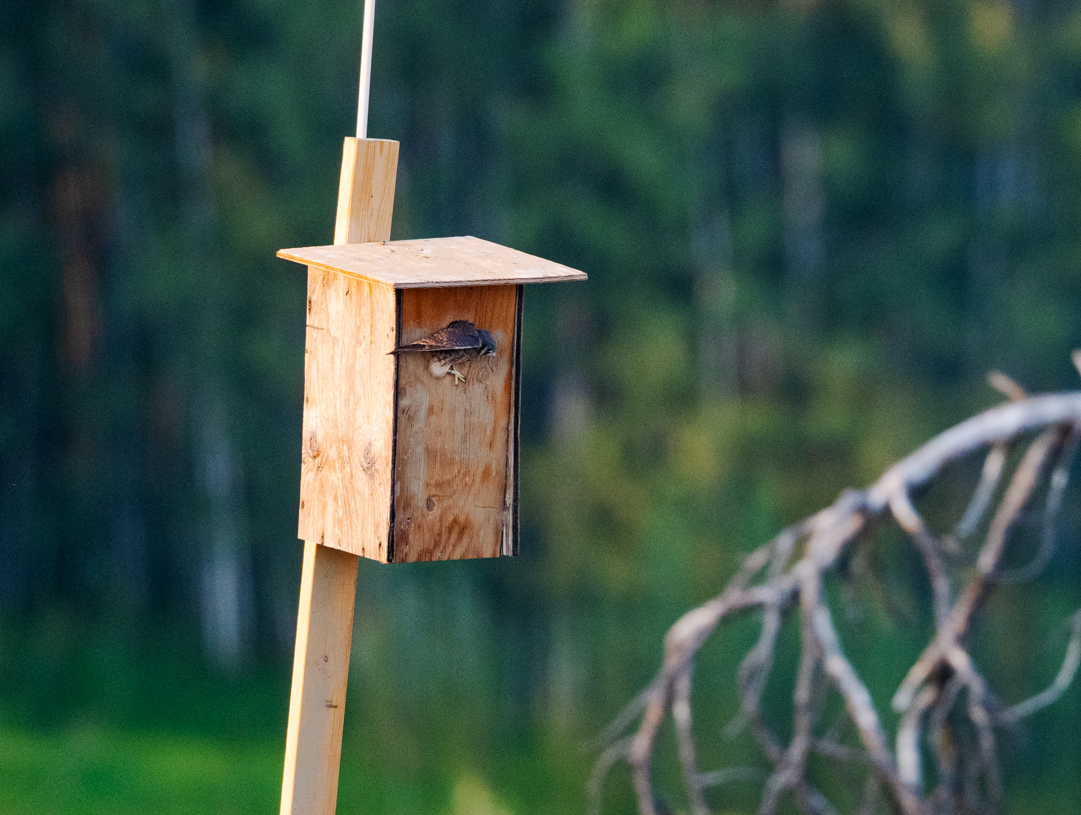
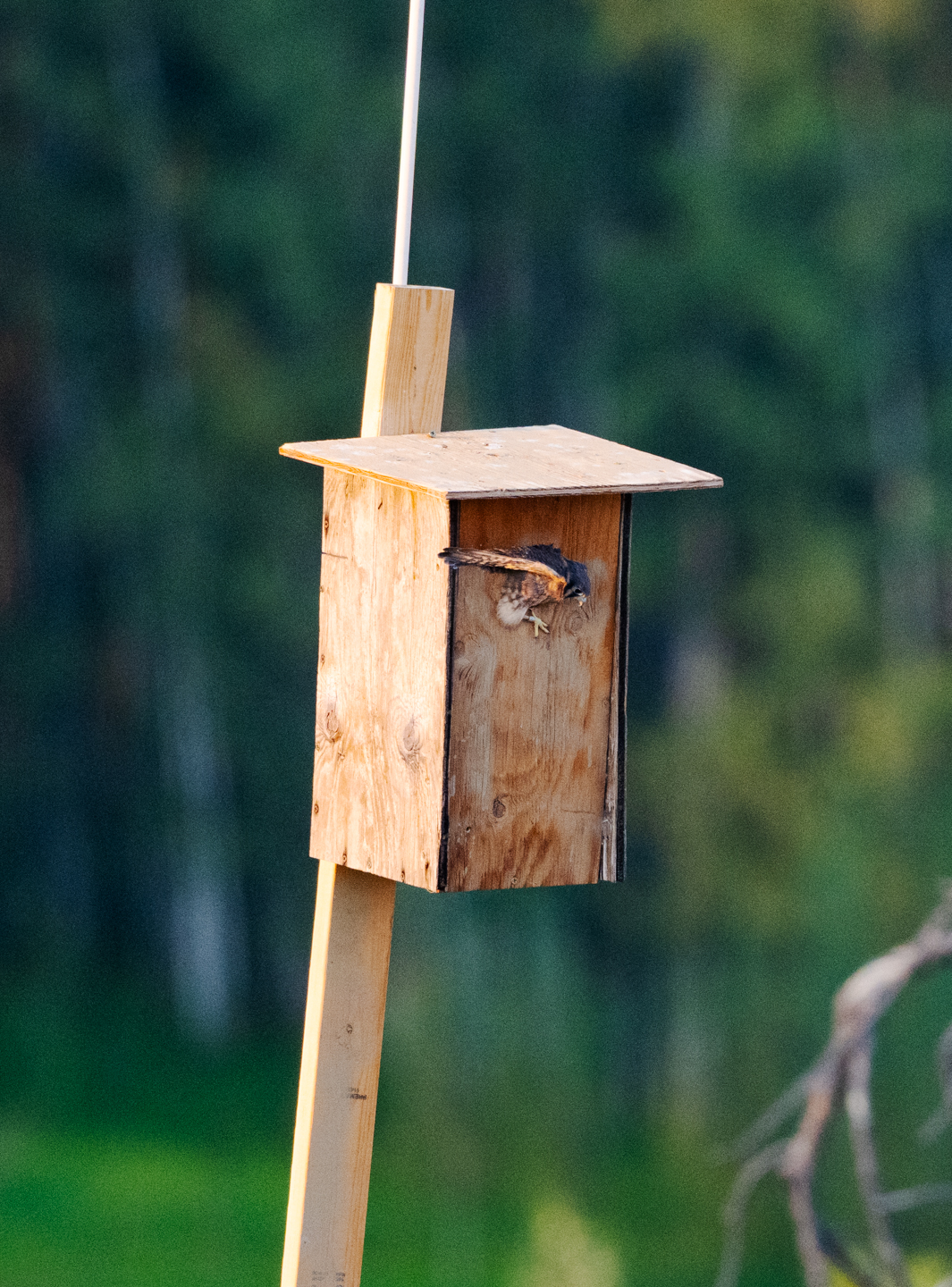
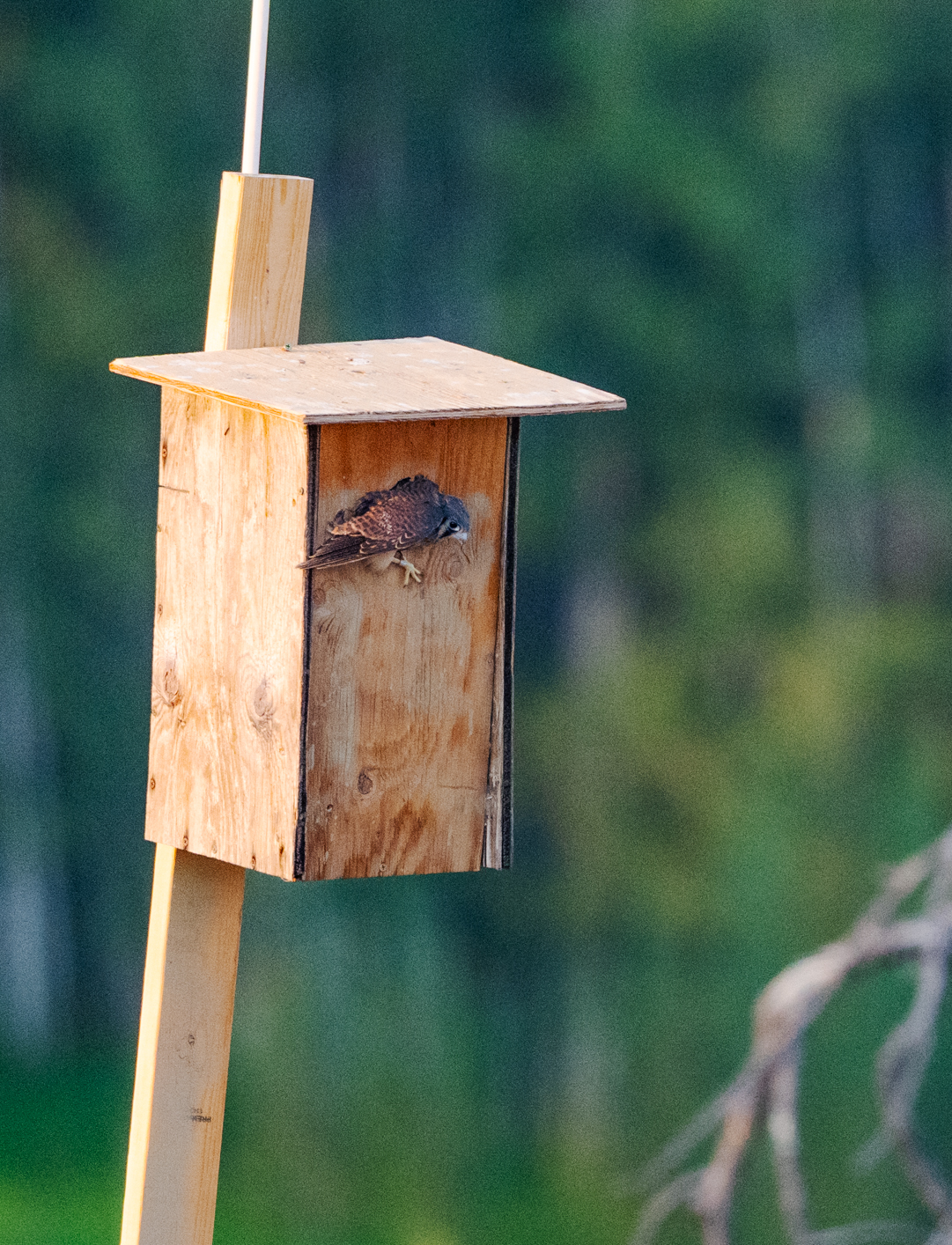
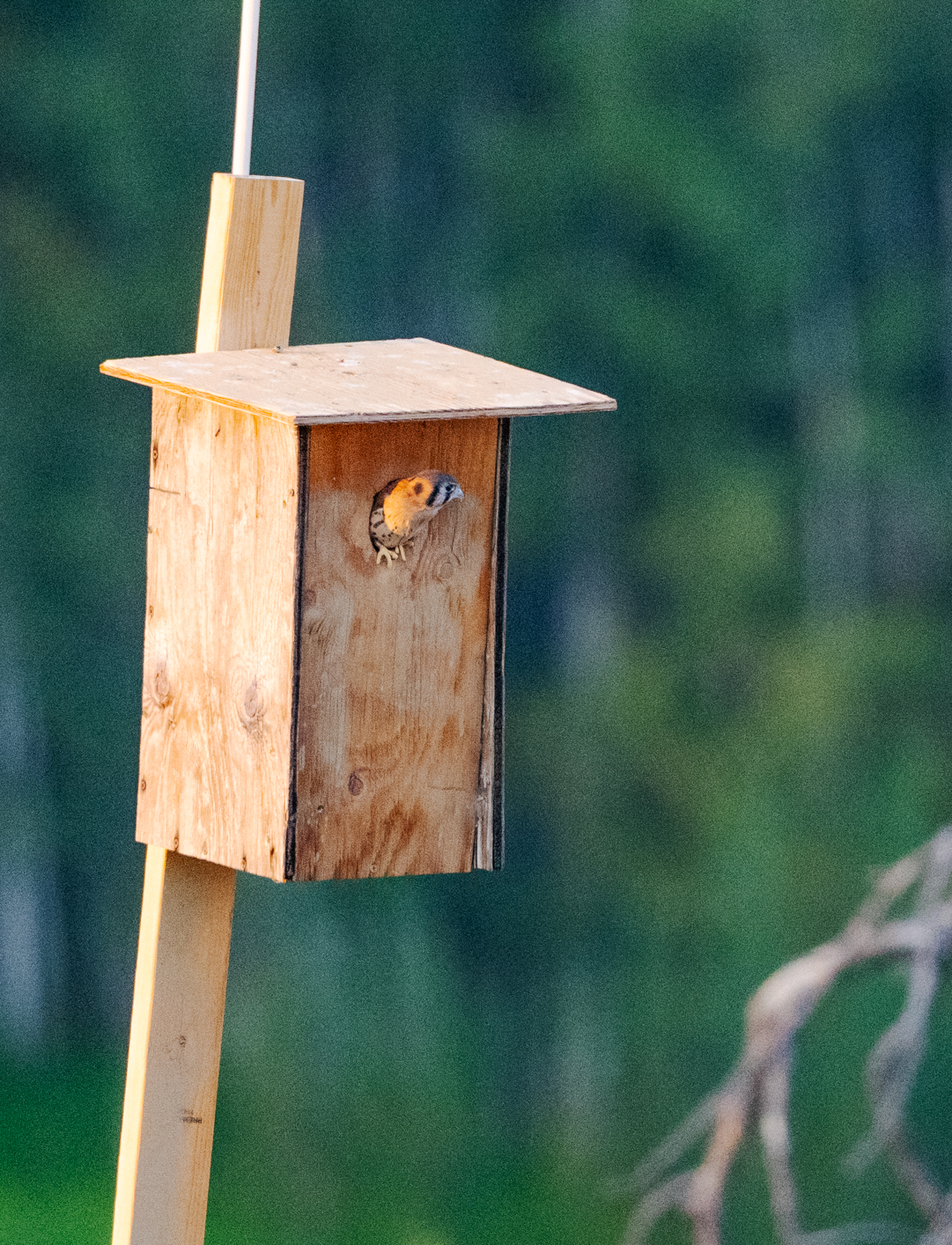
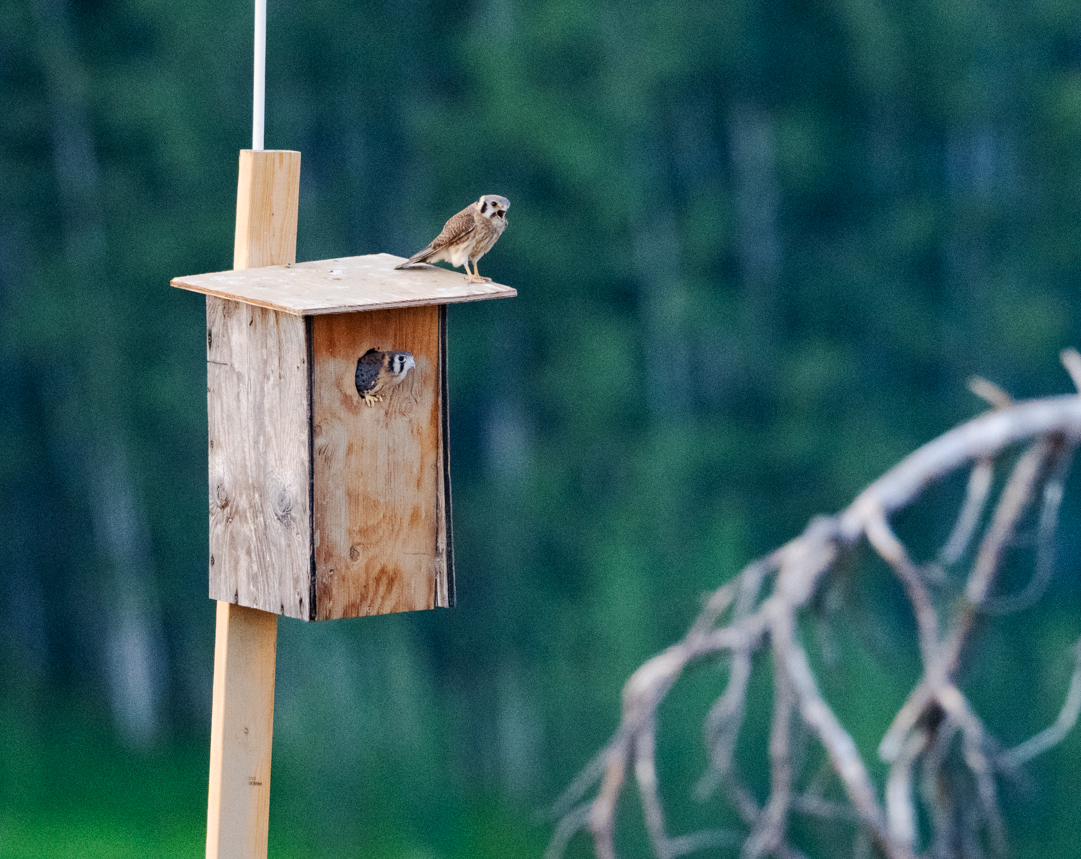
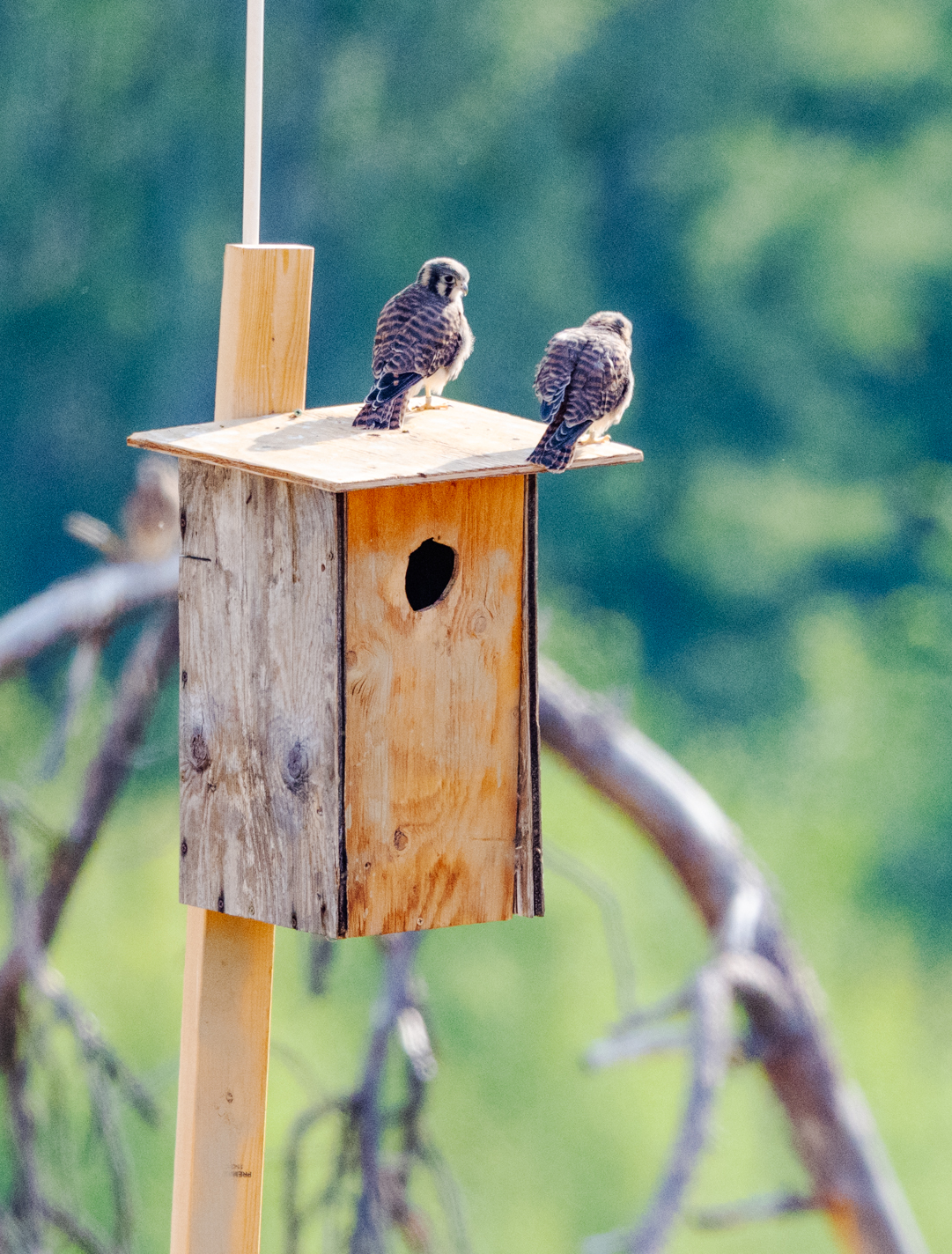
Fortunately, Ken put up a nest box for American Kestrels for my birthday in March. We watched it from the house, hoping our smallest falcons would find it and use it to raise their young. First there were starlings, much to my disgust but they didn’t stick around! Yay! Some songbirds perched near it but they could see it was too big for their use. Finally, kind of late in their season, a pair of American Kestrels chose it for their own! We watched as they came and went. For us, who live without tv, it was instant entertainment. We set up the scope, in an inconvenient place, where we could watch the box and the nearby perch anytime. I practiced digiscoping with my phone too.
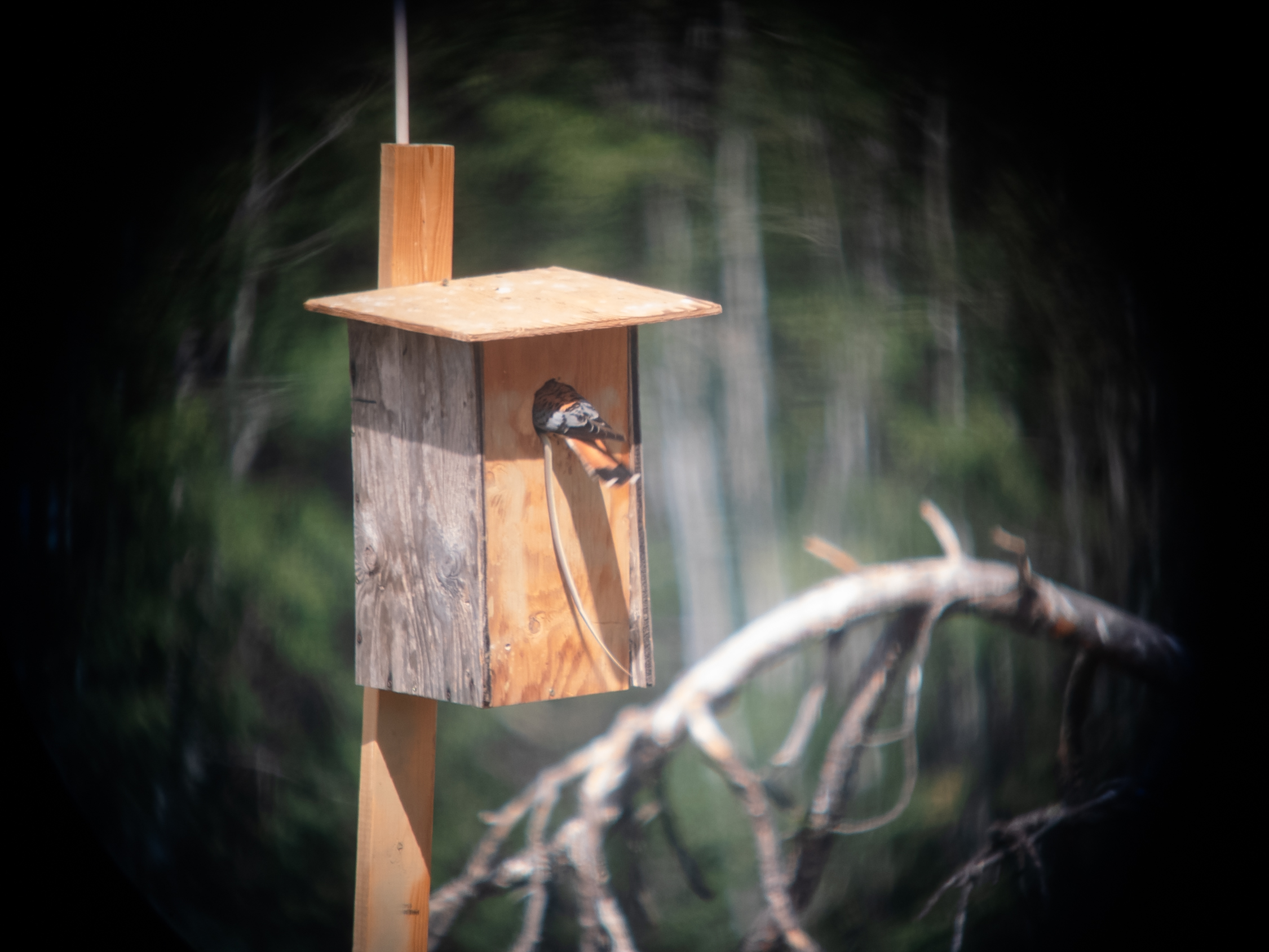
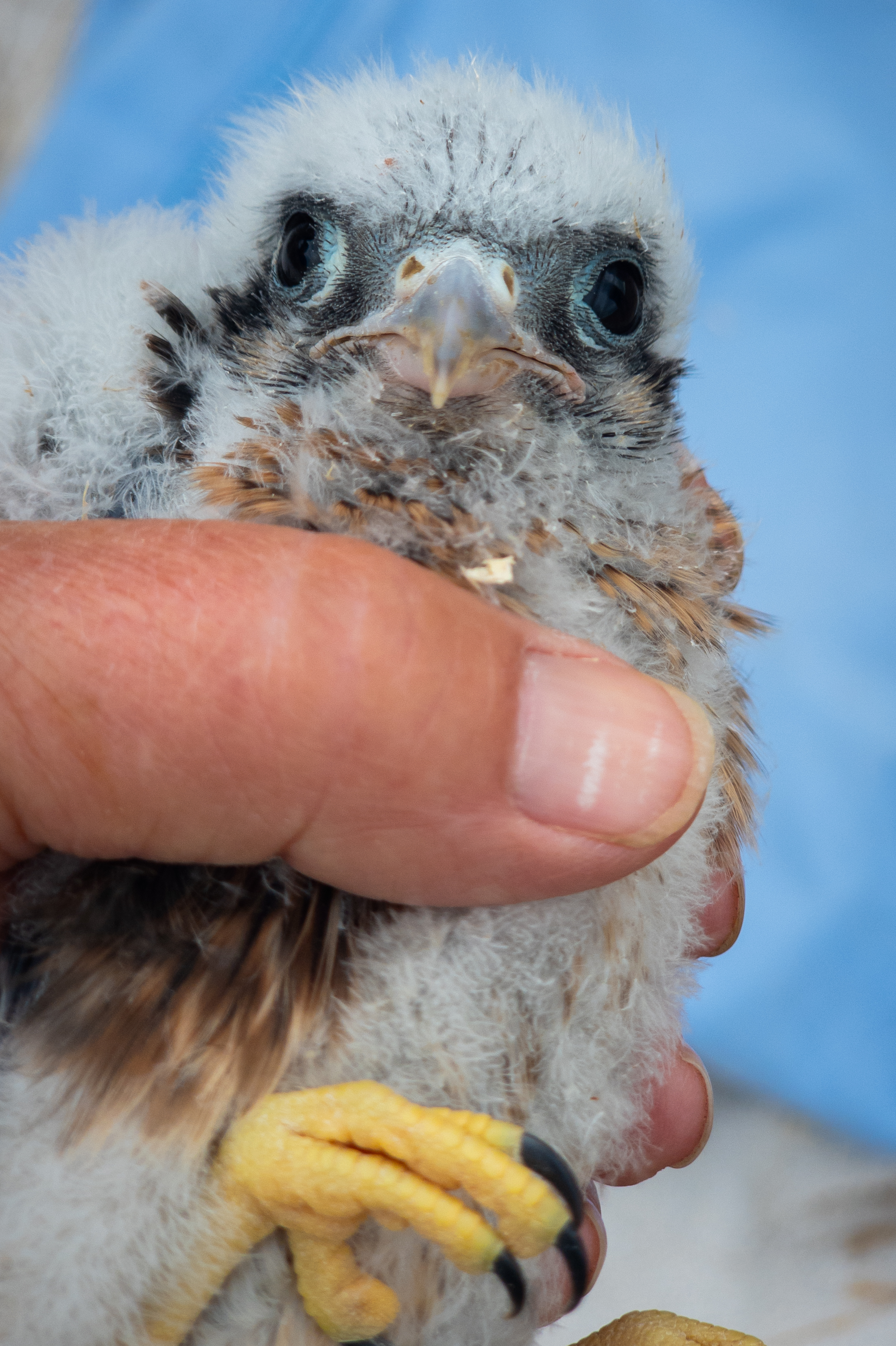
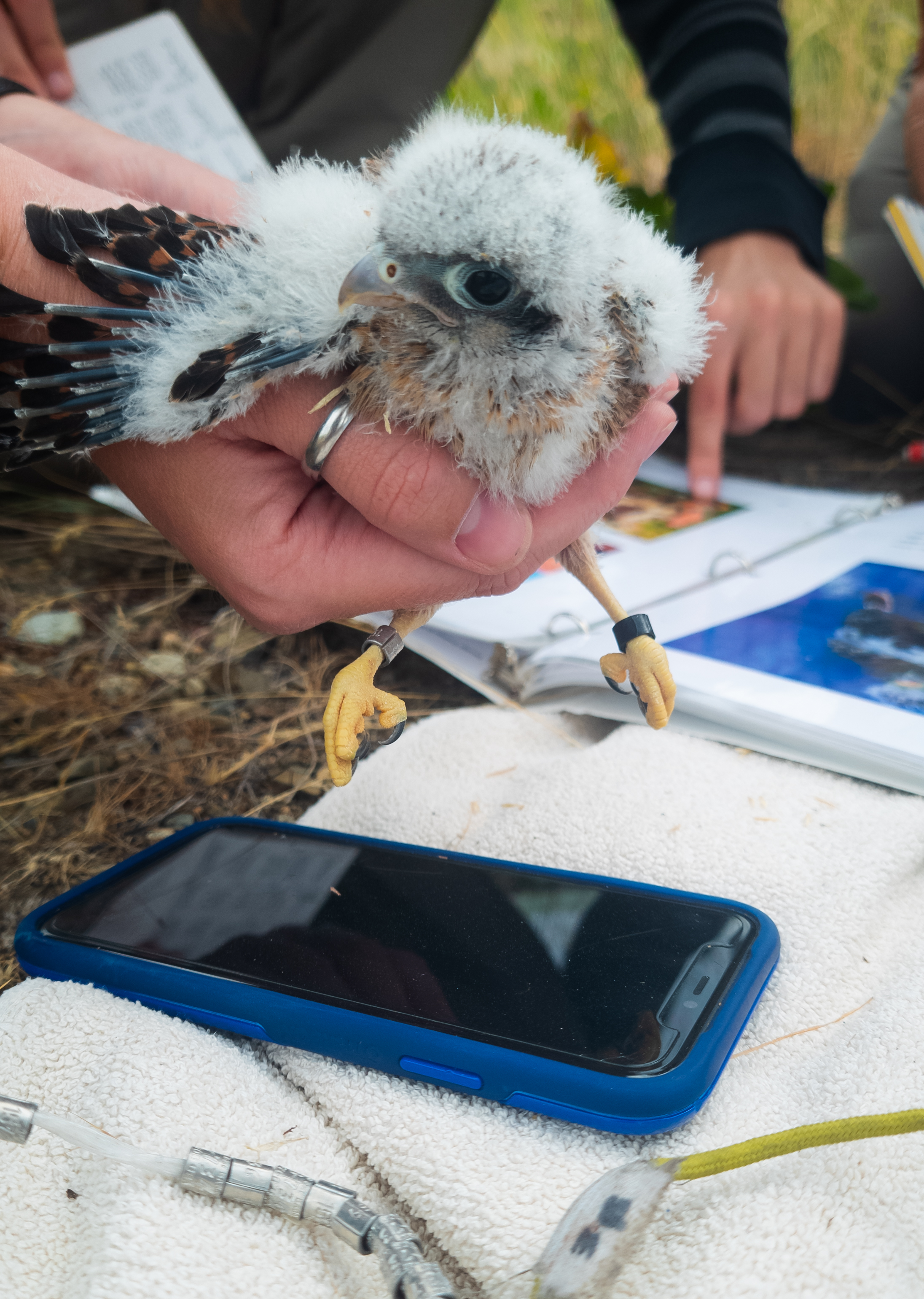
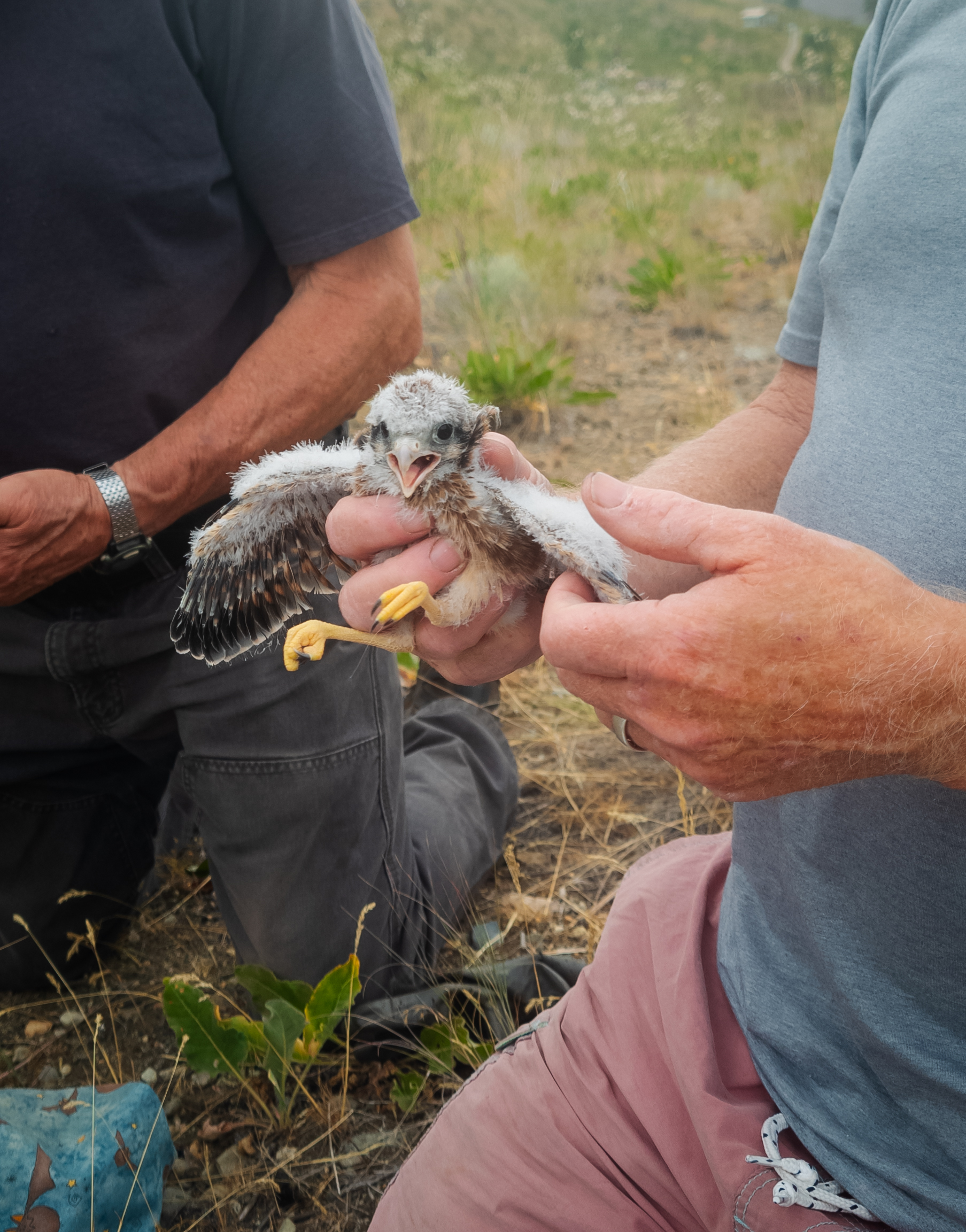
North Central Washington Audubon Society is studying kestrel boxes in Douglas and Okanogan Counties. You can read about their long-term project here. My friend Julie has been monitoring boxes here in the Methow and she asked if I wanted to add ours to the study. Sure. She came by with a peeper camera with a long handle that could look in the box and we saw the first egg. A week later, there were five! And then there were youngsters – four of them. Part of the project includes banding the kestrel young so a permitted bander came and climbed up on a borrowed ladder and carefully plucked the little ones from the box. It was noted that there was one unhatched egg. For whatever reason it wasn’t viable. The little ones got a silver band on their right leg and a black band on their left leg. Last year’s kestrels got blue bands on their left legs. There were three girls and a boy. After banding they were returned to the box and soon the parents were back to feeding them. It’s a big job to keep baby falcons fed. They grow very fast.
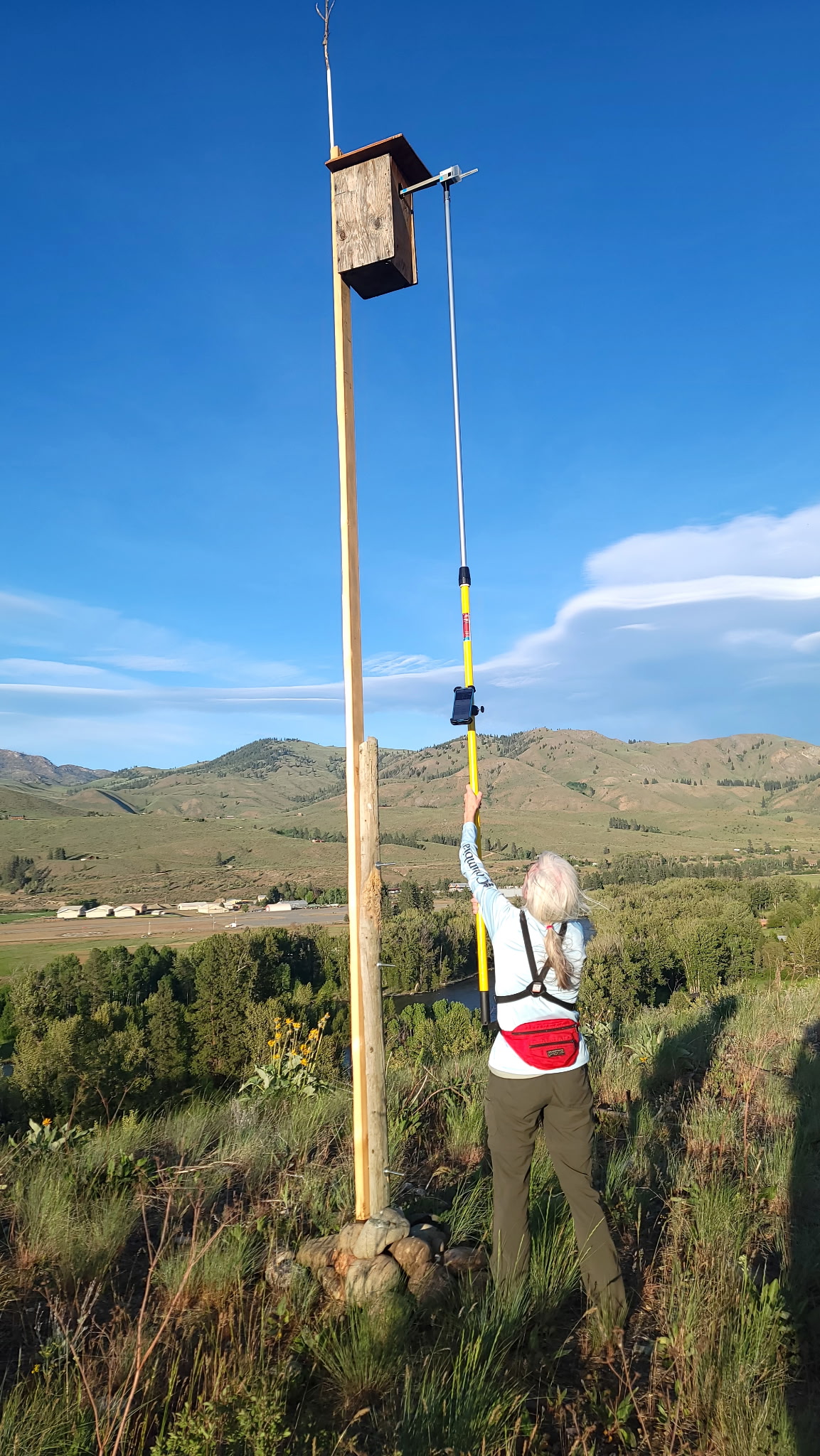
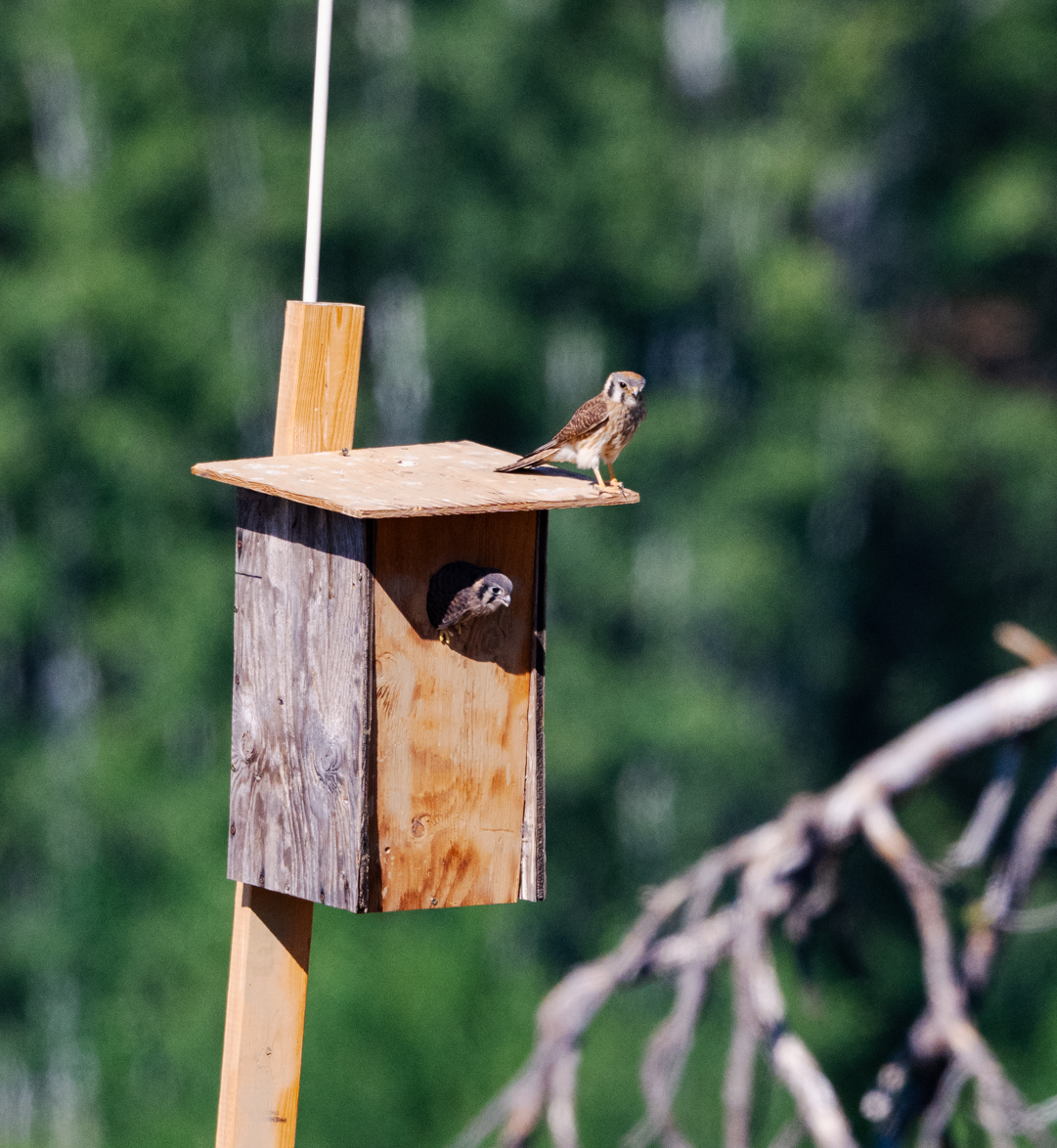
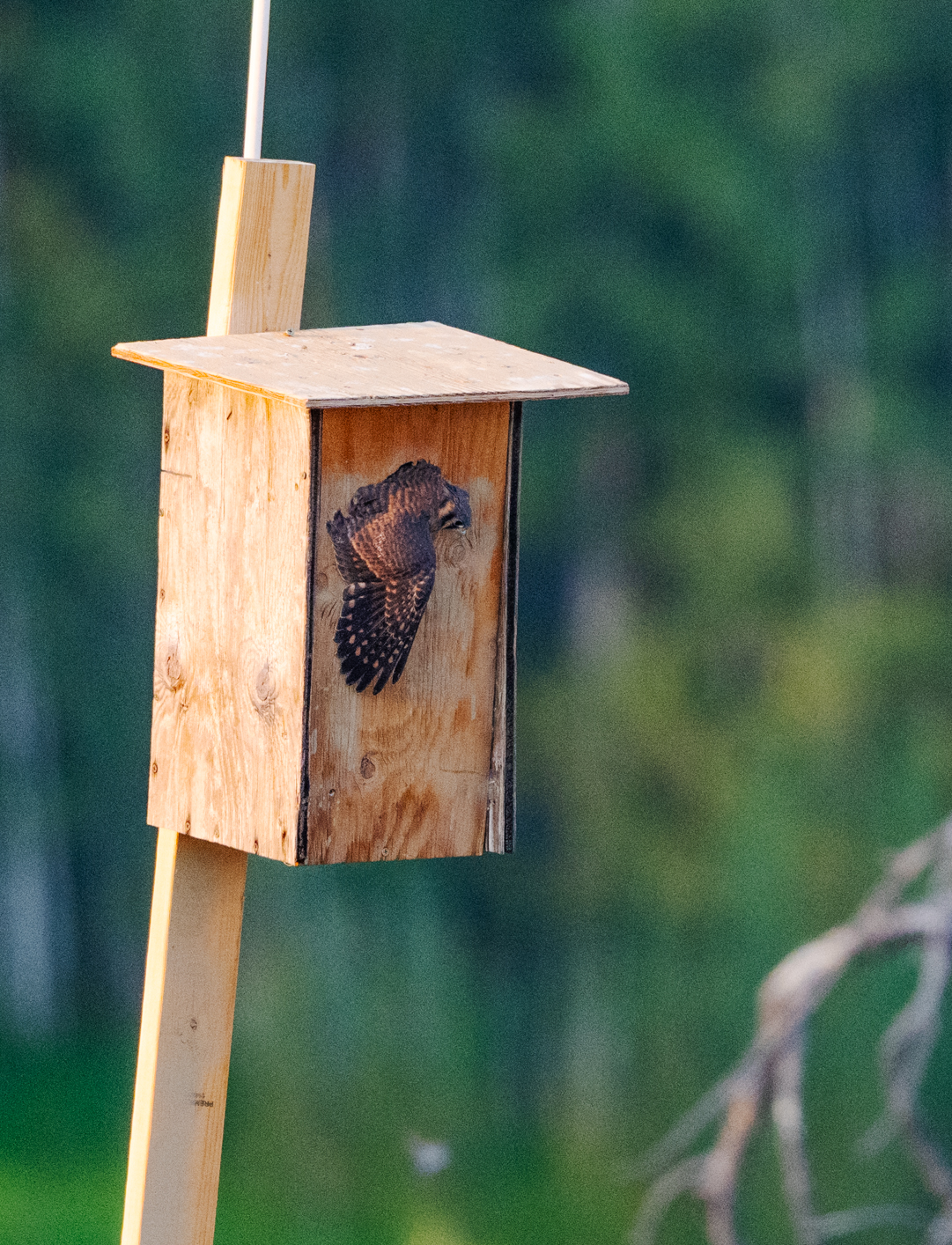
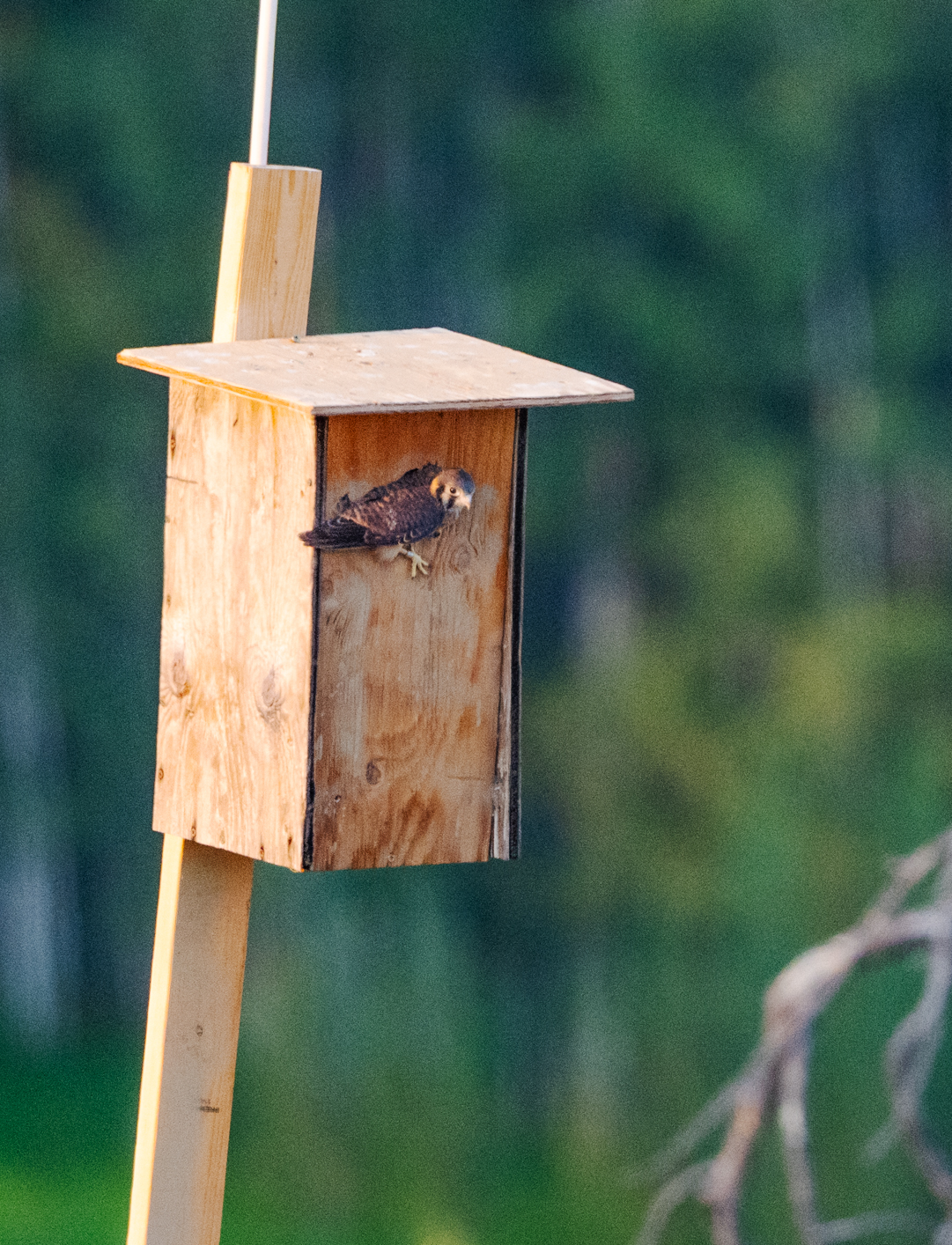
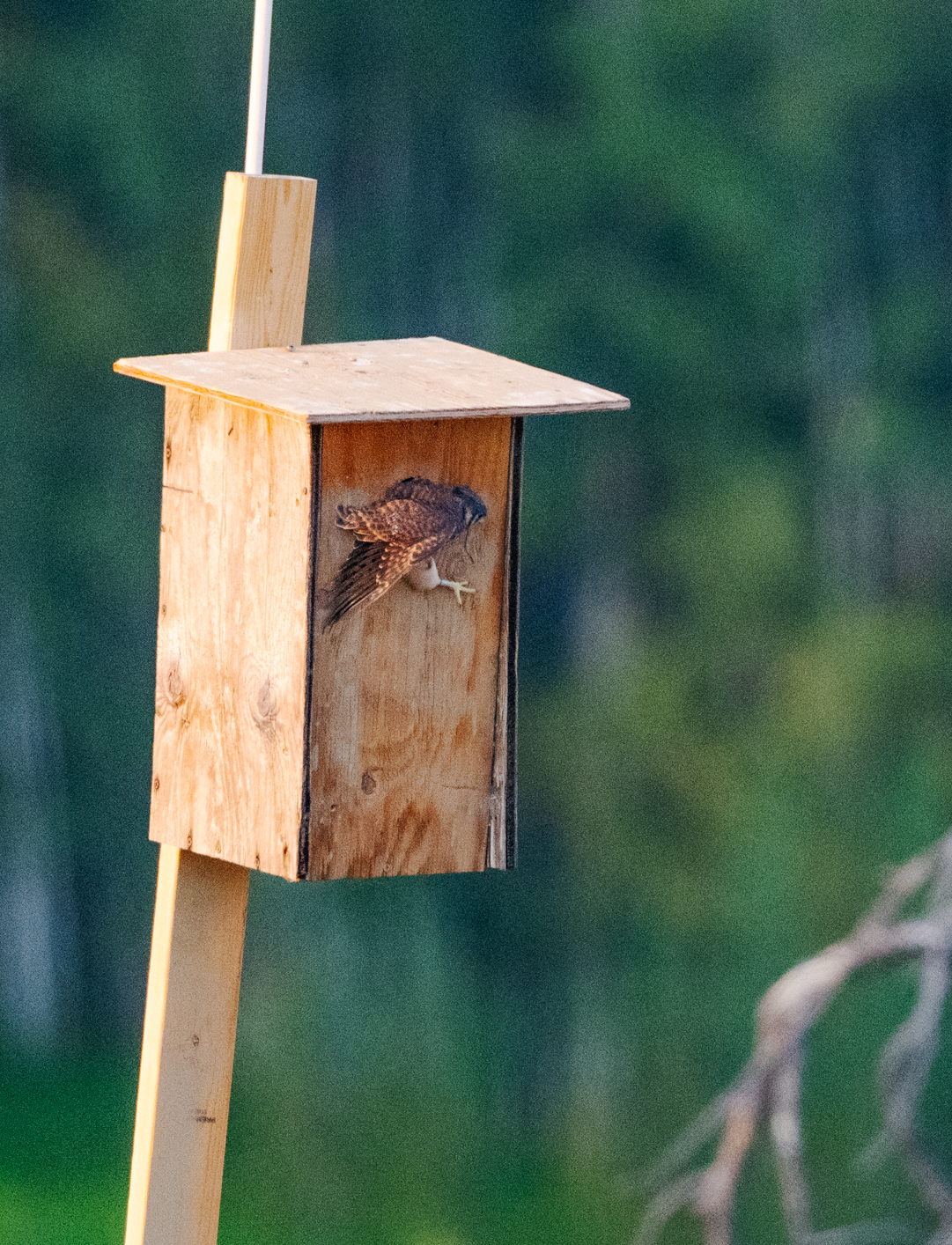
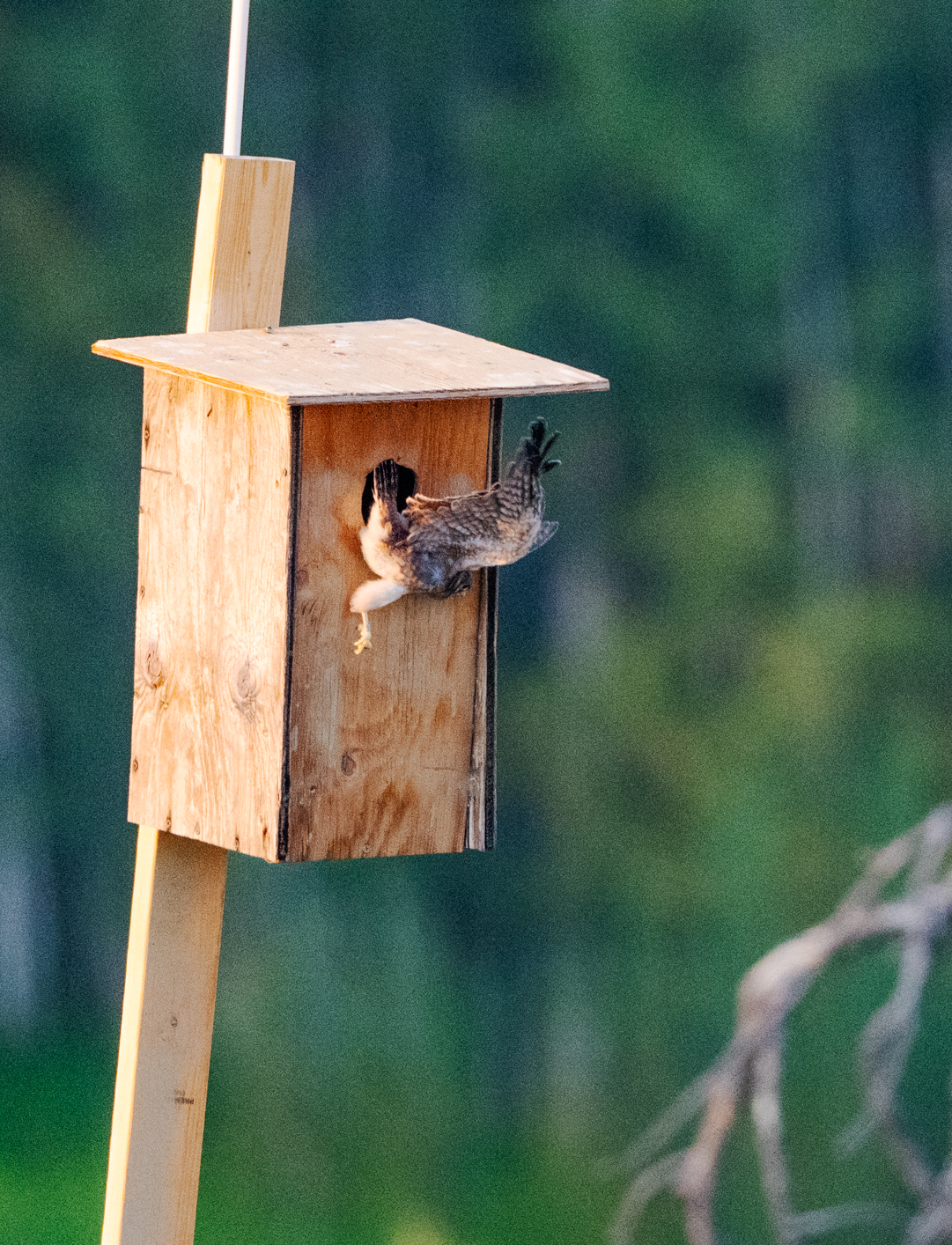
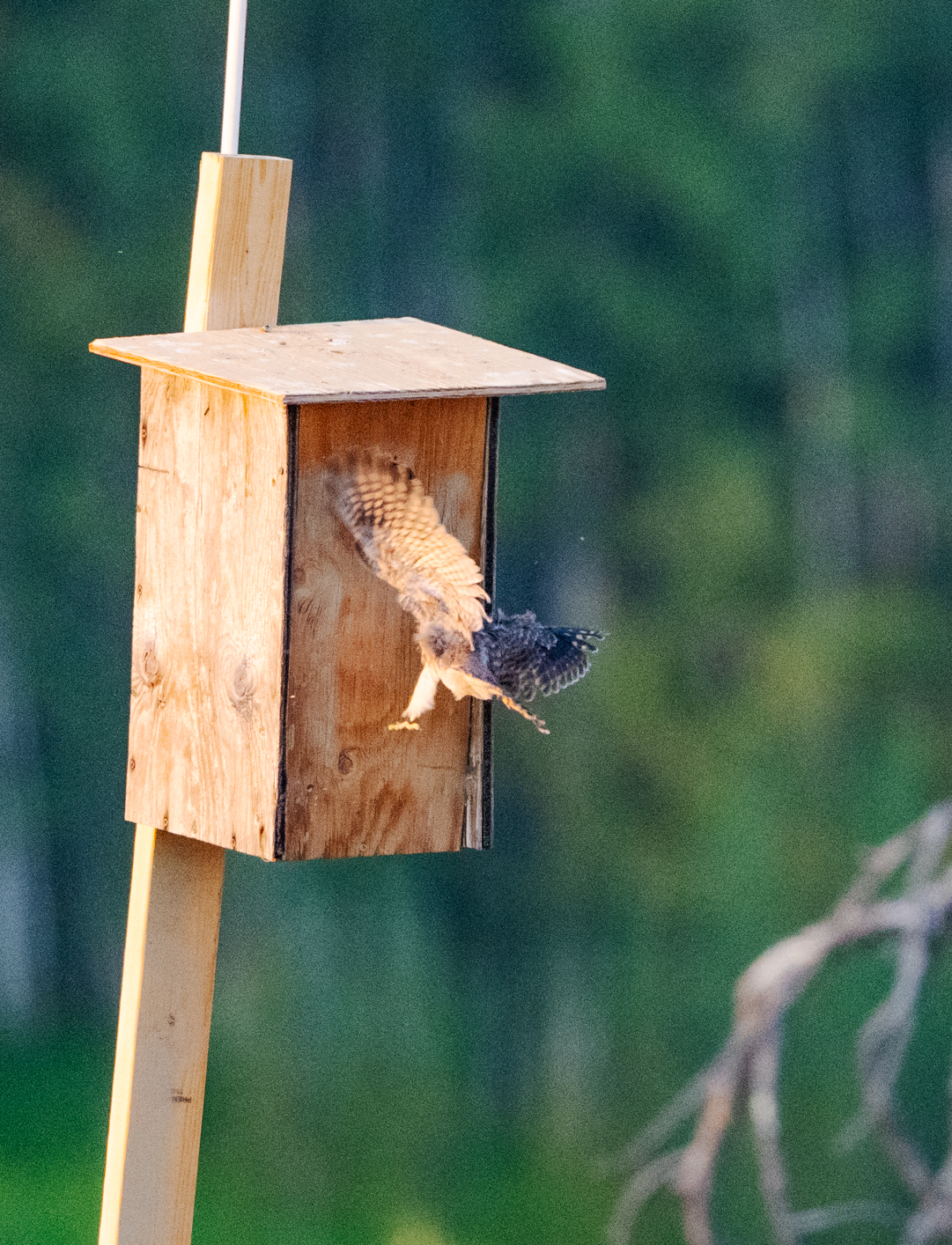
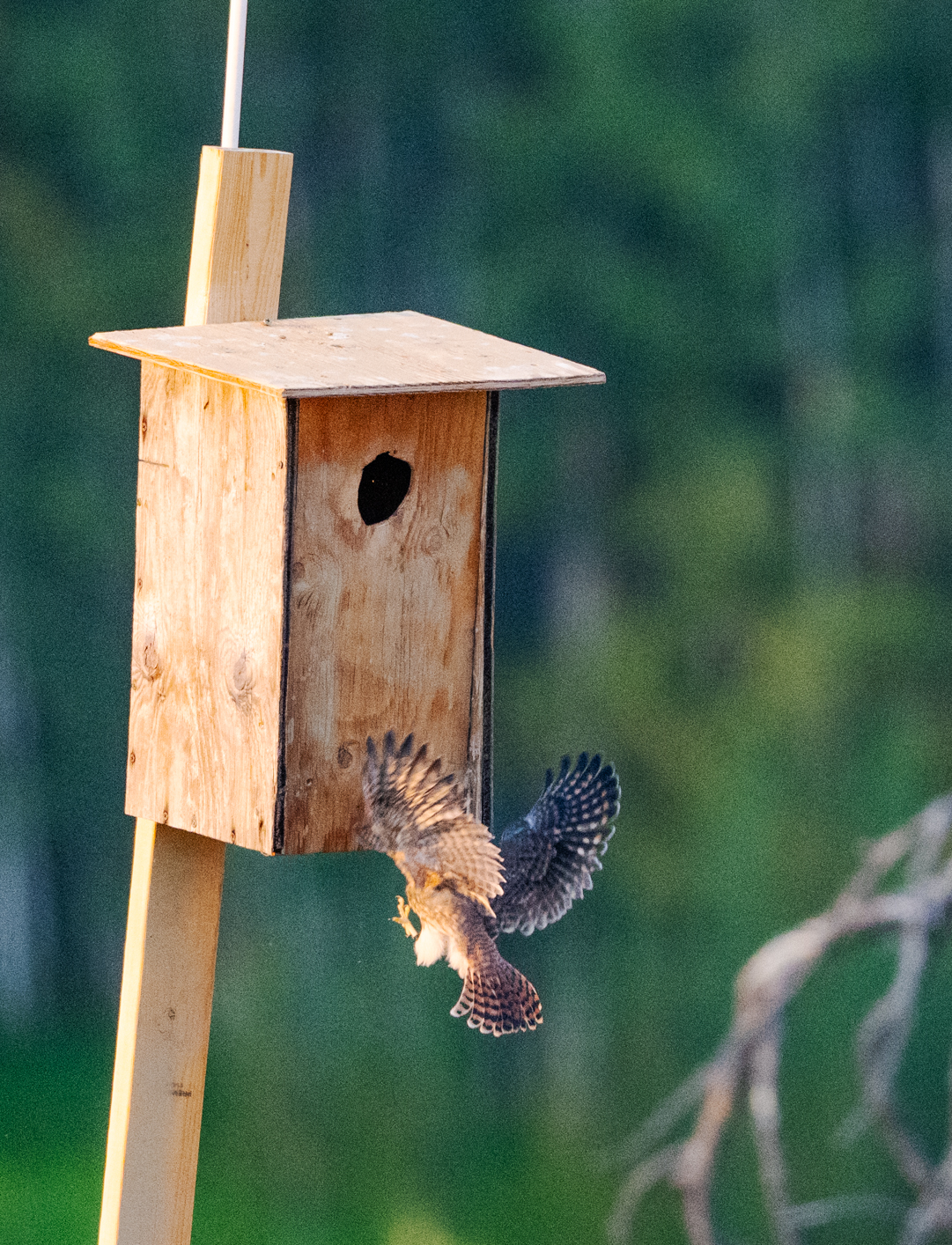
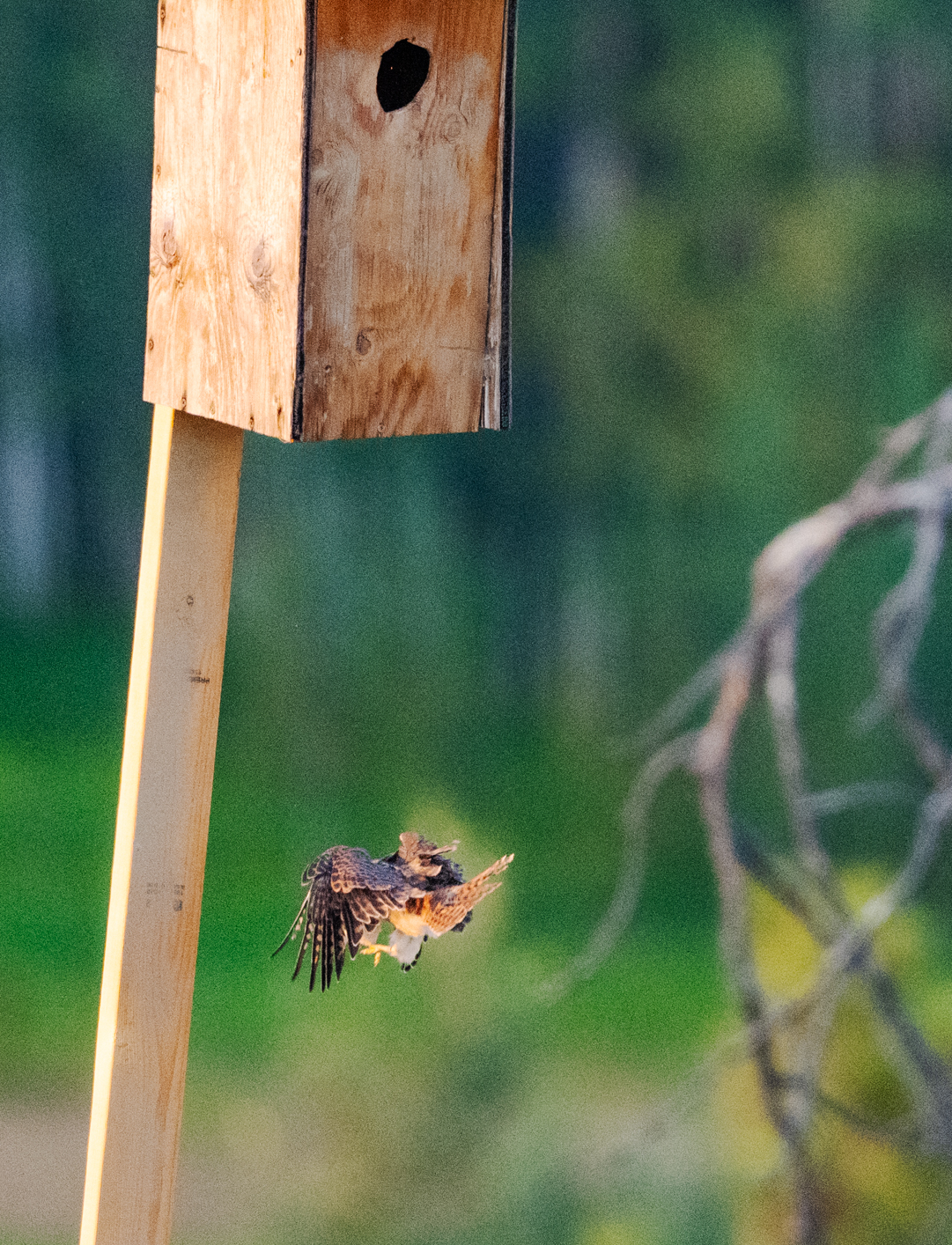
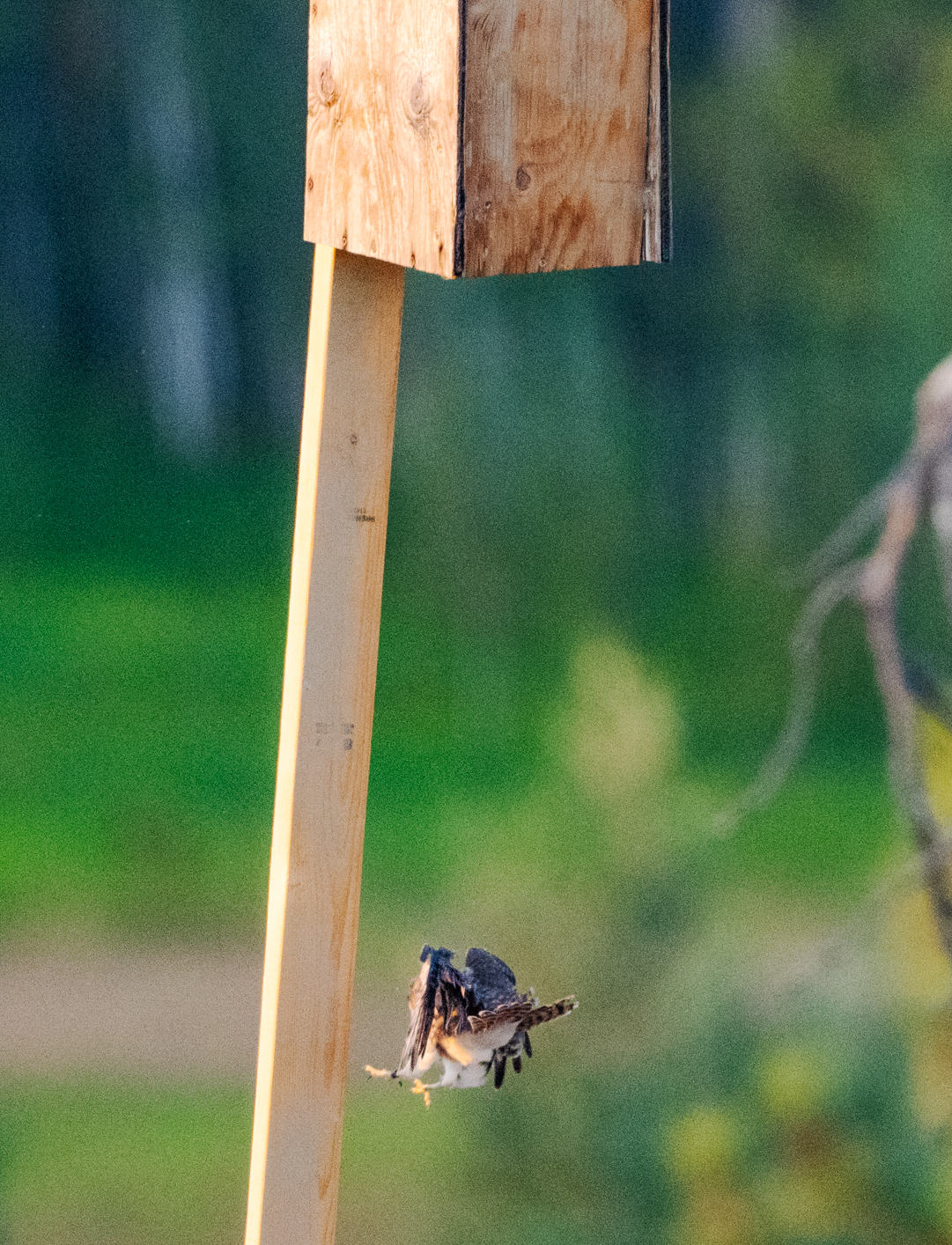
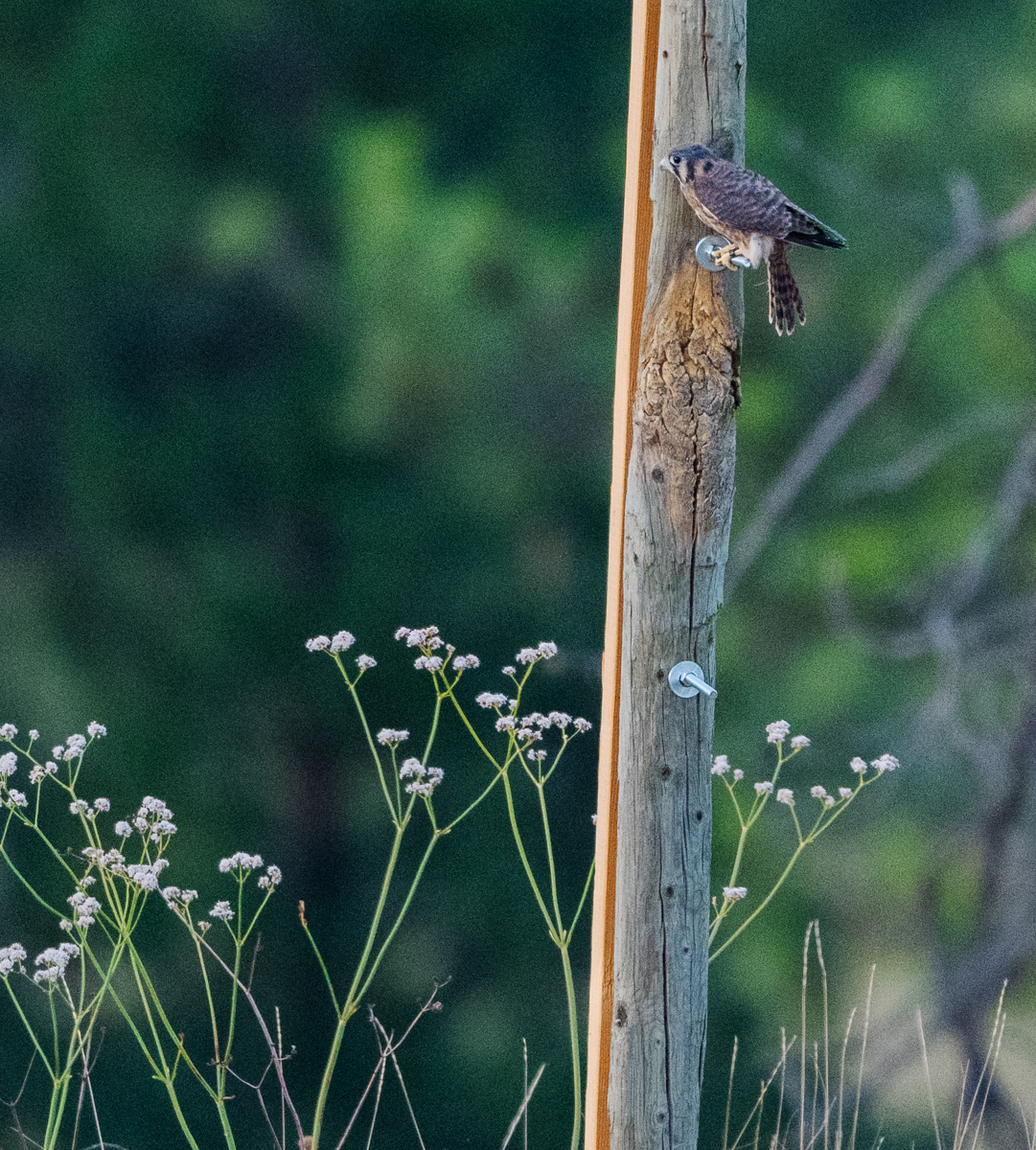
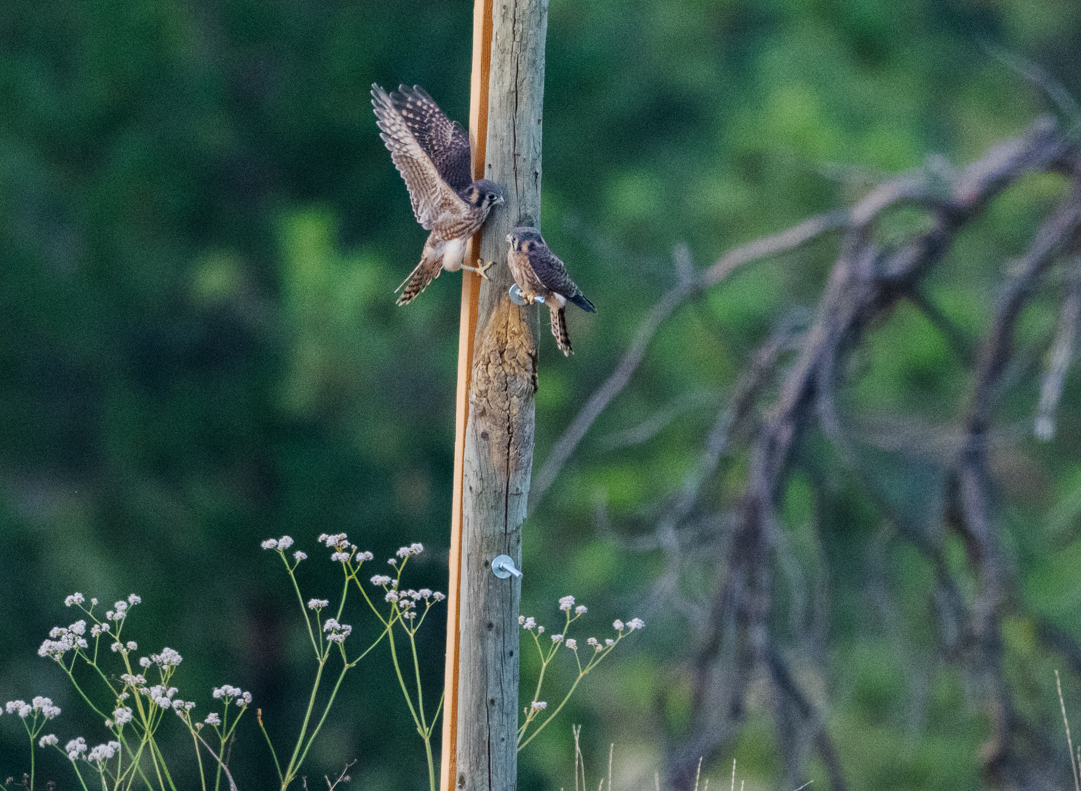
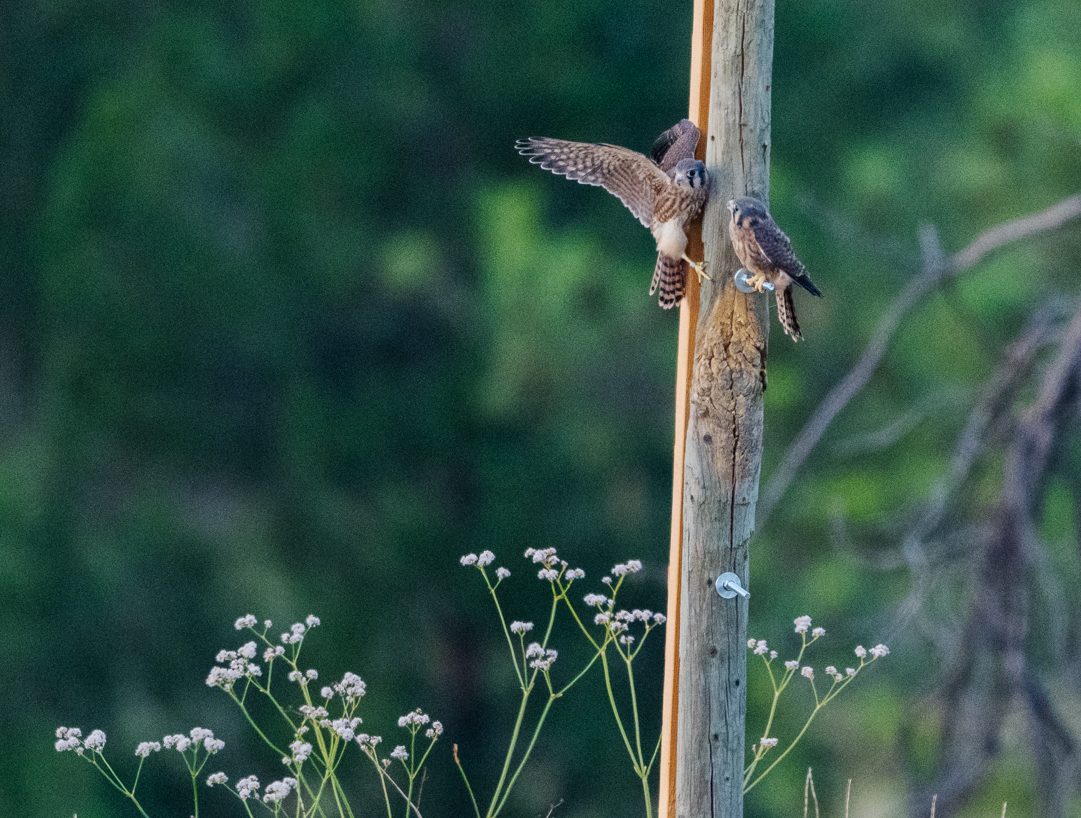
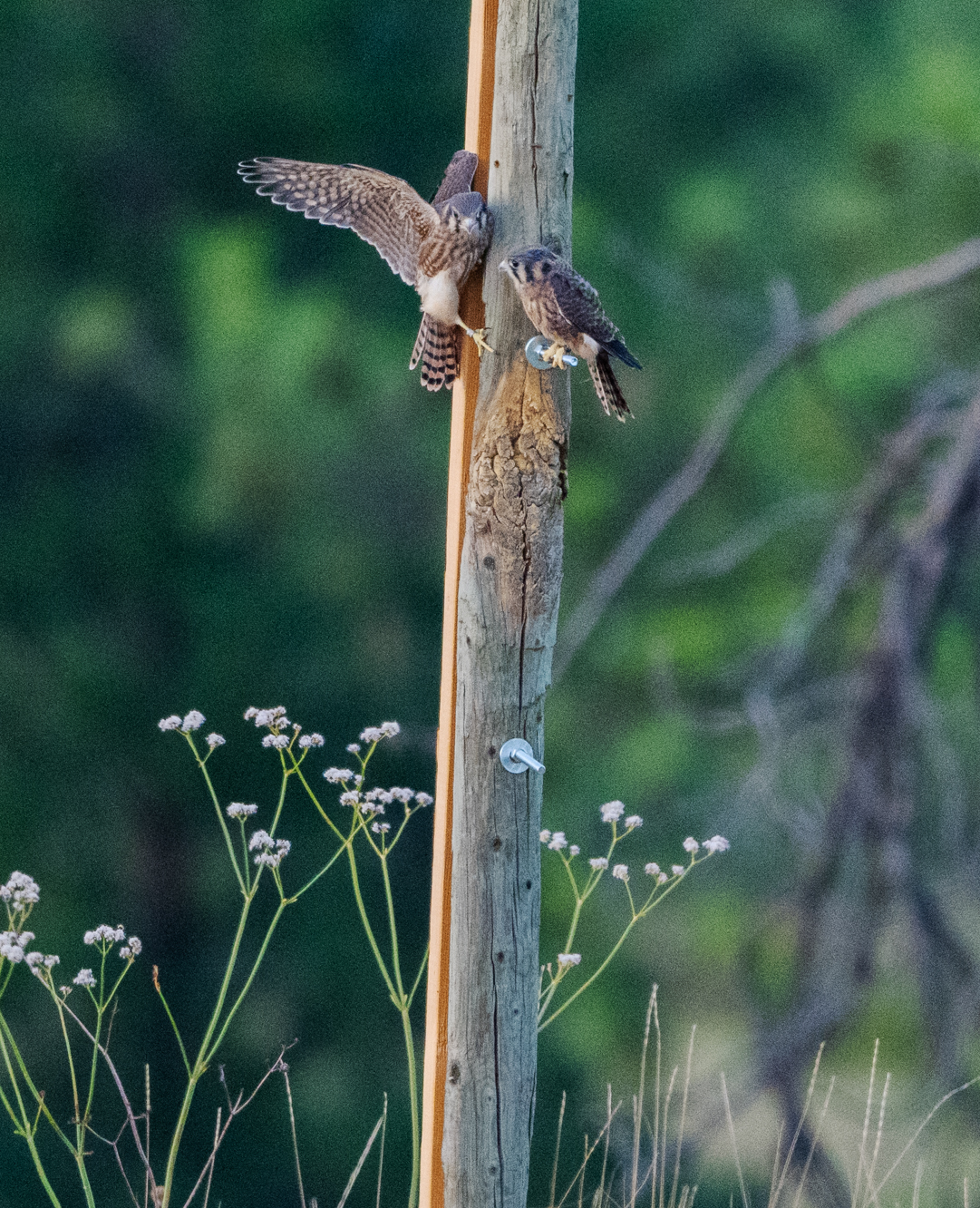
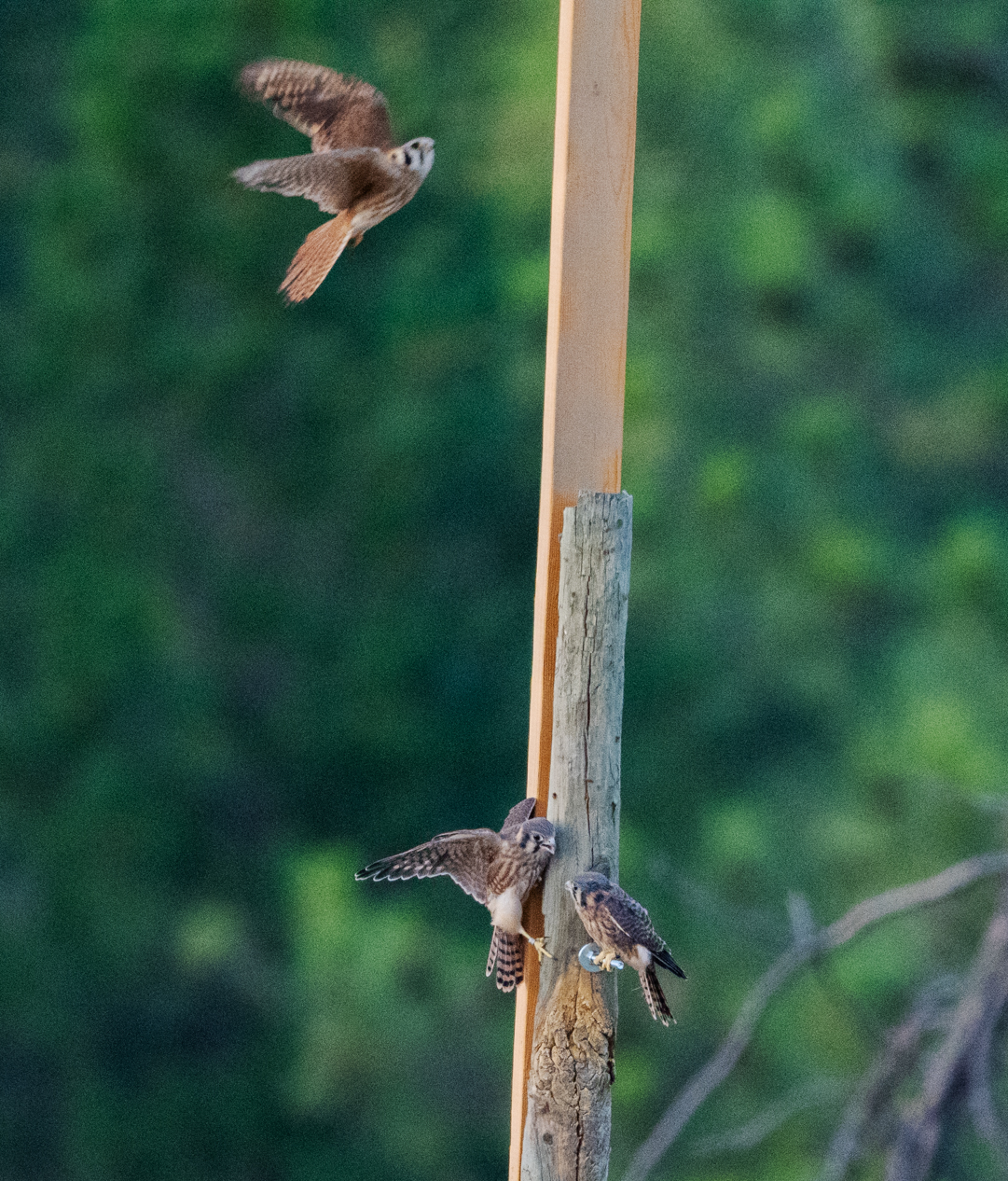
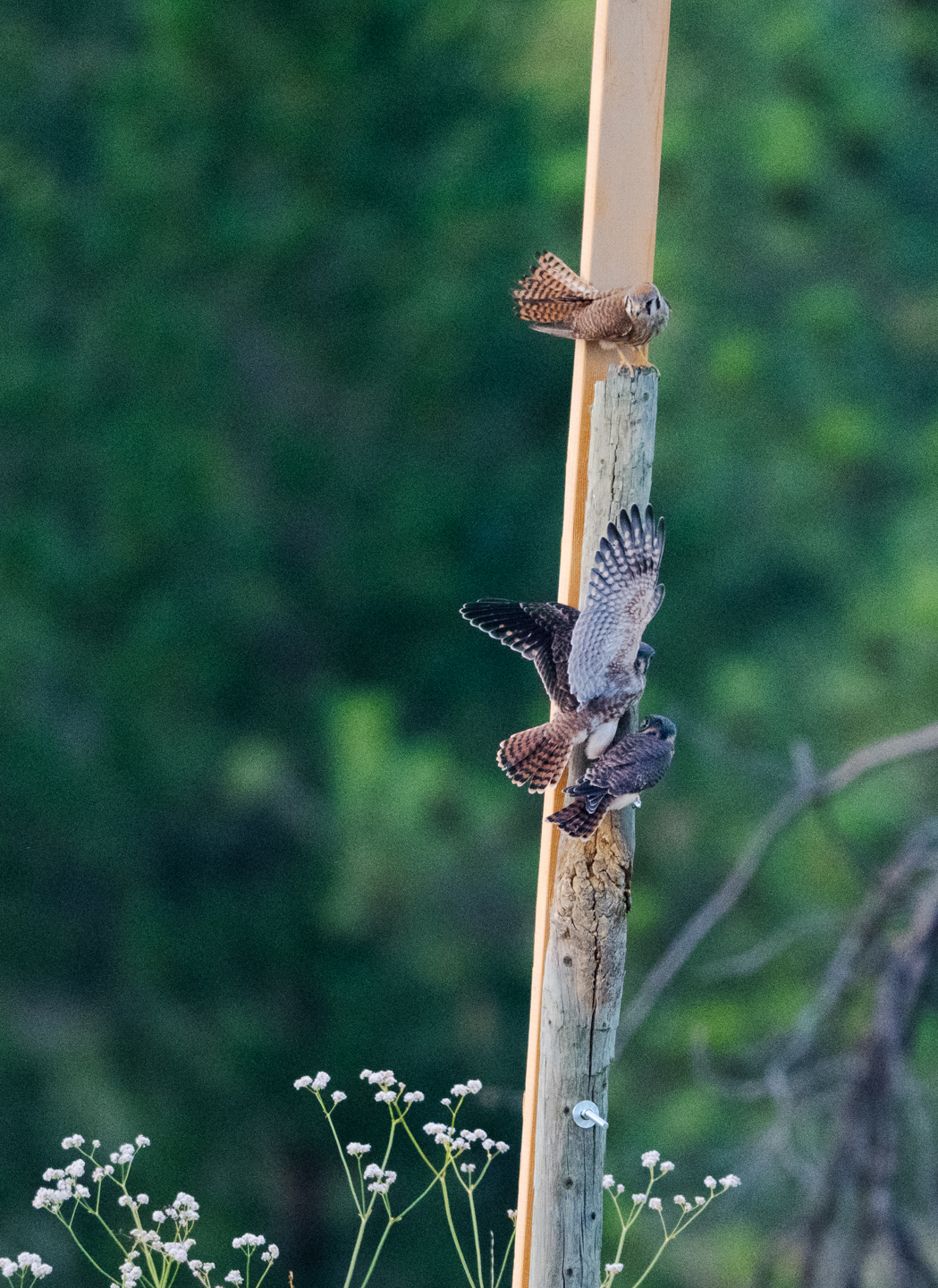
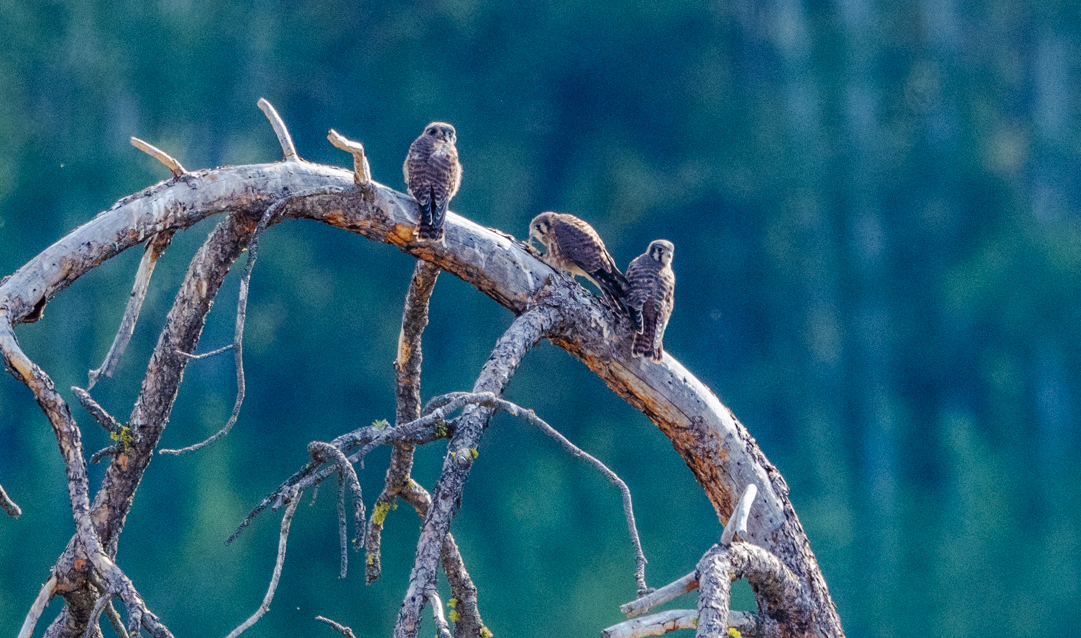
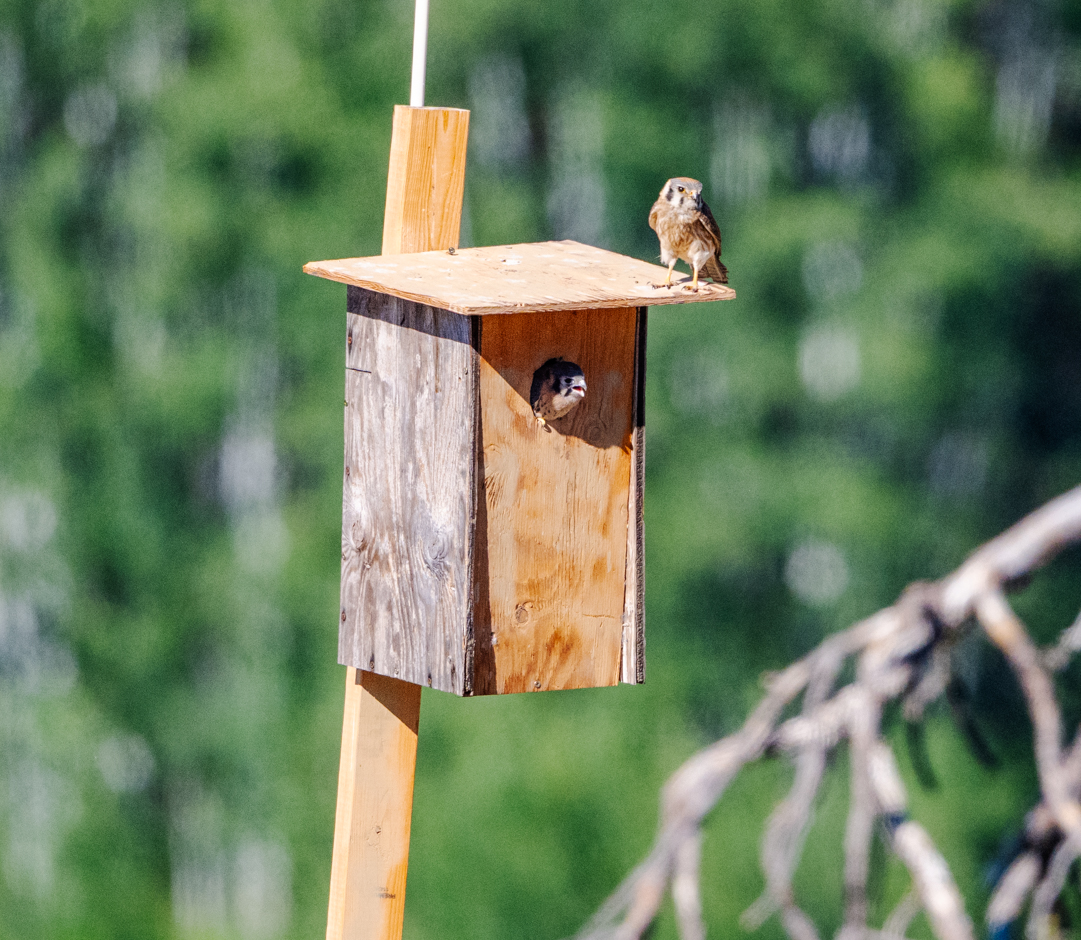
And soon the youngsters were big enough to look out from the nest box hole. Sometimes they’d get their feet over the edge, pushing their heads out as far as they could. One day, as I watched, a bird got her wing outside the hole! From that point, there was no going back. She quickly lost balance and fluttered to the ground! Another bird was poking its head out to see what happened to the sister. I couldn’t see where she landed but soon she fluttered up to the nearest perch on the pole, a slippery bolt and began to take stock of her new future. She was joined by two siblings for a bit before she got up the nerve to fly to a pine tree about one hundred feet away. It was a good spot, offering cover from potential predators. The next morning, I saw three sisters all on top of the nest box and the nearby snag that the parents had used for a perch throughout this whole process. Now I see one here and there often in the company of a parent bringing food. I hope they all learn to find food and survive.
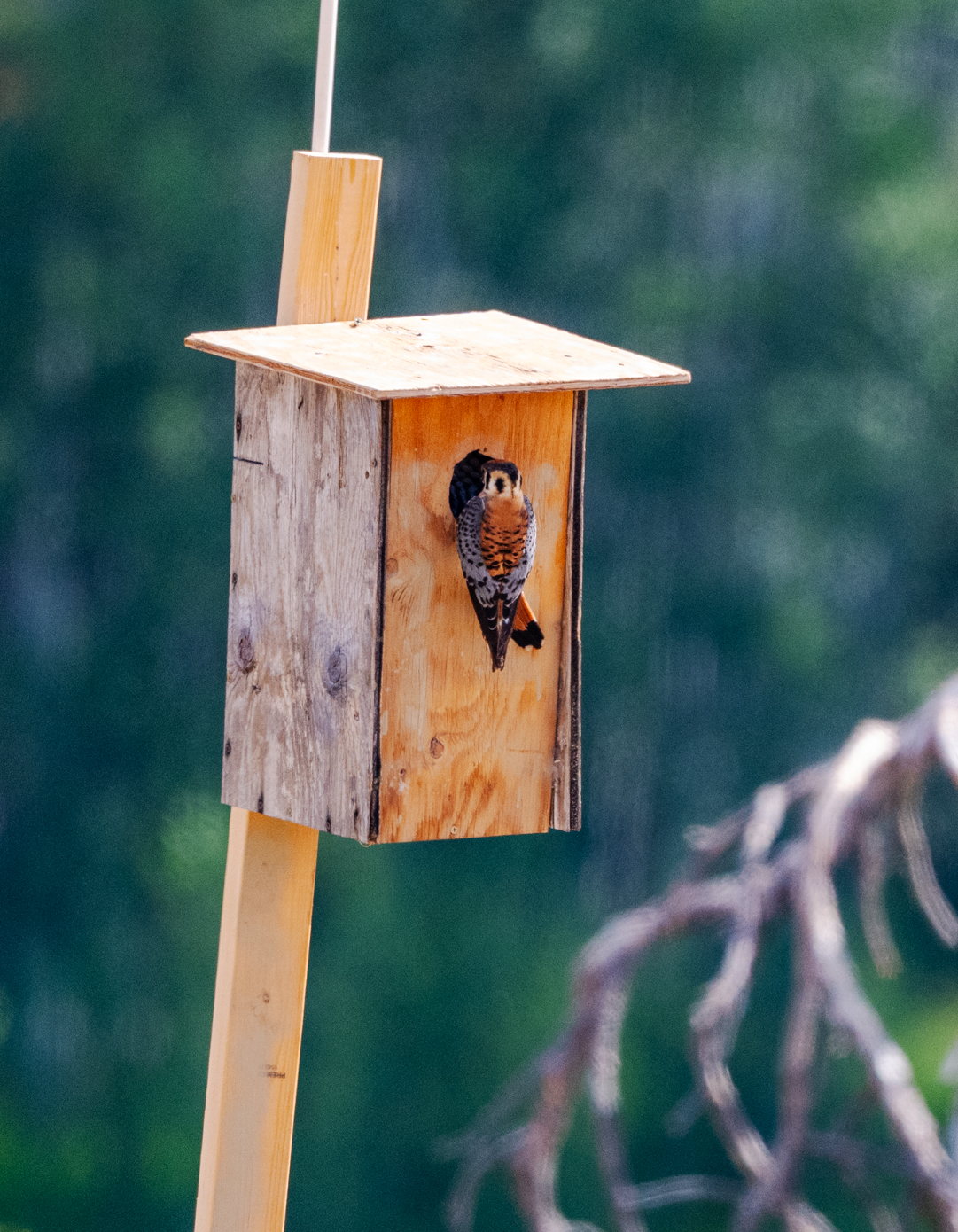
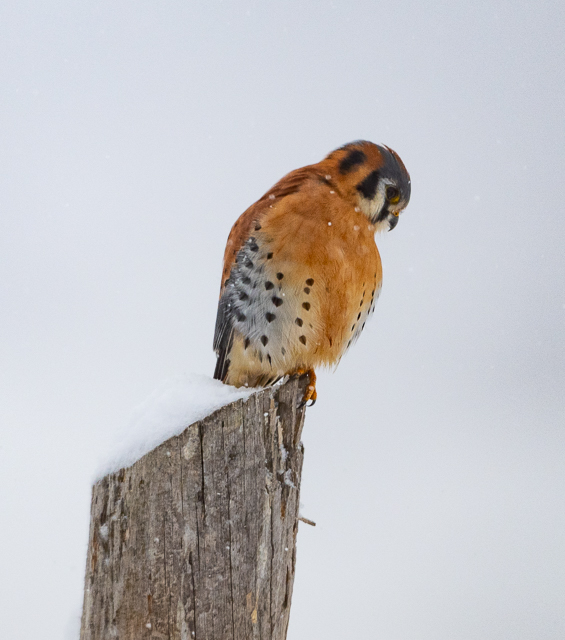
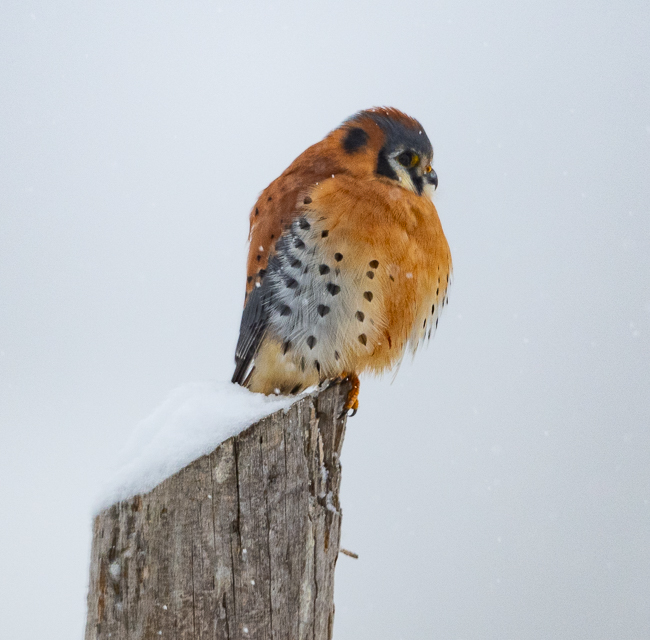
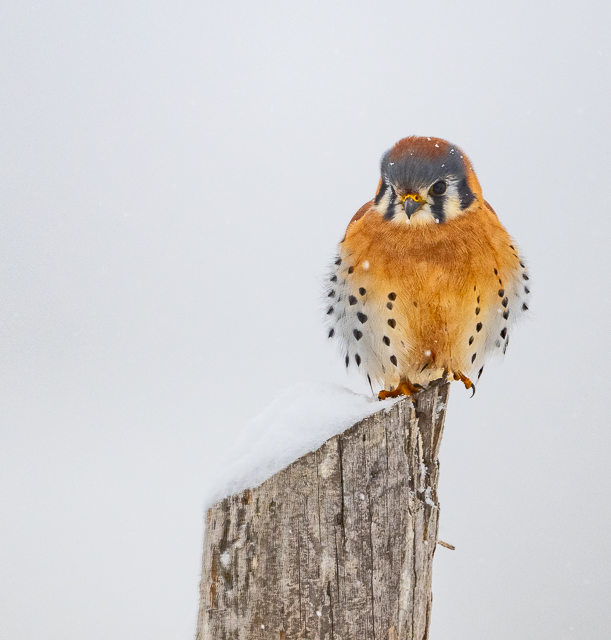
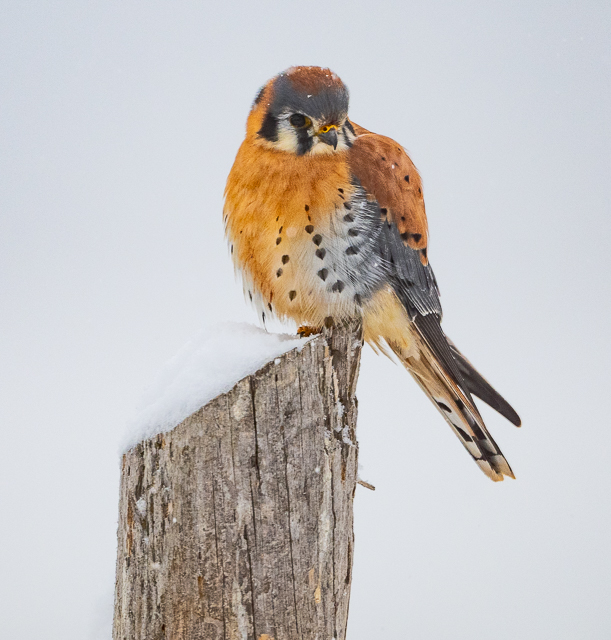
There have been a couple interesting birds at the feeders recently. This American Kestrel did not stick around very long but he sure did give me some good looks! His feathers are very puffed up due to the cold. Normally, he would have a tubular shaped body.

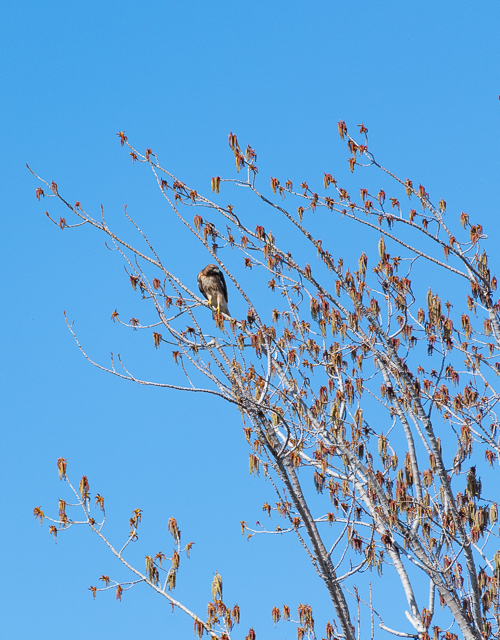
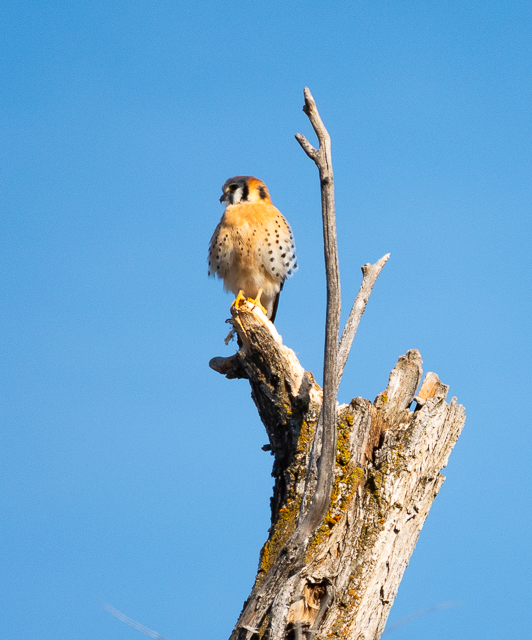
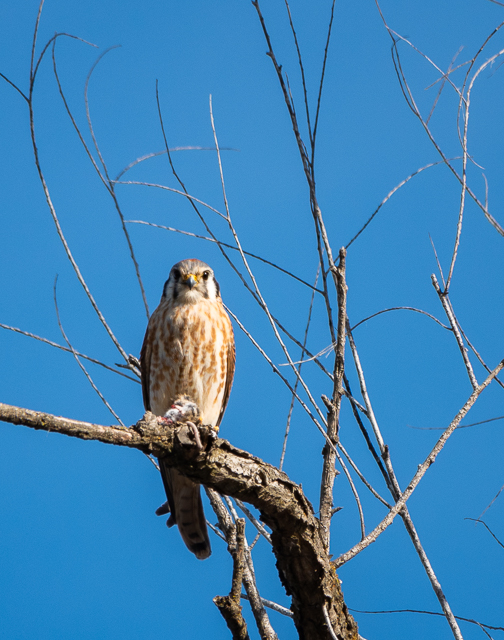
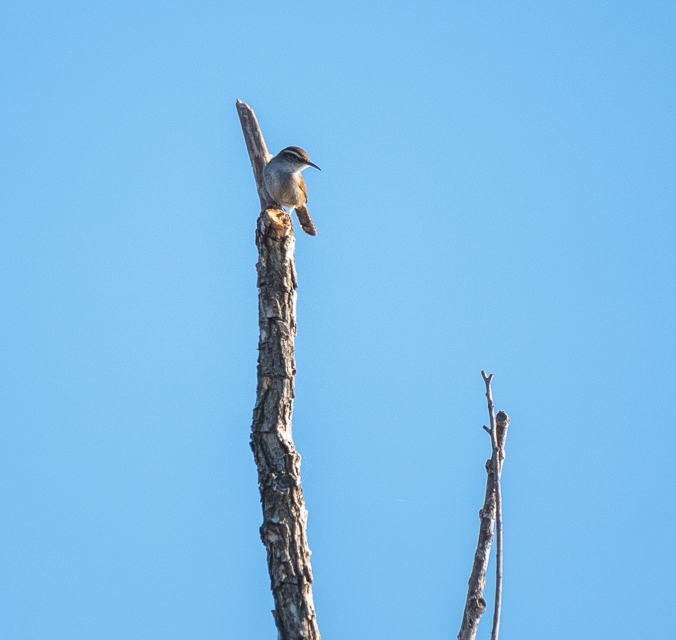
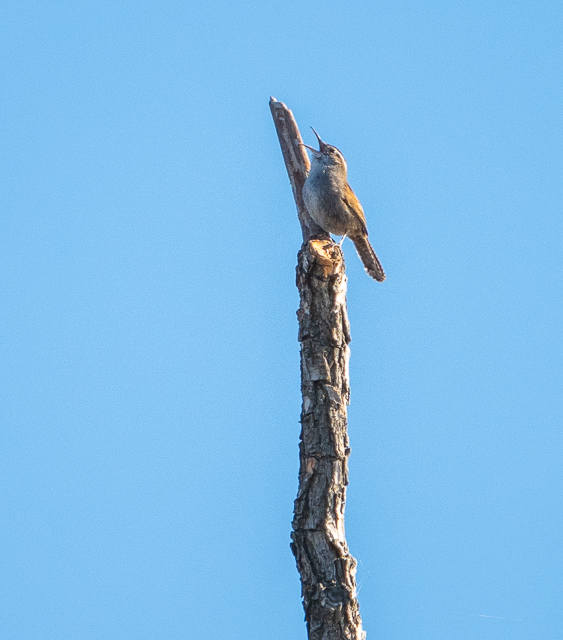
On the trip to see cranes and Snow Geese, I saw about sixty bird species. There should have been more but I was pretty focused on the big charismatic birds. I did get a few photos of the others – Red-tailed Hawks, American Kestrels and Bewick’s Wrens. The hawks and kestrels were setting up their territories and we saw the hawks’ nest. The kestrels probably had a tree cavity staked out. You can see in one picture, that the female kestrel had found some good food nearby.

I remember the first time I saw a Bewick’s Wren in SE Washington probably more than twenty years ago. At the time they were considered unusual for this area. Now they seem widespread in eastern WA. I don’t know about the rest of the state. It used to be that Marsh Wrens were common but I haven’t seen one in years. Maybe I’m just not getting to the right habitat at the right time.
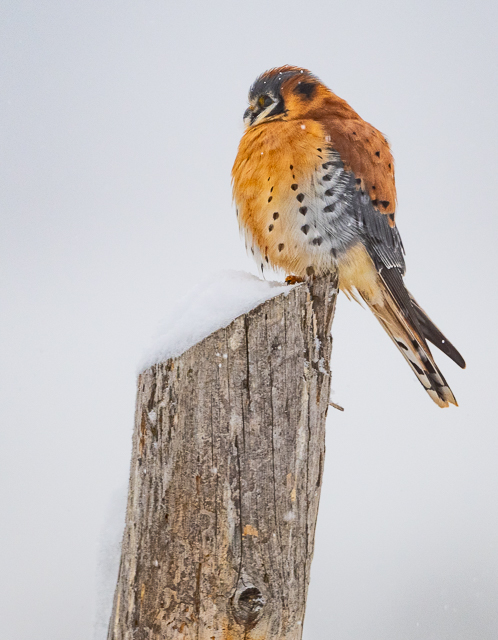
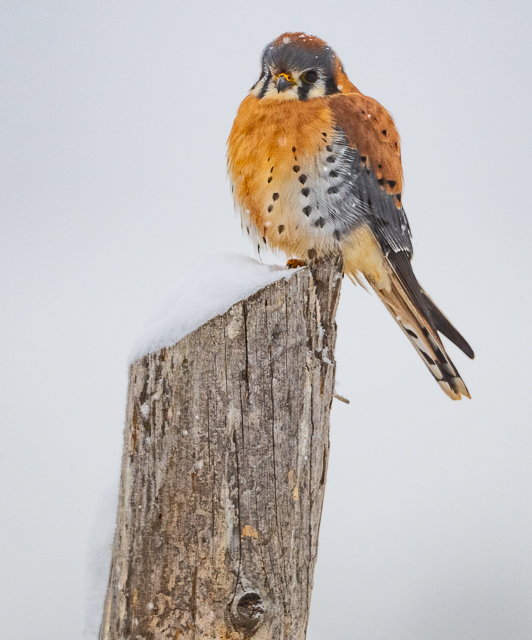
Lots of birds have successfully nested on our hillside this year – American Robins, Say’s Phoebes, Western and Mountain Bluebirds, House Wrens, Tree and Violet-green Swallows, Bullock’s Orioles and more. The biggest highlight has been our Nice Nests kestrel box hosting its first successful nest of American Kestrels. Four birds were raised and got out of the box and were standing around on branches up until a few days ago. That is the branchling stage. Now they are out doing flying and hunting lessons. I hope they stay here and work on our rodent population. And I hope they return next year. We have another kestrel box that hasn’t been used yet!

Yesterday a friend and I ventured out to the dryland wheat country south of here, across the Columbia and River and up on the plateau in search of Snowy Owls. It was a lovely sunny day. We saw quite a few interesting birds including numerous Rough-legged Hawks, a Prairie Falcon, Snow Buntings, American Kestrels and others. The landscape in that area is criss-crossed with a grid of roads every mile. The north/south roads have letter names – A, B, C, etc. And the east/west roads nave number names. That seems easy enough but often roads don’t go through or are not maintained so navigation can be a challenge. And don’t even think about using a phone app to navigate. No doubt, you will be sent down a road that has not been maintained in many years.

We were sticking to the rougher roads, thinking the owls would be off the beaten path but we were not finding them. We turned down a good paved county road and shortly my friend was slapping the door and saying STOP! There it was, maybe 20 meters off the road perched on the side of big rock outcropping. What a view! We were delighted. For my friend it was a lifer – the first time she had ever seen this species.

We watched it for a while and it seemed pretty unconcerned with our presence and when we left, it was still taking in the warm sun. Snowy Owls nest in the far north on the tundra. They eat lemmings and when there is a shortage of food they migrate farther south in the winter. This year there have been a few of them reported around Washington. It’s always such a treat to see these magnificent wild animals.

Following that we returned down to the big river and watched a variety of water birds and then we went to a park where she had seen  Northern Saw-whet Owls recently. We located the white wash on the ground and looking straight up we could see the tiny owl looking down at us.

It was a good day.


This is a male American Kestrel approaching a female on a delicate branch.

This slideshow requires JavaScript.