Skip navigation

Tag Archives: nest

Our six days of camping were not really enough to cover all the ground in northern Okanogan County but we sure did make a dent in it. We left camp a couple times to drive out and do some exploring. Along the way we found more birds and some more interesting plants as well.

No doubt, seeing nesting Great Gray Owls was a highlight of our week!

Common Loons are not so common in Washington, especially nesting Common Loons. Apparently they used to be common all over the west but not so much anymore. Threats to loons include loss of habitat, predators and discarded fishing tackle. Fishing line, hooks and lead weights are all potentially damaging or fatal to loons and other water birds such as Trumpeter Swans.

At Lost Lake, there is a pair of Common Loons that have nested in the same place for many years. They arrive in the spring from their wintering grounds and take up residence. Thirty days later, the eggs – there may be one or two – hatch and the tiny balls of black fluff are immediately paddling around the lake with their parents. They may also ride on the backs of the parent birds. Both parents care for the birds – feeding and protecting them from predators and gradually teaching them to forage for fish on their own. It takes much of the summer for the birds to fledge and be ready to migrate.

Due to shortage of good nesting areas, pairs in Washington are helped with the supplementation of extra four-inch fish added to nesting lakes by the Department of Fish and Wildlife. Also, sticks are placed around and leaning over the nest to protect it from avian predators such as Bald Eagles. Most loons are banded for further study. When the young are nearly grown, researchers will attempt to net them so they may also be banded. The male of this pair has always eluded capture and consequently has never been banded.

This male arrived at Lost Lake this spring with fishing line hanging out of his mouth. It is presumed that there is a hook embedded in his tongue or cheek – probably acquired when the bird ate a fish that had escaped an angler with the tackle in its mouth. You can clearly see the fishing line in the images I made on Wednesday with a loop of it hanging out one side of his mouth. On Friday, it appeared that he had both ends of the line in his mouth and it’s less easy to observe.

Wednesday I inadvertently, paddled right up to the nest. I did not know it was at the edge of the reeds. I was able to see the two dark eggs and quickly moved away in hopes of lessening any disturbance to the birds. Later in the day, we walked on the road on the east side of the lake where we had a clear view of the female on the nest. Friday when I was out on my boat I saw that the eggs had hatched and the two loonlings were out and about with their mother! It was very exciting for me.

All of these images were made with a 600 mm equivalent lens and I did my best to minimize disturbance to the loons.

More signs of Spring each day now. Yesterday the dog and I went for a steep walk above the bottom of Pipestone Canyon. I had thought about walking up the canyon but the access road is still muddy and snowy in places. Best not to even try to drive on those conditions. The bird highlight was a couple of Dusky Grouse. They should be displaying soon. Western Meadowlarks sang as we walked. It was overcast and a little chilly.


The view looking up towards Pipestone Canyon.

P1050712


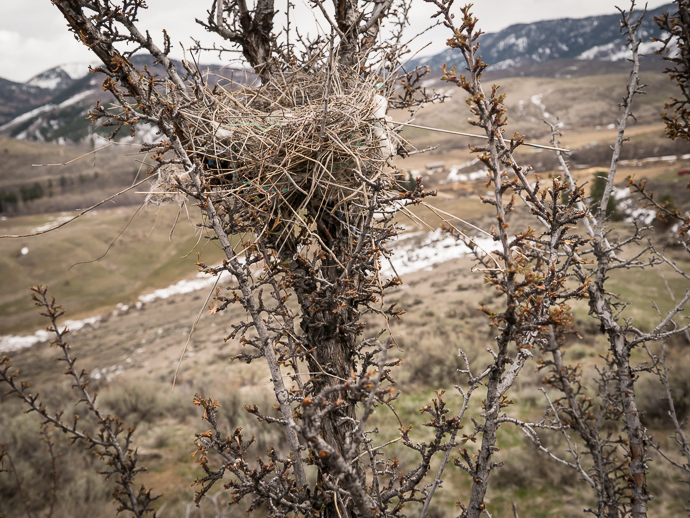
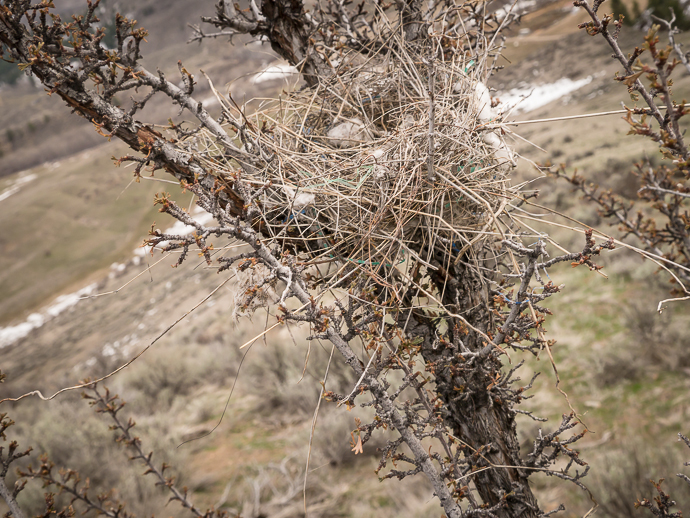
A nest from last year high in an old bitterbrush. I had to hold the camera above my head to get pictures.

P1050702


P1050704


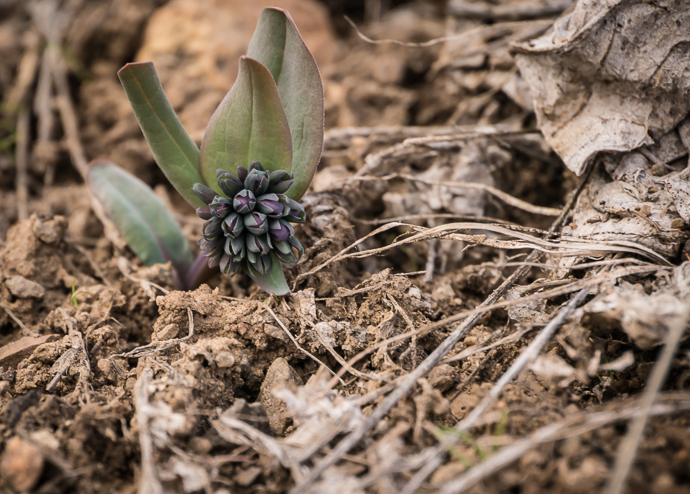
The name of this flower has slipped my memory. Hopefully it will return soon.

P1050699


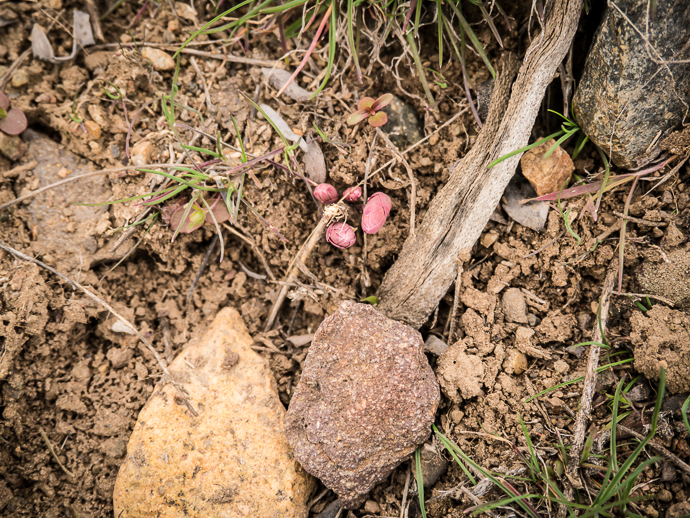
And I don’t know this tiny pink bud emerging from the crusty soil.

P1050718


Balsamroot buds

P1050701


And the first wildflowers – bluebells.

P1050721

Funny, I haven’t seen any buttercups yet.

 Spring brings something new and promises of life to come.

Here is some of what’s coming on our hill.


Chokecherries!


Say’s Phoebes!


Butterflies, or maybe moths!

What’s growing on your place?


Another nice walk today. Juliet and I rambled around in the upper Rendezvous for most of the morning. There was some smoke from controlled burning in Fawn Creek but other than that, skies were clear and the air was cool. We saw a few birds, some deer, lots of squirrels and a chipmunk or two. We came across at least four piles of moose droppings, none too fresh; and some bear poop. Well, I stepped in the bear poop.

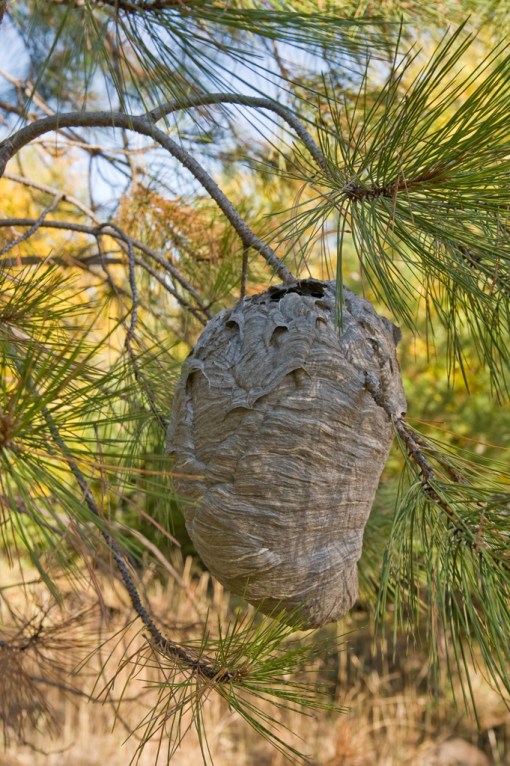
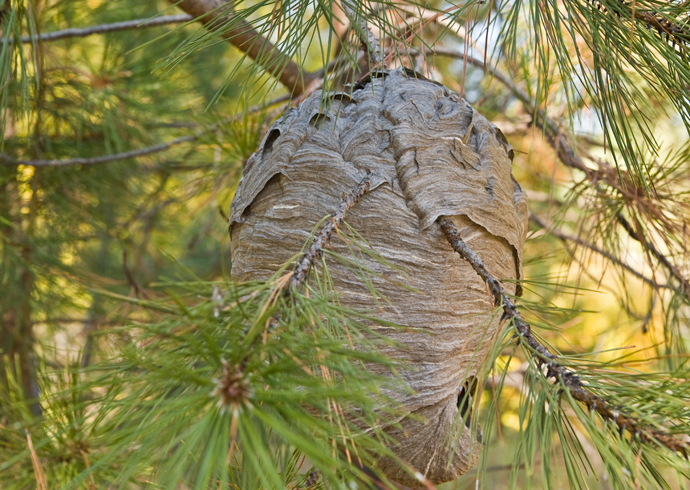
One of my favorite sights was of an intact wasp nest. We had already run across one that had been pulled from its tree and dismantled. This one was still perfect and right at eye level and stinging insects around. On the ground, there were remains of an earlier nest. WAs it from earlier this year or the remains from last year? These nests are amazing structures and simply made out of spit. How do they do it? If you know more about these and the specific species that make them, I’d like to learn about them.

There is a hole on the top. It’s a little bit ragged and I wonder if it was made by a bird or is part of the original structure?

Hole on the bottom for quick exit and entrance

I really like the way it is formed around the branches that support it.