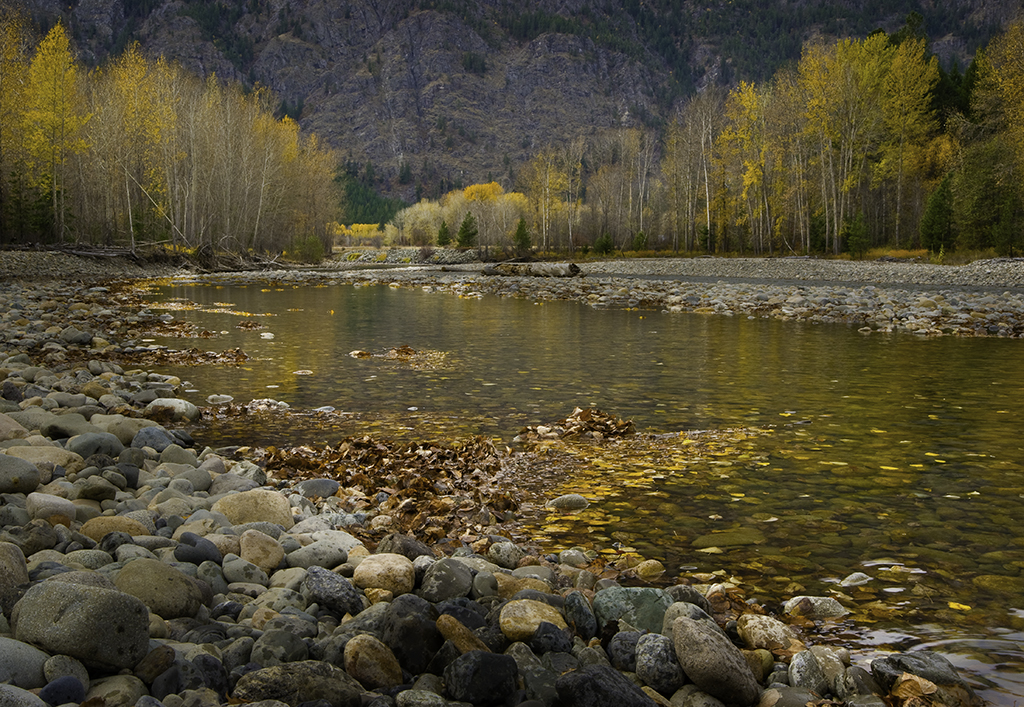
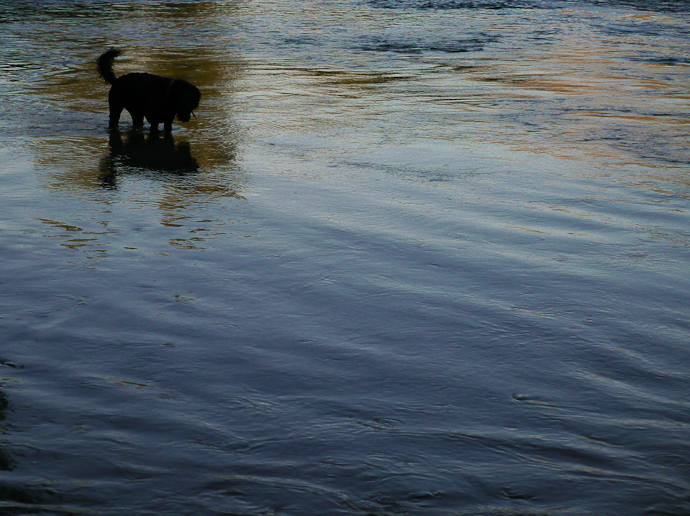
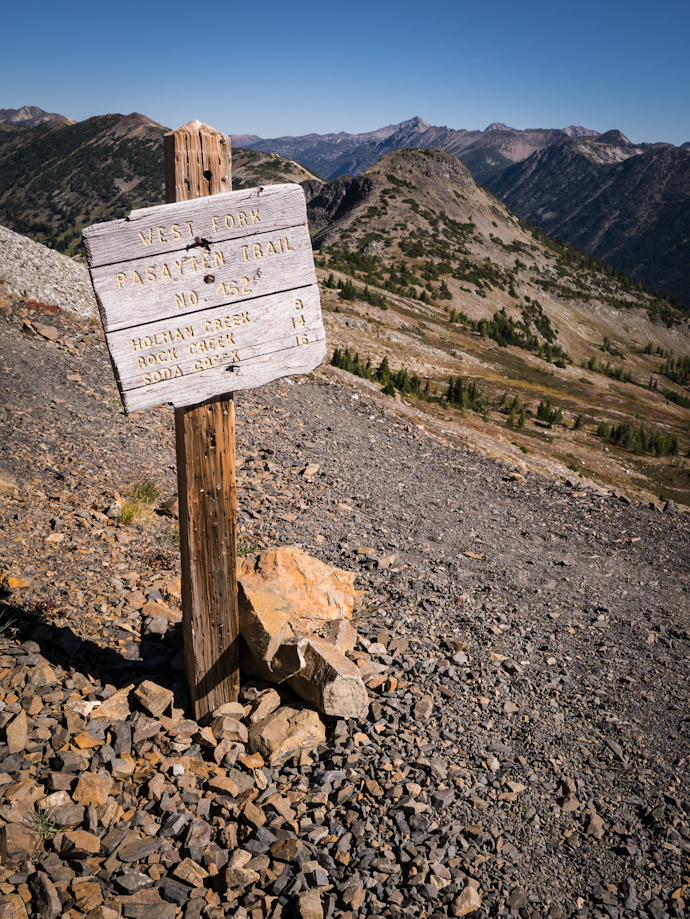
It’s been a few weeks since I had a nice hike in the mountains. I had grand plans for a hike every week this summer and have fallen far short of that goal. Yesterday’s hike was a good one. With the passing of Labor Day and the start of school, it sems that summer is over. Nights are cooler and days are way shorter. The light is marvelous and the air is crisp making for perfect hiking conditions. Luna and I drove most of the way to Slate Peak and then took the Buckskin trail down into the basin below the lookout. We left the trail and rambled through the basin and then up to the ridge where we found the West Fork of the Pasayten trail and returned to the road and walked back to the car. It was not a long hike but it was long on views and surprisingly, quite a few flowers. There were also lots of migrating birds – in particular I noticed Cooper’s Hawks, American Pipits and White – crowned Sparrows. Also many finches in flight that I could not identify.
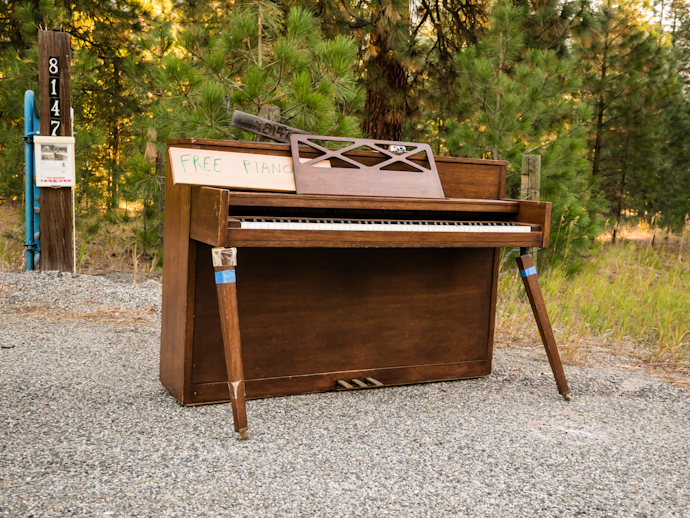
Almost to Mazama on highway 20 I saw this free range or feral piano, abandoned by the side of the road. There was a package of castors to replace the broken ones. I’ve seen bbq’s, out dated tv’s, couches, even old satellite dishes; but this is the first time of seen a piano on the side of a road.
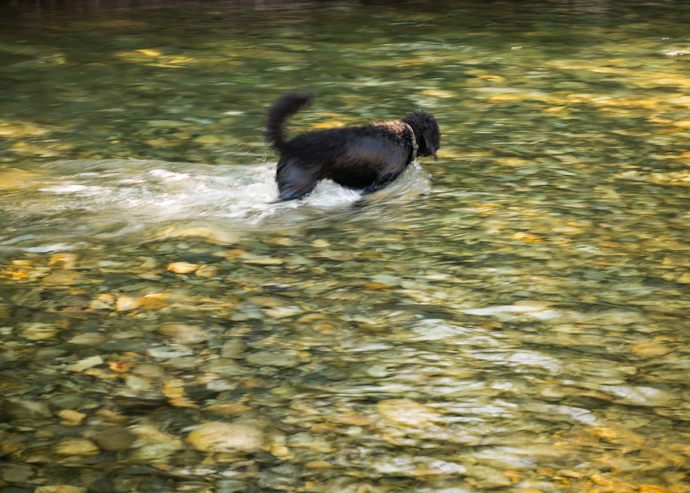
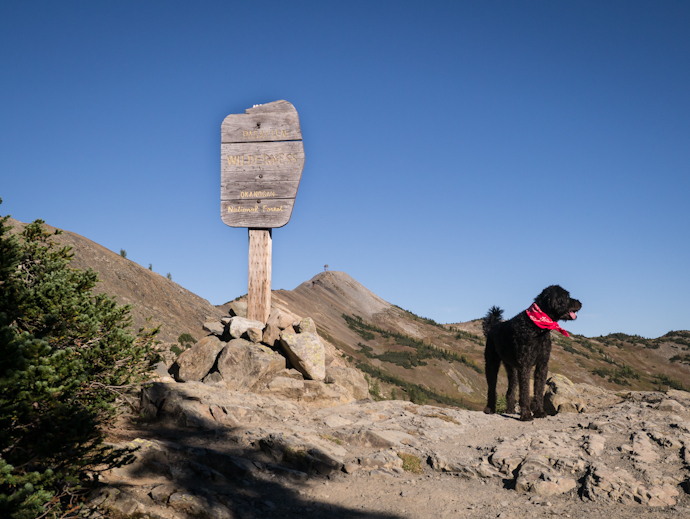
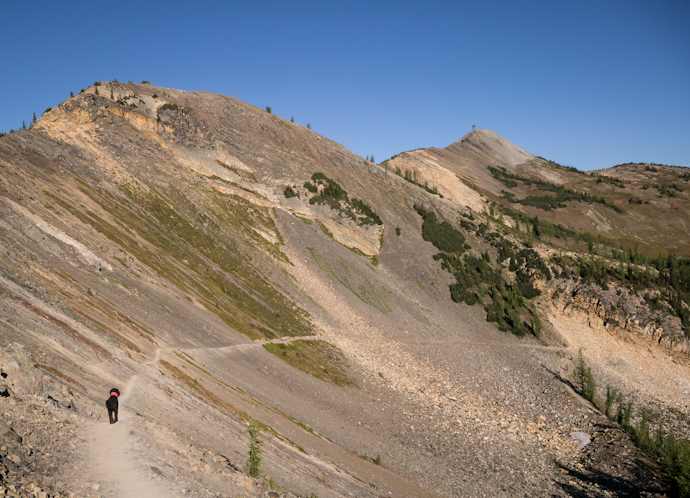
Luna is wearing red because it’s hunting season and more than once I’ve benn told that she looks like a black bear.
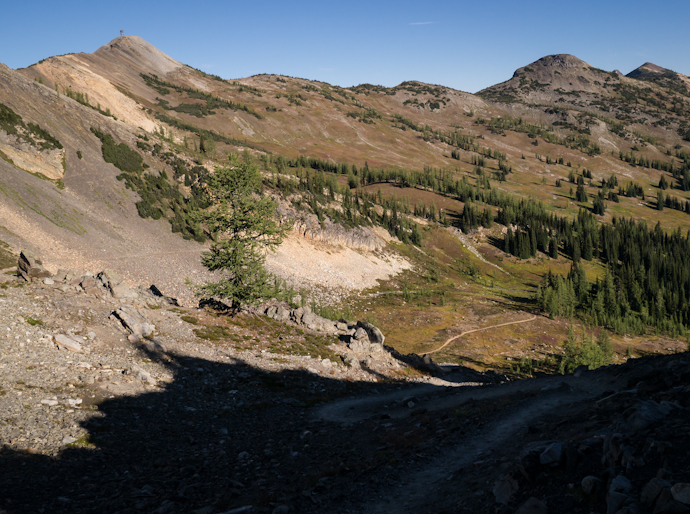
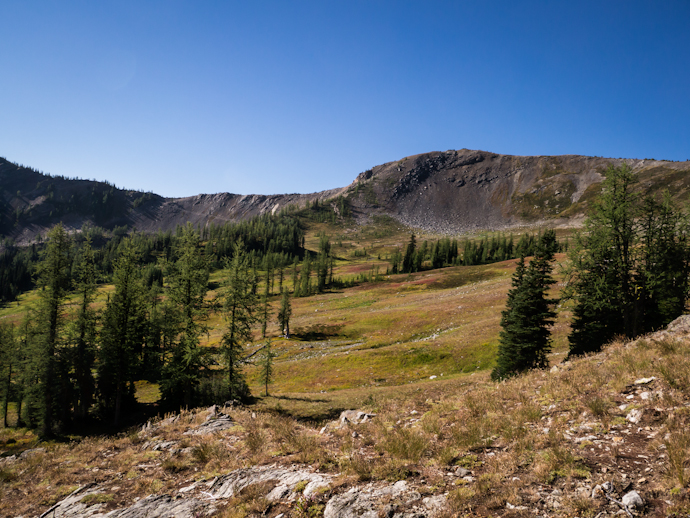
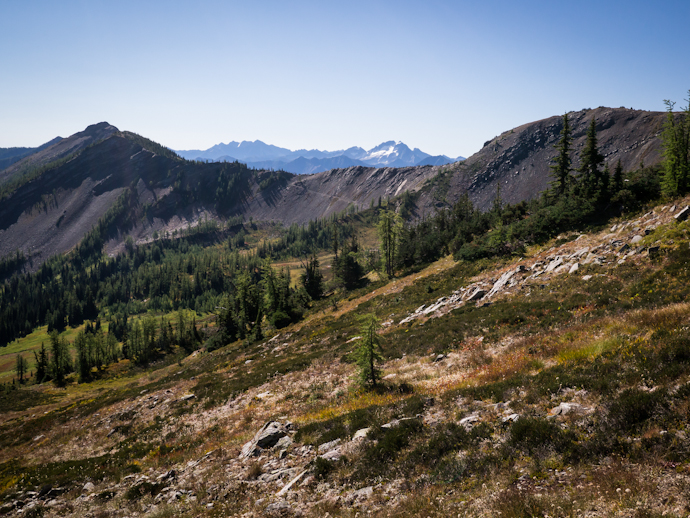
This photo needs some arrows to show our route. Our trail drops down there in the shade on the bottom right of the image and then you can barely see it crossing the talus (rock) slope to the left before it drops down into the meadow. We crossed through the larch trees and on the other side of them left the trail to ramble up through the basin and to the ridge, where we joined the second trail and it took us to the road just below and to the left of the lookout on the high point.
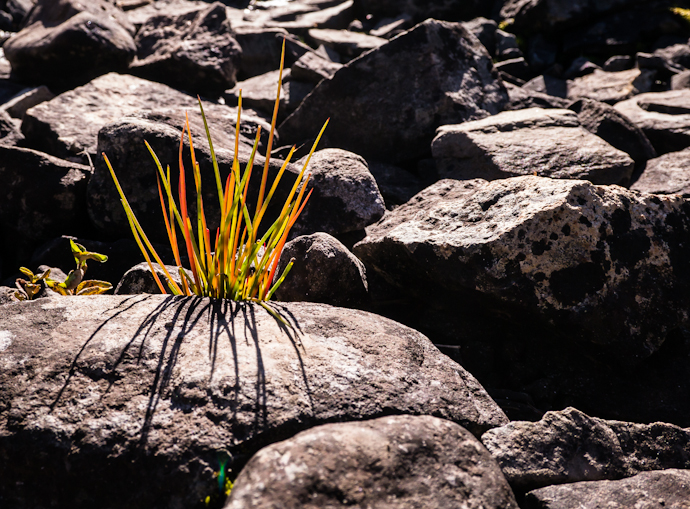
Red leaves show that there’s already been a frost. It was 42 in the sunshine when we started our hike. I was glad I had a jacket and wool gloves.

Luna is already out on the trail.
In the meadow there were lots of flowers. Here is a paintbrush (Castilleja sp) with blue gentian in the background

I love the dark blue gentian, a late summer flower in the high country.

Looking back at the trail as we enter the trees.
There was a family of Cooper’s Hawks calling loudly and flying around in this area.

Moss shows that the area is still wet despite the fact that we’ve had no rain in a month or more.
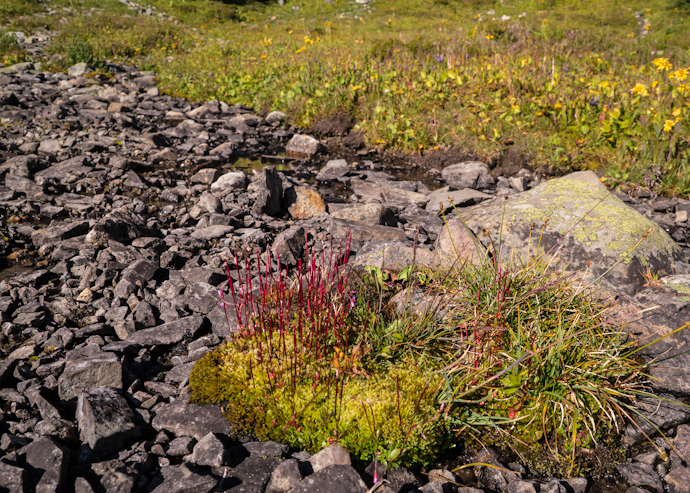
I could not resist this tiny scene
How many months of lupine are there? Seems like I’ve been seeing it since April!

Pink monkeyflower and its shadows.

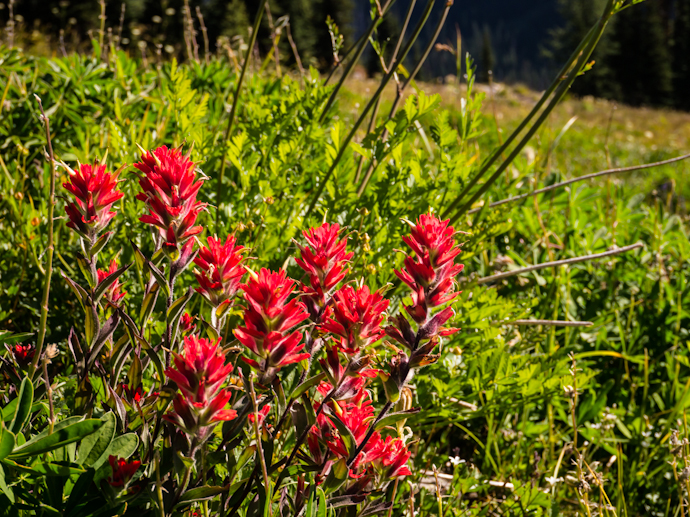
More paintbrush. I saw at least three different colors of it.
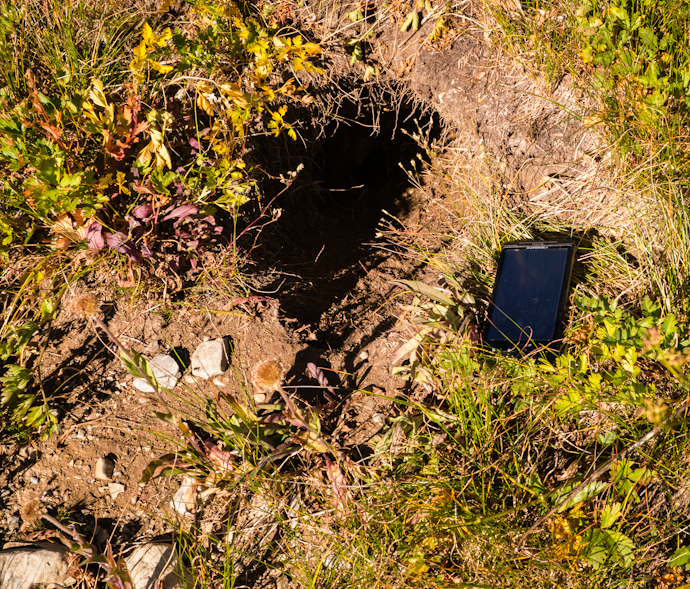
Someone’s burrow. It is pretty good sized. Maybe a marmot? I think they live in rocks. A wolverine?
Another view looking back. We’ve left the trail and are heading up now.
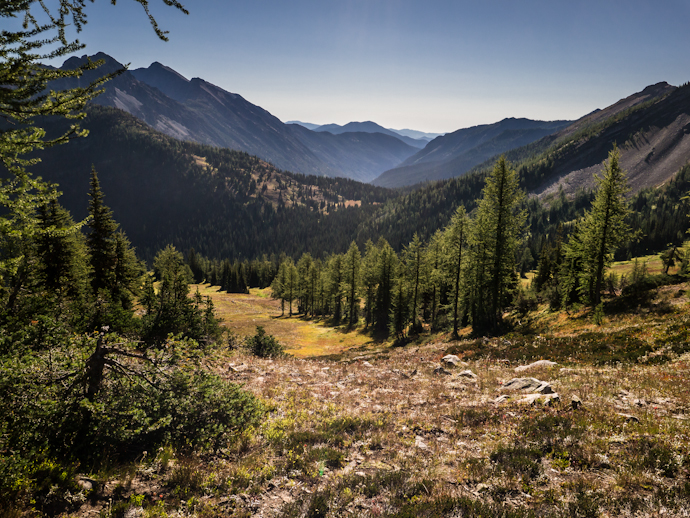
And looking down valley. Within a month all those larch (tamarack) trees will turn golden and their needles will begin to drop.
A much-needed rest in the shade.

Now we are higher than when we started.
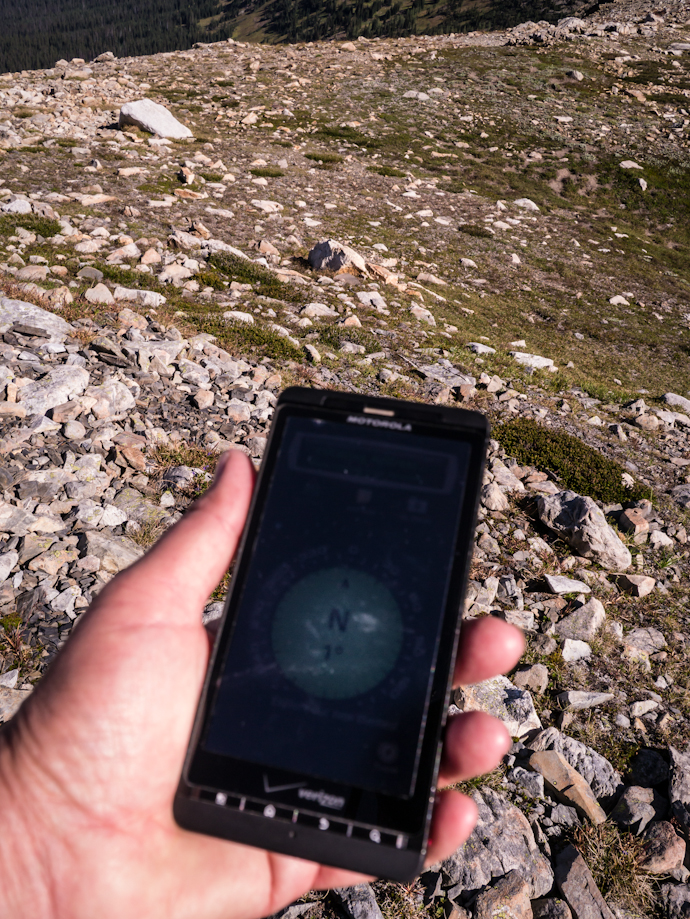
My cell phone has a compass app. I wonder how it works even without a cell signal? Any ideas?
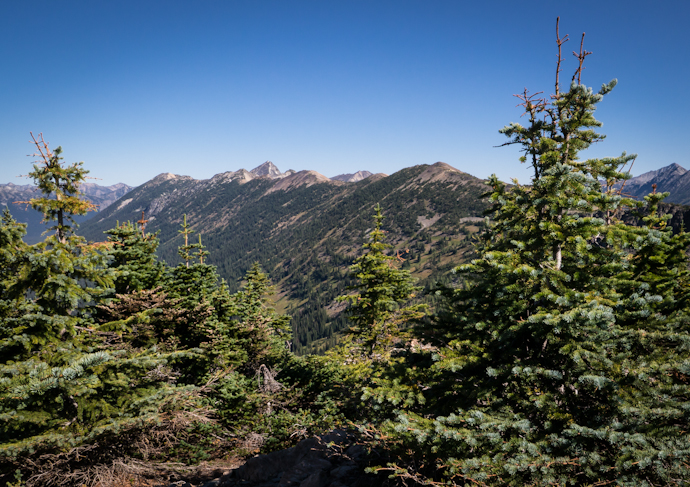
Looking north towards Canada. The stunted spruce and other species of trees at high elevations are sometimes referred to as krumholtz – crooked, bent or twisted
Luna was happy to find two lingering snow patches

And up to the road. It was almost a mile walk back to the car.
Views to the west from the road. That’s Mount Baker in the middle.

And a last view of the lookout

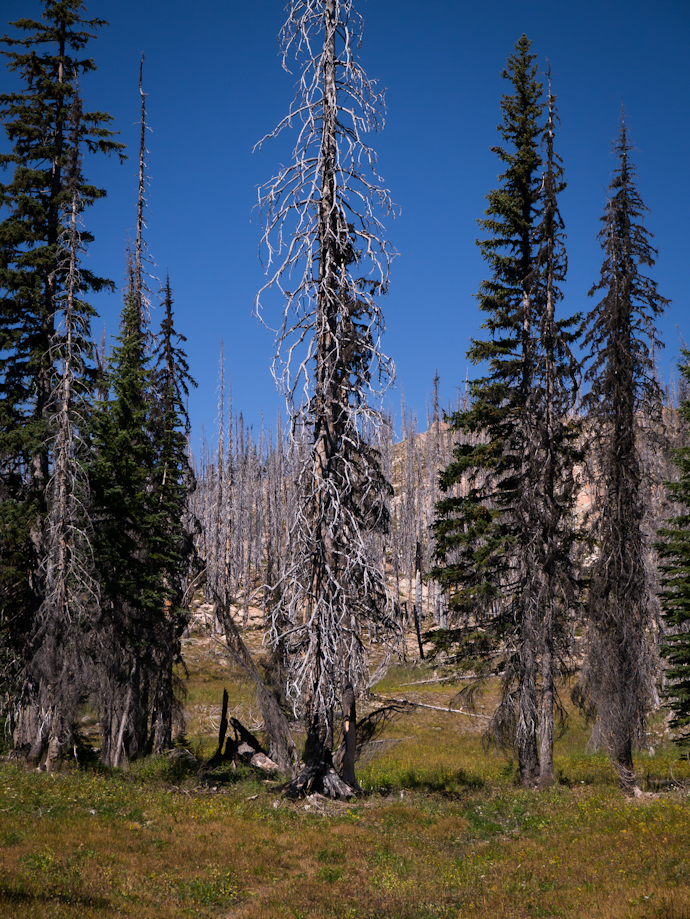
We stopped in a silver forest to look for birds. Mostly Yellow-rumped Wablers. Also a Townsend’s Solitaire.
An aster next to the creek.

Ahhhhhh.