Skip navigation

Tag Archives: Methow photography

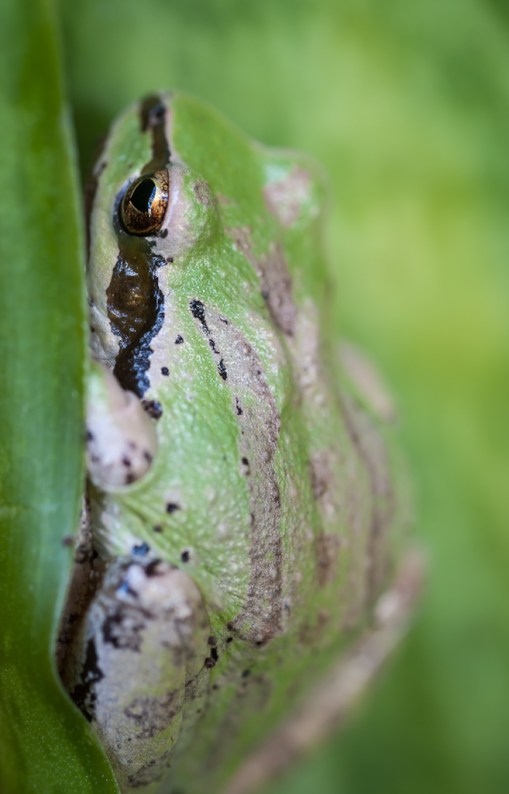
We often find these tiny chorus or tree frogs on our deck, in the potted plants, even in the bbq – we need to open the grill before lighting it – and also in the garage. I don’t know why they think that these places are good frog habitat but here they are. There is no open water for them and we never hear a ‘chorus’ of them, just lone frogs here and there. Once, in the fall, when I was bringing plants back in the house before cold weather set in, a frog came in and its calls of protest were so loud, we were encouraged to find the animal and return it outside, to its ‘natural’ habitat!
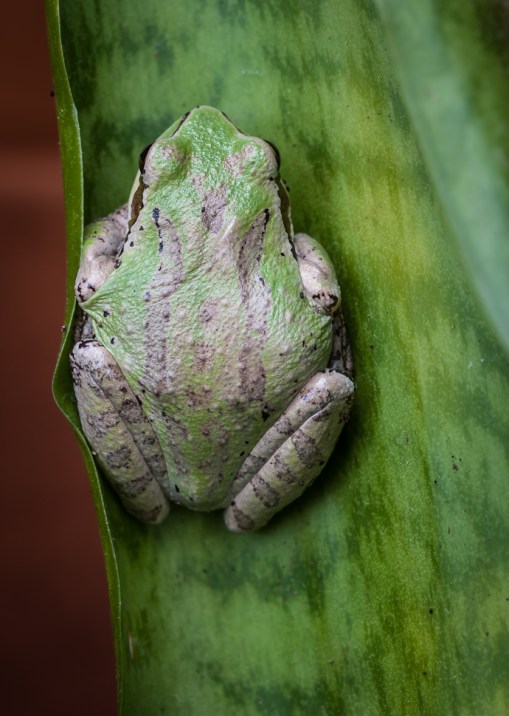
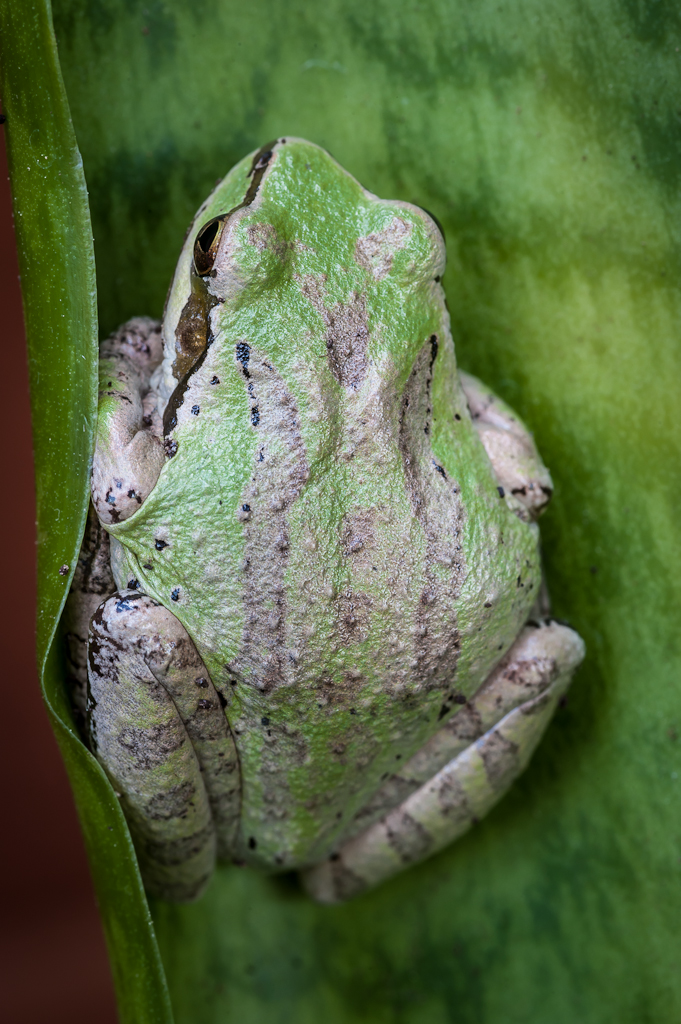


Here is some information about these wide-spread frogs.
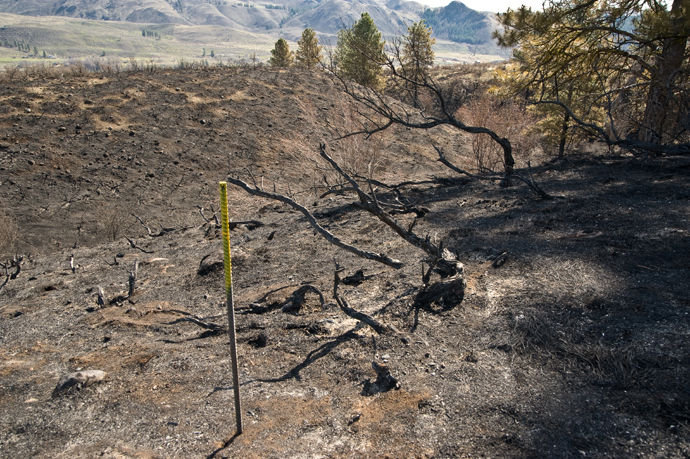
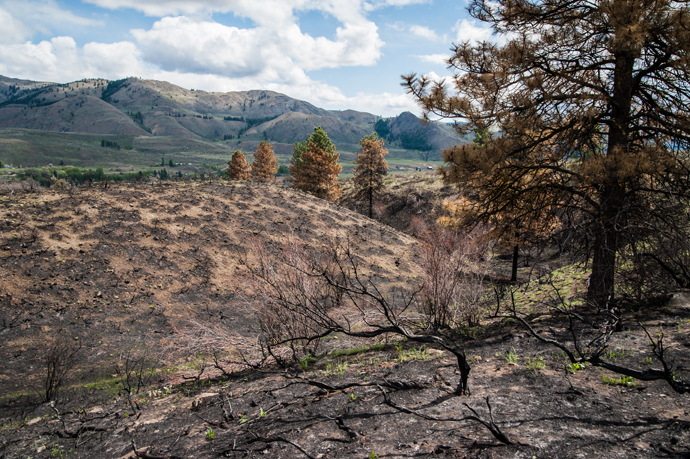
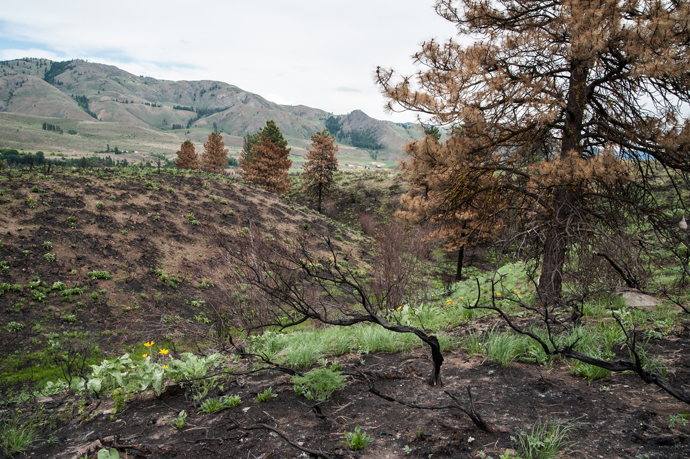
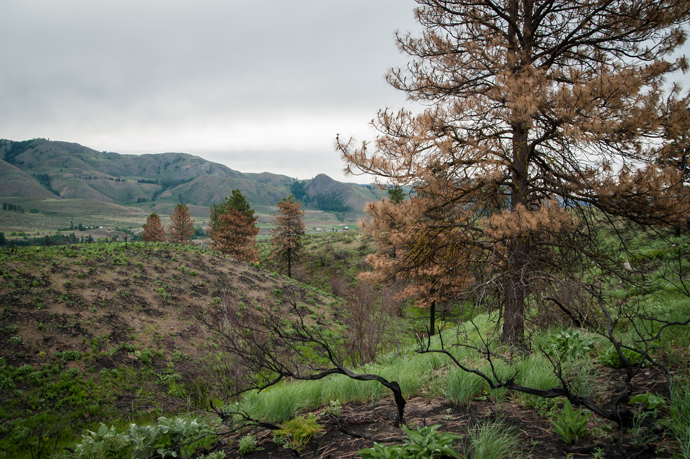
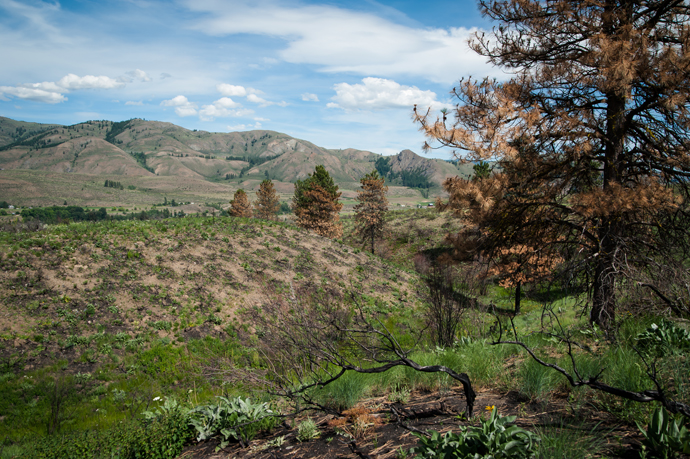
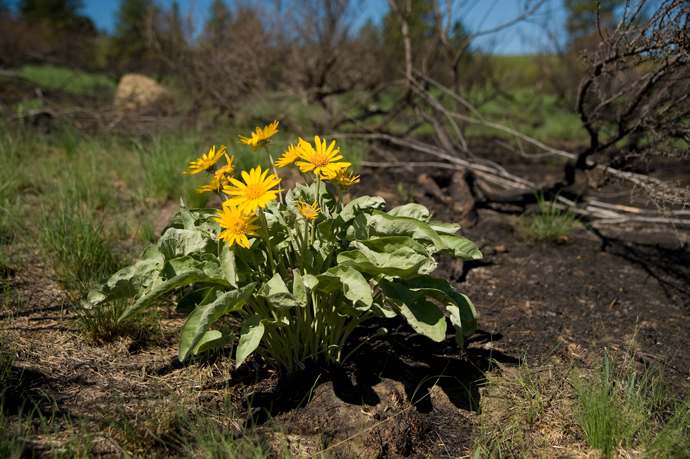
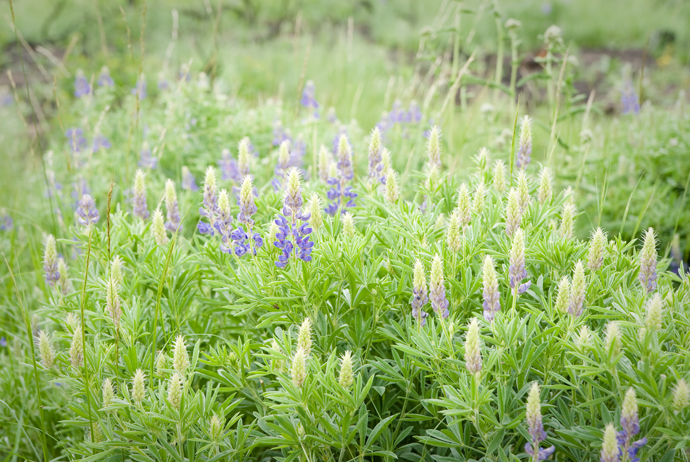
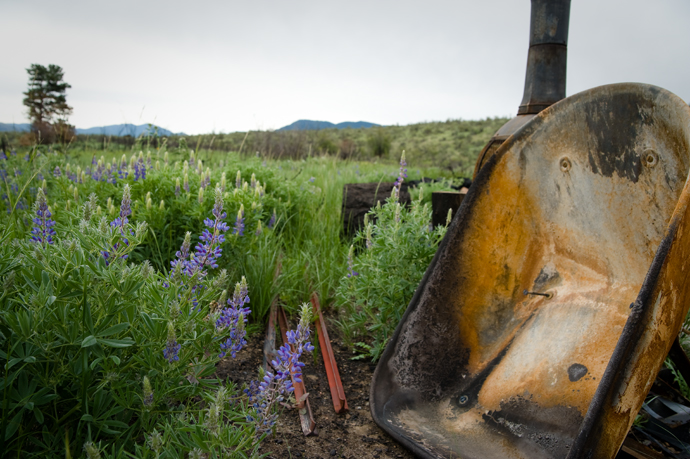
Back in April, there was a fire on our hillside – you can see the images from that day here. Our neighbor’s place suffered a lot of damage and he asked me to document the recovery over the course of the growing seasons with my camera. He set up a photo point for me to visit on a regular basis and after 2 1/2 months, it’s easy to see that recovery is well on its way. So far, there has not been a big influx of weeds in most places. In fact, the native wildflowers are doing well – even more abundant than in the areas that were not burned! The bitterbrush, a favorite food for the local mule deer, does not seem to be sprouting back. This will be a major change in the habitat. Grasses and forbs are doing well.


April 20, three days following the fire. The yellow rebar marks the photo point.


May 1. The burned pine tree on the right and bent over to the left burned bitterbrush show up in all the images in this series.


May 13


May 22


May 30


June 14


June 28


Balsamroot bloomed very well in the burned area.


Lupine is blooming more abundantly and for a longer season in the burned area compared to the non-burned area.


Douglas sunflowers are also more abundant.


Lush growth


The day of the fire.


In 2006, the Tripod wildfire raged through Okanogan County. Between late July and snowfall, it burned more than 175,000 acres of forest lands. Unlike the fires currently burning in Colorado and Montana, it did not burn any homes. Six years later, regeneration is producing a new kind of forest with wildlife friendly snags, wildflowers and new growth of willows and aspens. I spent part of Monday afternoon walking through a tiny bit of the old burn listening to birds and small mammals and admiring the flowers.


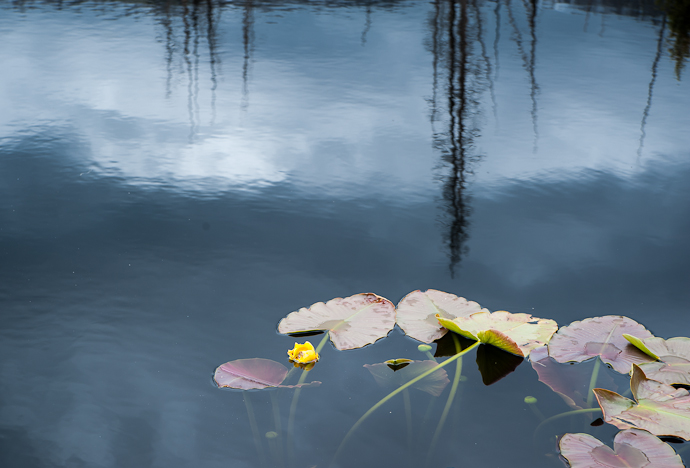
Burnt snags reflected in a small pond


Roger Lake – some trees survived in the boggy edges of this lake and it continues to be a great place for birds and other wildlife


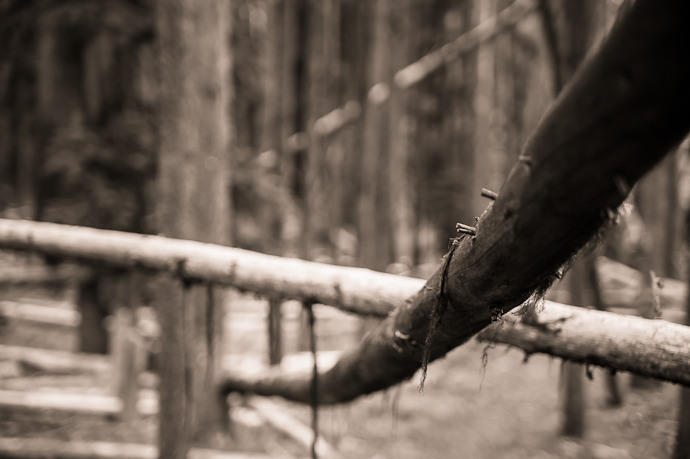
Snags criss cross on the trail


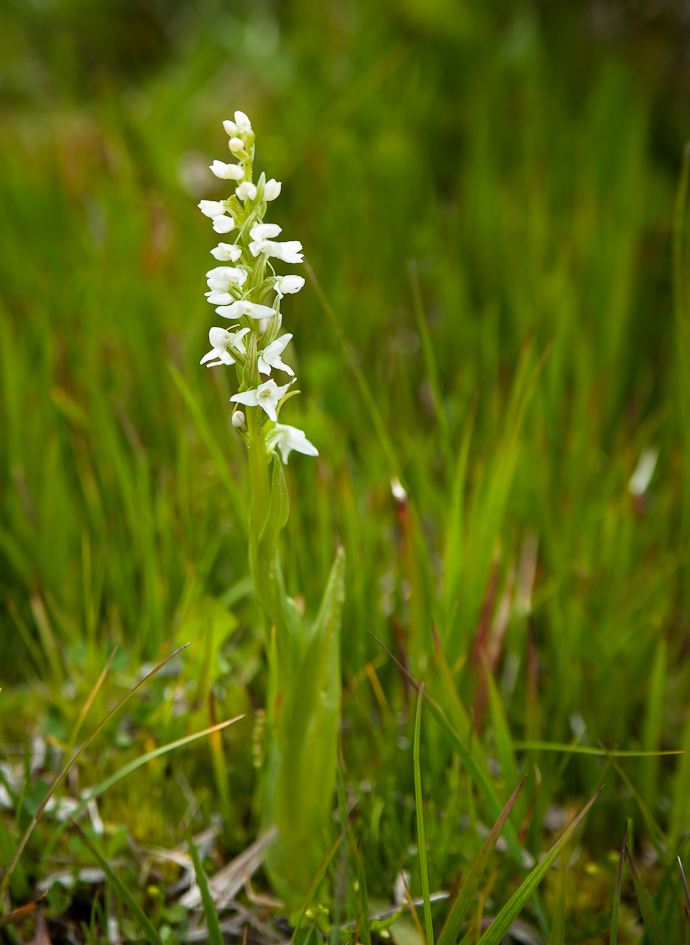
Bog orchid grows in a wet spot


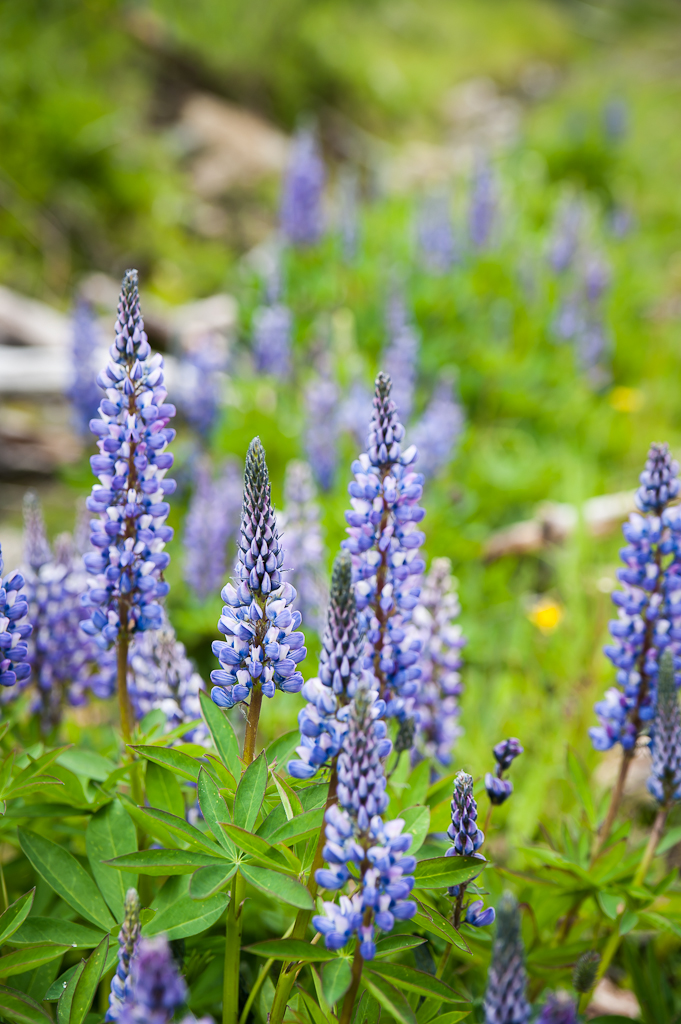
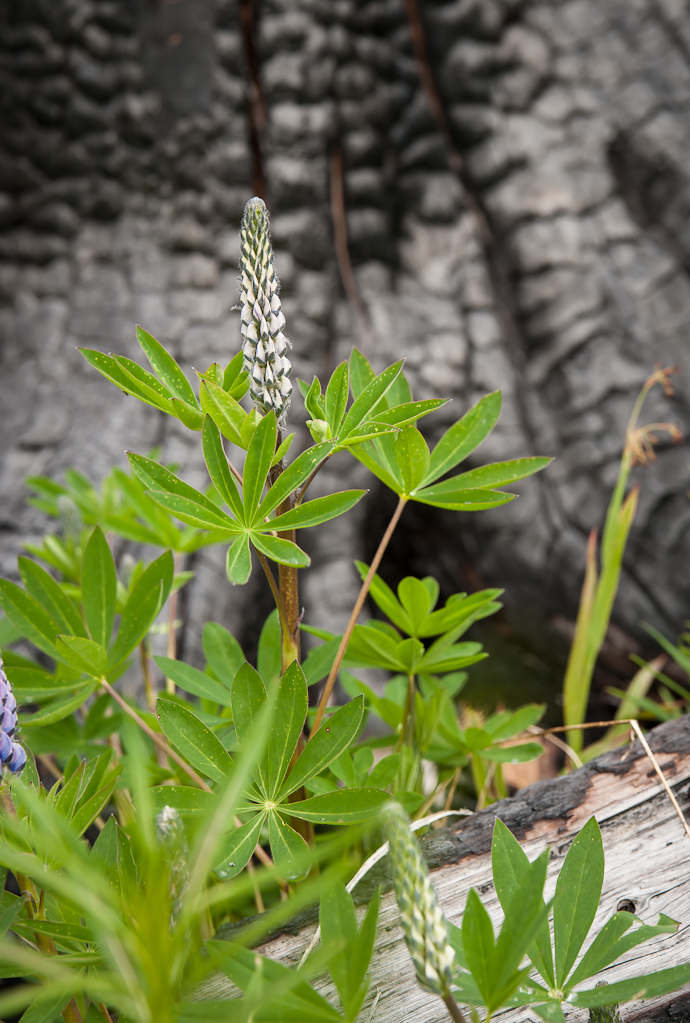
lupine


Spent flowers remind me of the fire


Lupine bud


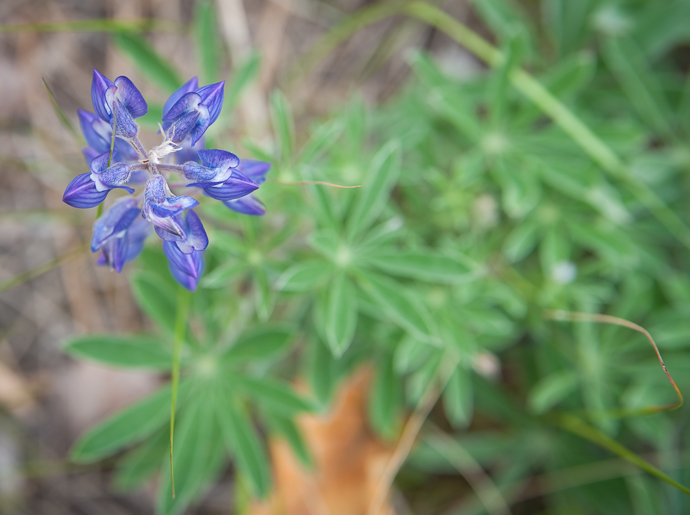
Lupine from above


Scarlet gilia


Wild rose


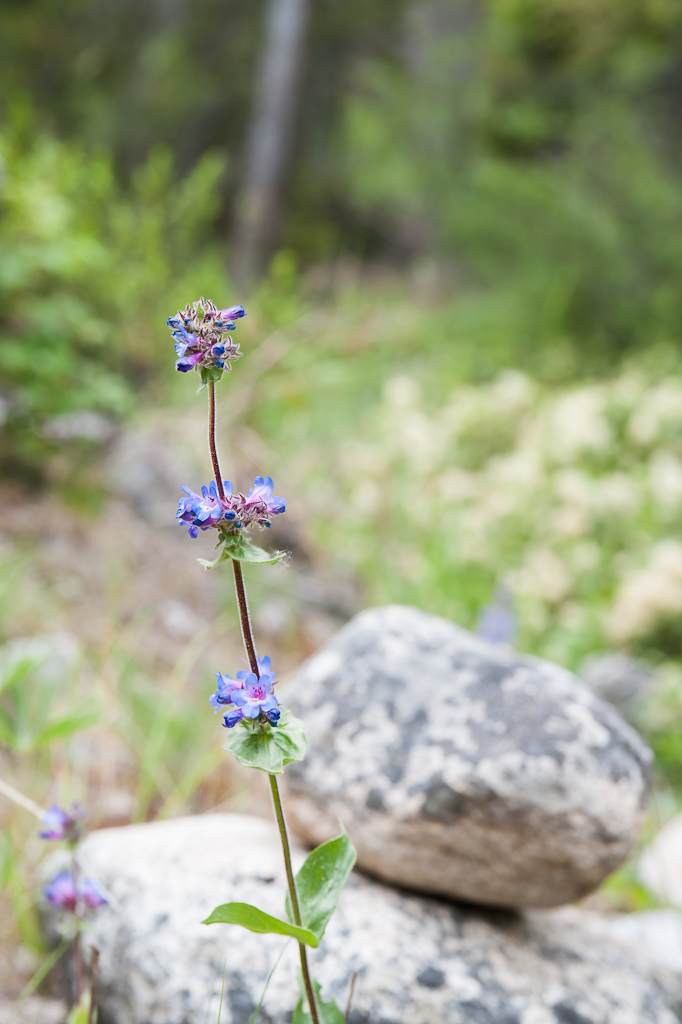
Penstemon


Here is an article about the fire. And here is an article about a study on the effects of the fire.


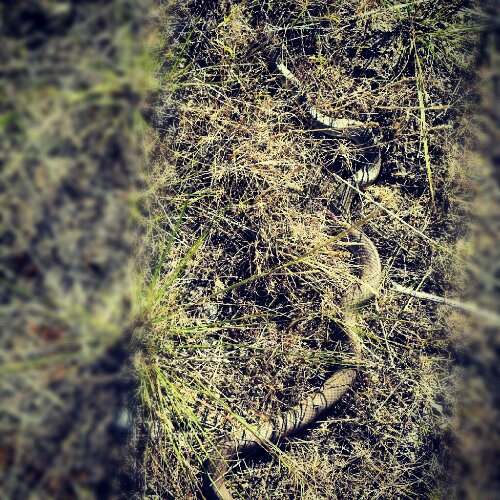
Not much time for a long walk with the dogs today so we made the most of it with sightings of a Great Horned Owl, Gray Catbird, American Kestral and two Rubber Boas.

This one is about eighteen inches long.

image

I was up early and out on the wet hillside this morning, hoping to hear birds and try to figure out which ones were singing. It was a glorious morning after all the rain we’ve had this week. Rubber boots were the fashion statement of the morning. I meant to take the big camera but, somehow managed to leave it behind so once again, Instagram to the rescue. Really, I mean to get serious about photography again. Soon. Really.


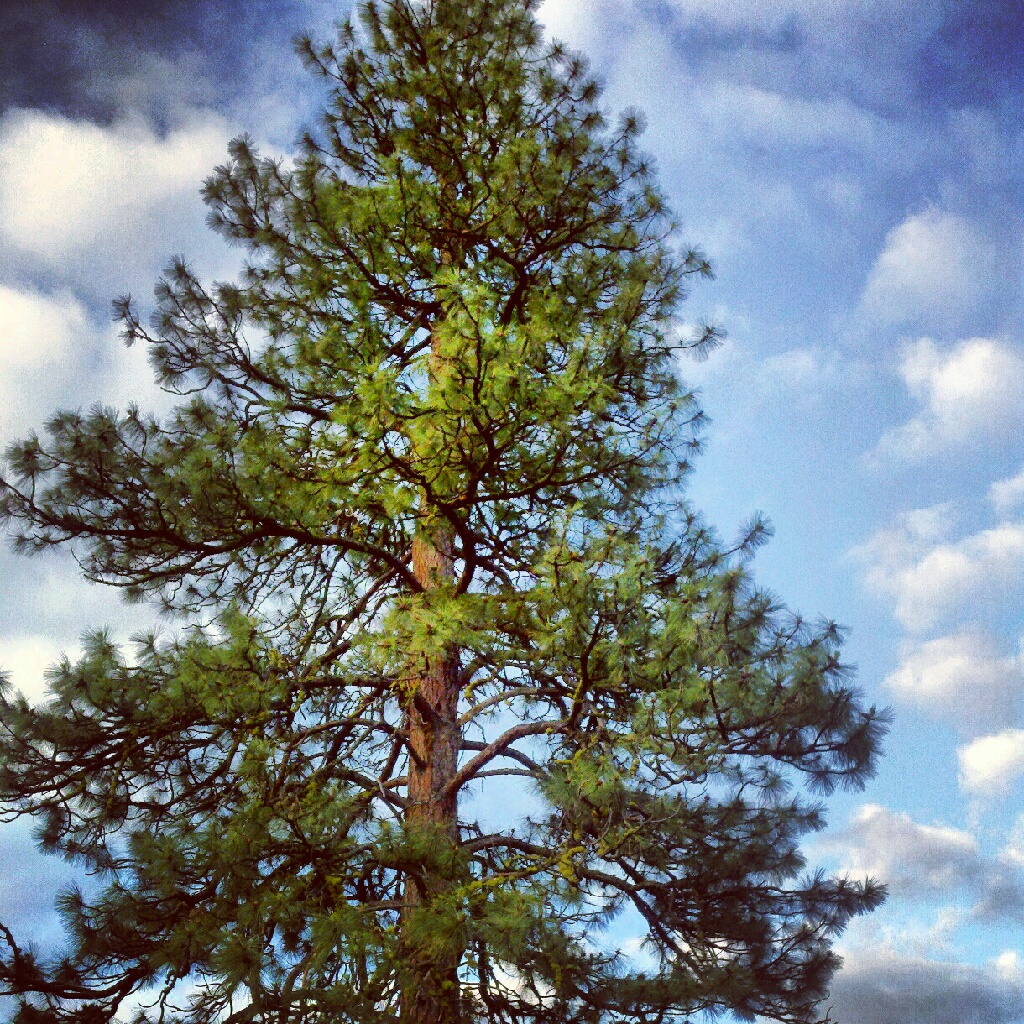
That’s our nicest pine tree


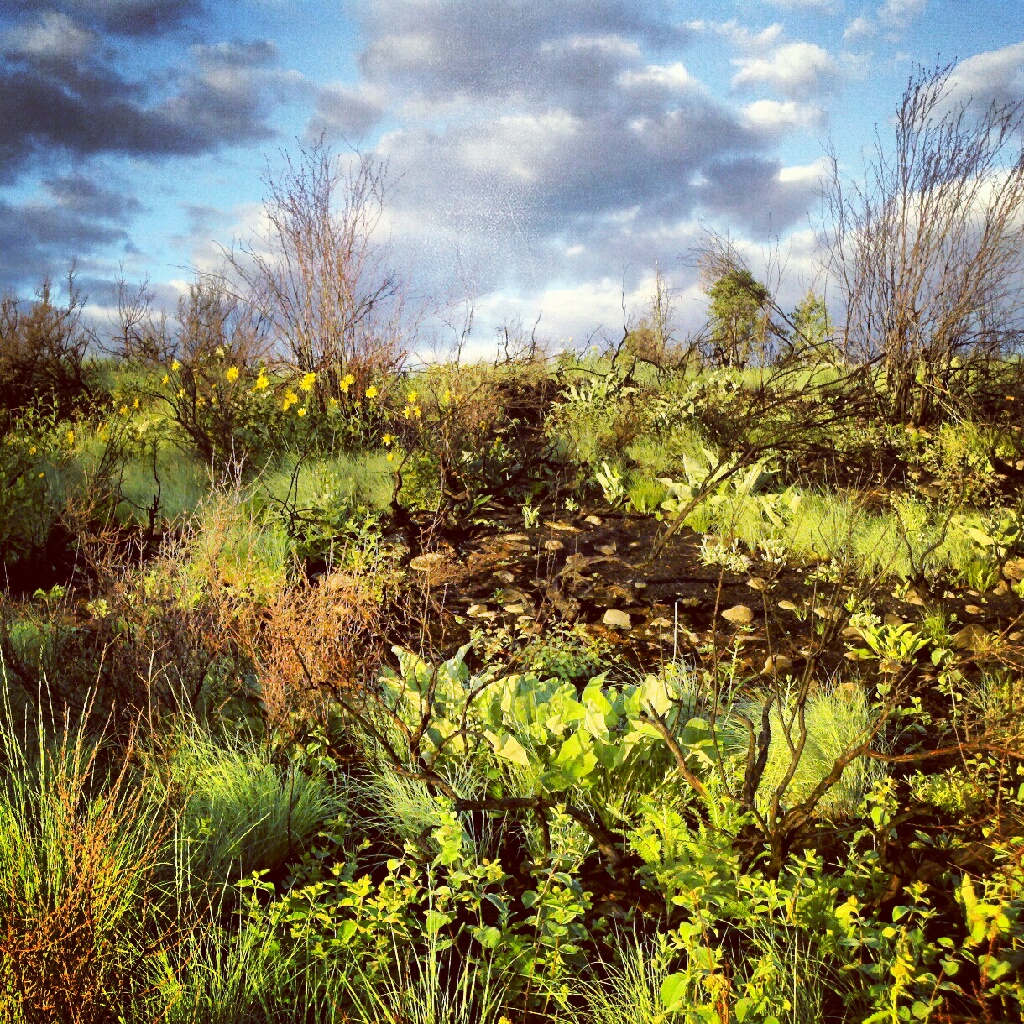
The ground is starting to heal nicely after the April 17th brush fire


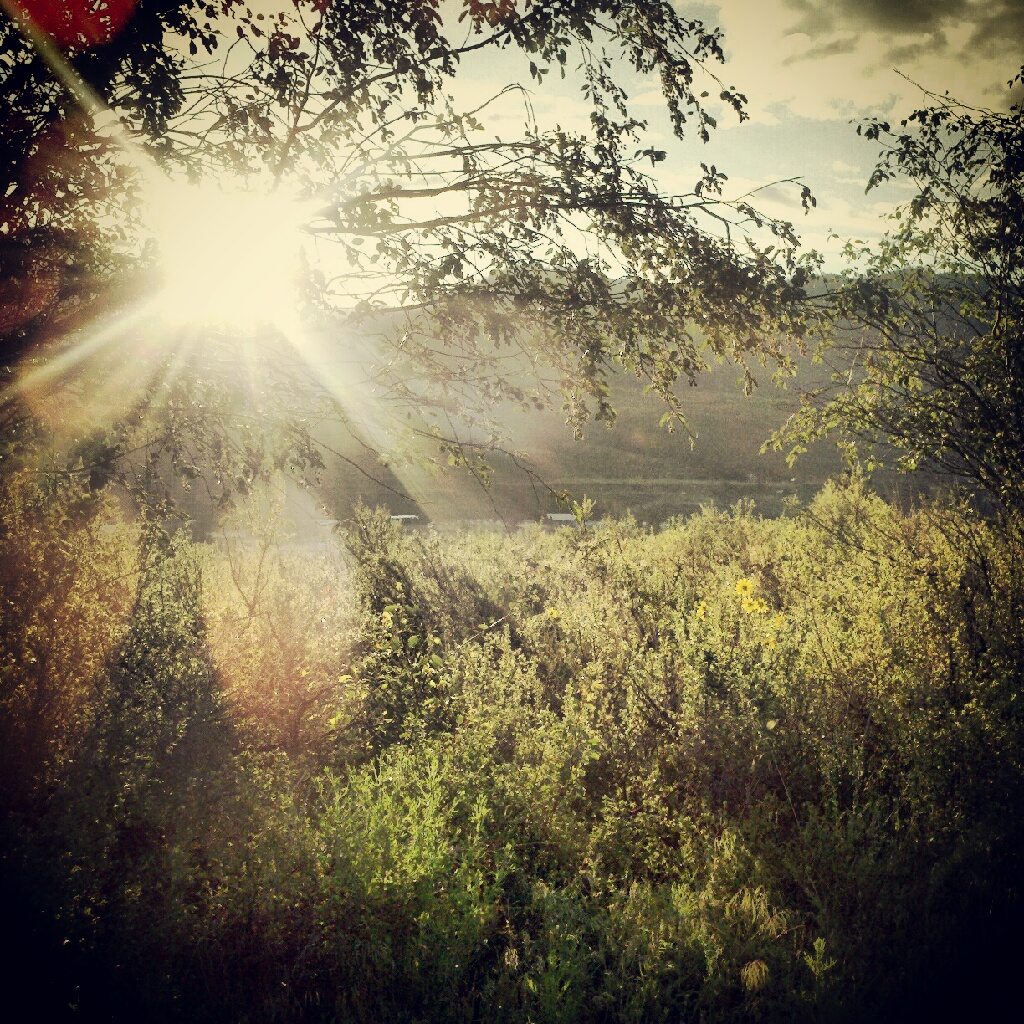
Sunrise!


I think these are Douglas sunflowers


I don’t think the pines down in the draw are going to survive


Here’s something new


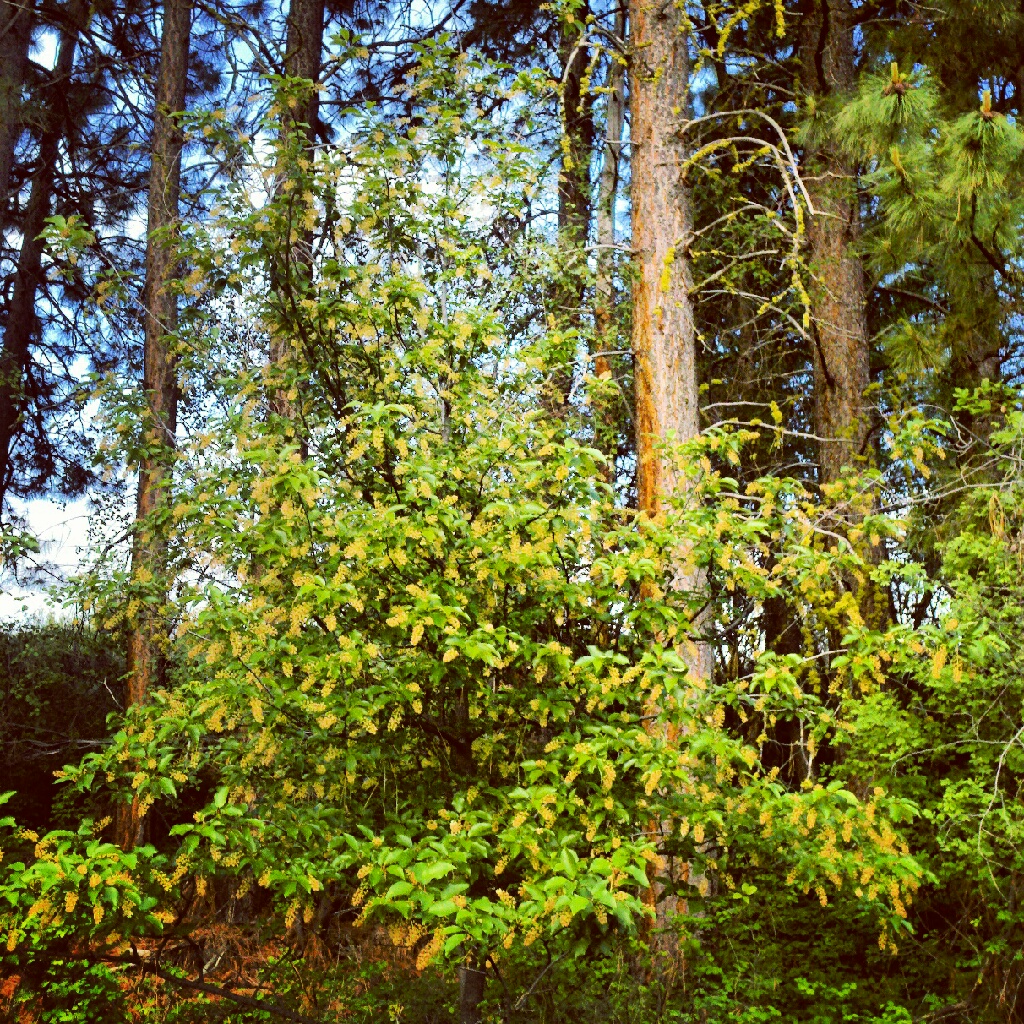
Lots of chokecherry blossoms this year


Target practice?

 And birds. Here is the list of birds I was able to identify by sight or sound:

California Quail

Dusky Grouse

Red-tailed Hawk

Mourning Dove

Rufous Hummingbird

Calliope Hummingbird

Northern Flicker

Western Wood-Pewee

Willow Flycatcher

Say’s Phoebe

Warbling Vireo

Red-eyed Vireo

Common Raven

Tree Swallow

Violet-green Swallow

Black-capped Chickadee

Mountain Chickadee

House Wren

Western Bluebird

Mountain Bluebird

American Robin

Gray Catbird

Orange-crowned Warbler

Yellow-rumped Warbler

Spotted Towhee

Western Tanager

Black-headed Grosbeak

Brewer’s Blackbird

Brown-headed Cowbird

Cassin’s Finch

Pine Siskin